

1 Franc – Belgian Congo
Context
Years: 1920–1929
Country: Rwanda and Urundi Belgian Congo
Issuer: Belgian Congo
Ruler: Albert I
Currency:
(1908—1960)
Demonetized: Yes
Total mintage: 61,000,000
Material
Diameter: 28.9 mm
Weight: 10 g
Thickness: 2 mm
Shape: Round
Composition: Copper-nickel
Technique: Milled
Alignment: Coin alignment
flip
References
KM: #Click to copy to clipboard21
Numista: #7608
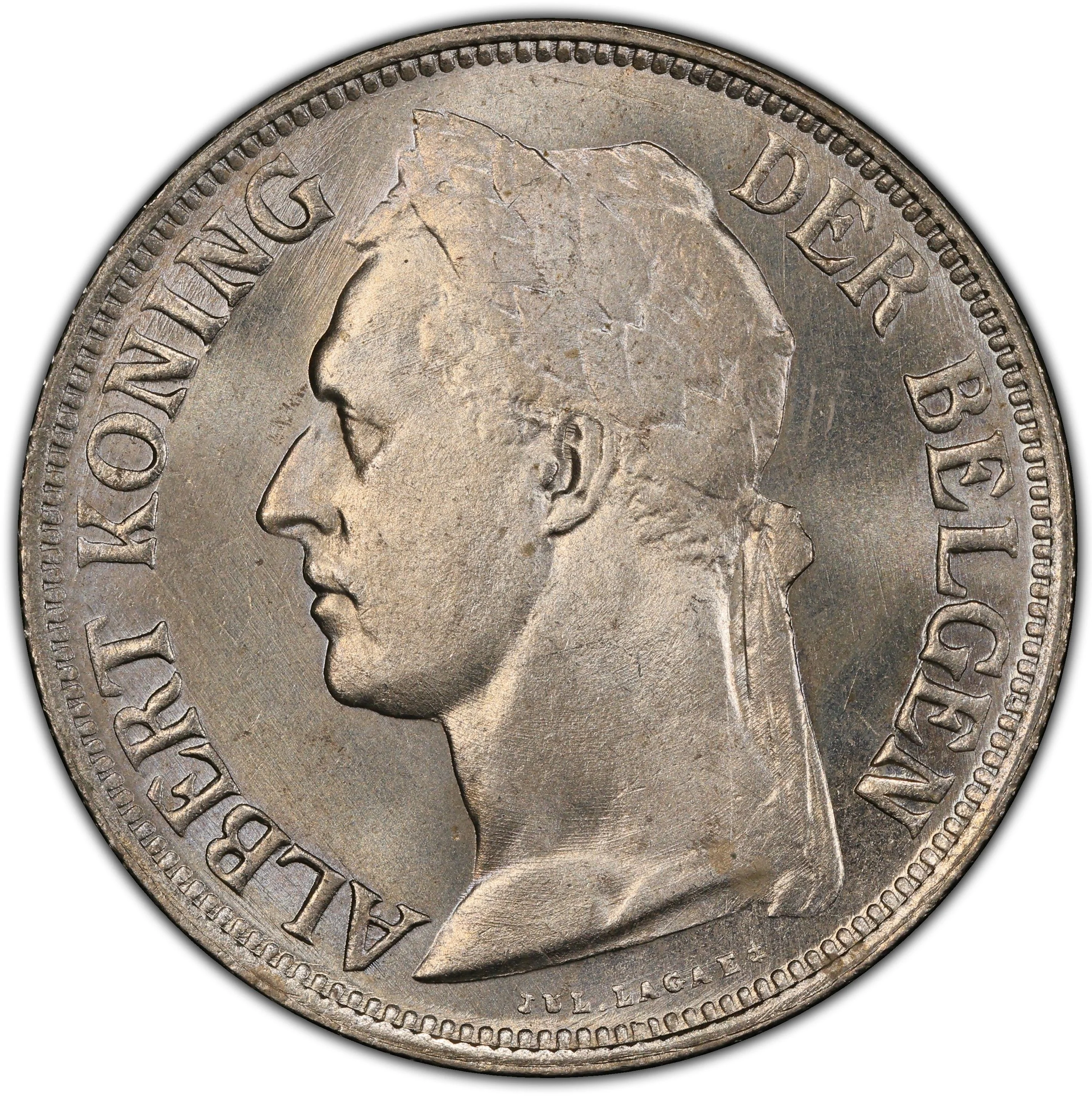
Obverse
Description:
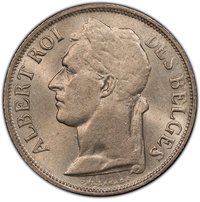
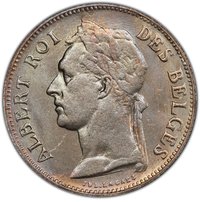
Albert I crowned with laurels.
Inscription:
ALBERT KONING DER BELGEN
Jul. Lagae
Jul. Lagae
Translation:
Albert King of the Belgians
Jul. Lagae
Jul. Lagae
Script: Latin
Engraver: Jules Lagae
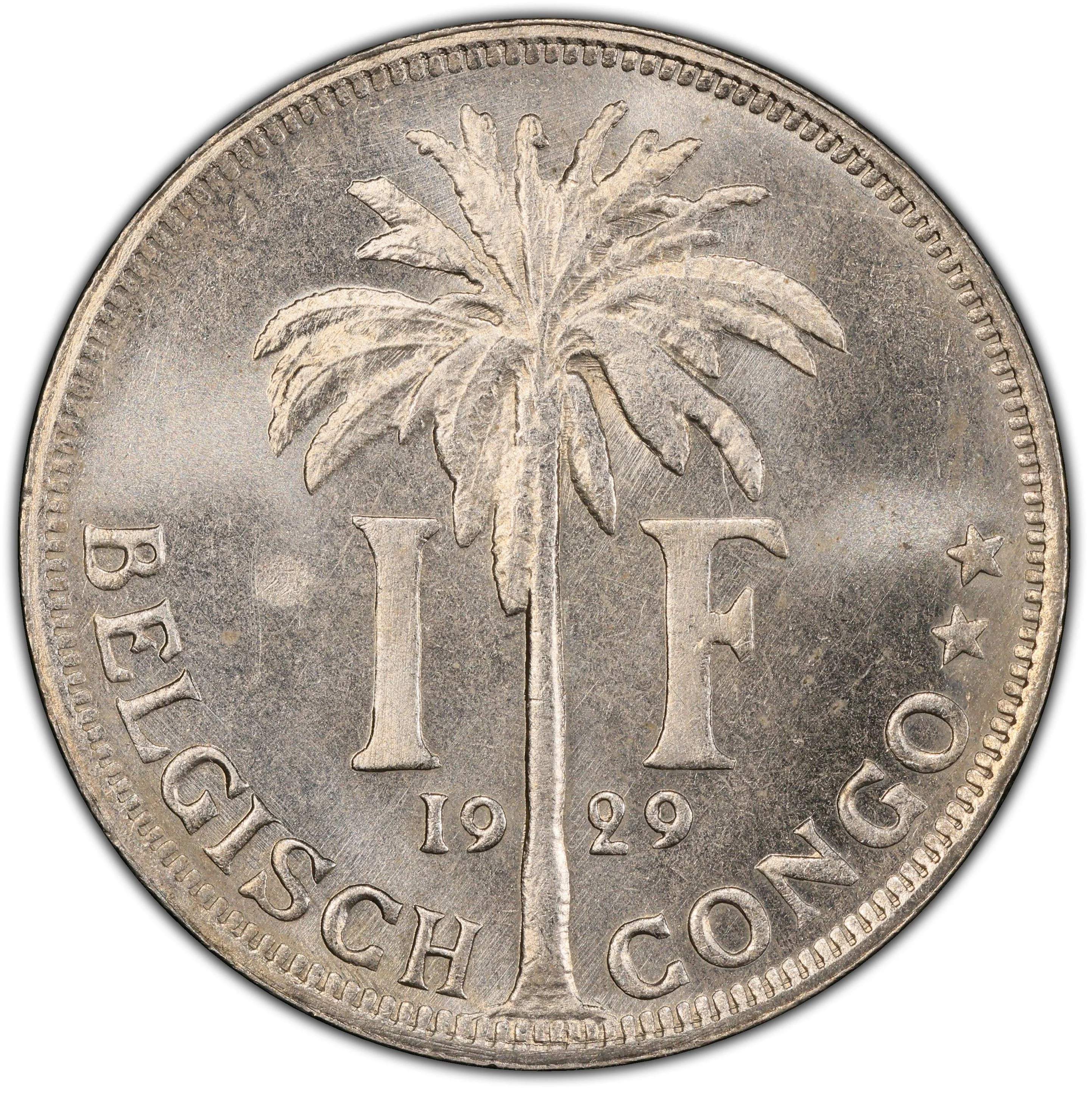
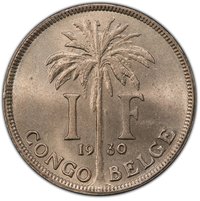
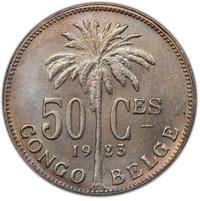
Reverse
Edge
Reeded
Mintings
| Year | Mint Mark | Mintage | Quality | Collection |
|---|---|---|---|---|
| 1920 | — | 475,000 | ||
| 1921 | — | 3,525,000 | ||
| 1922 | — | 5,000,000 | ||
| 1923 | — | 7,362,000 | ||
| 1924 | — | 4,608,000 | ||
| 1925 | — | 9,530,000 | ||
| 1926 | — | 17,000,000 | ||
| 1928 | — | 9,250,000 | ||
| 1929 | — | 4,250,000 |
Historical background
In 1920, the currency situation in the Belgian Congo was defined by its integration into the monetary system of the Belgian colonial empire, centered on the Congolese Franc (CF). Established in 1887 and pegged at par to the Belgian Franc, this currency was issued and controlled by the Banque du Congo Belge, a private bank granted a monopoly note-issuing privilege by the colonial state. The system was designed to facilitate the extraction of resources and administrative control, replacing earlier forms of barter and heterogeneous currencies with a uniform, metropolitan-aligned monetary standard to stabilize trade and tax collection.
The post-World War I context of 1920 presented significant challenges. Like Belgium itself, the Congo experienced inflationary pressures due to the war's disruption and global economic shifts. However, the colony's peg to the Belgian Franc, which had itself been destabilized, created a complex situation. The money supply was primarily geared toward financing the export sectors—such as copper, palm oil, and rubber—and the needs of European enterprises and administrators, rather than the broader indigenous economy. Most Congolese participated in the cash economy only through wage labor or the sale of small-scale agricultural produce, with traditional forms of money still persisting in remote areas.
Ultimately, the 1920 currency regime was an instrument of colonial political economy. It ensured that the Congo's wealth was convertible into Belgian capital, tightly binding the colony's financial fate to that of the metropole. This arrangement would be formalized further in the following years, leading to the creation of a stricter currency board system. Thus, in 1920, the Congolese Franc represented a managed and extractive system, providing monetary stability for colonial operations while being largely disconnected from the subsistence economies of the Congolese population.
The post-World War I context of 1920 presented significant challenges. Like Belgium itself, the Congo experienced inflationary pressures due to the war's disruption and global economic shifts. However, the colony's peg to the Belgian Franc, which had itself been destabilized, created a complex situation. The money supply was primarily geared toward financing the export sectors—such as copper, palm oil, and rubber—and the needs of European enterprises and administrators, rather than the broader indigenous economy. Most Congolese participated in the cash economy only through wage labor or the sale of small-scale agricultural produce, with traditional forms of money still persisting in remote areas.
Ultimately, the 1920 currency regime was an instrument of colonial political economy. It ensured that the Congo's wealth was convertible into Belgian capital, tightly binding the colony's financial fate to that of the metropole. This arrangement would be formalized further in the following years, leading to the creation of a stricter currency board system. Thus, in 1920, the Congolese Franc represented a managed and extractive system, providing monetary stability for colonial operations while being largely disconnected from the subsistence economies of the Congolese population.
🌱 Common