

5000 bolivars (Rafael Urdaneta) – Venezuela
Add to wishlist
Non-circulating coins
Commemoration: 200th Anniversary of Rafael Urdaneta's birth
Venezuela
Context
Year: 1988
Issuer: Venezuela
Period:
(1953—1999)
Currency:
(1879—2007)
Demonetization: 31 December 2011
Total mintage: 25,000
Material
Diameter: 27 mm
Weight: 15.55 g
Gold Weight:: 14.00 g
Thickness: 2.16 mm
Shape: Round
Composition: 90% Gold
Standard: Silver half ounce
Magnetic: No
Technique: Milled
Alignment: Coin alignment
flip
References
Y: #
Numista: #76022
Value
Exchange value: 5000 VEB
Bullion value: $2160.12
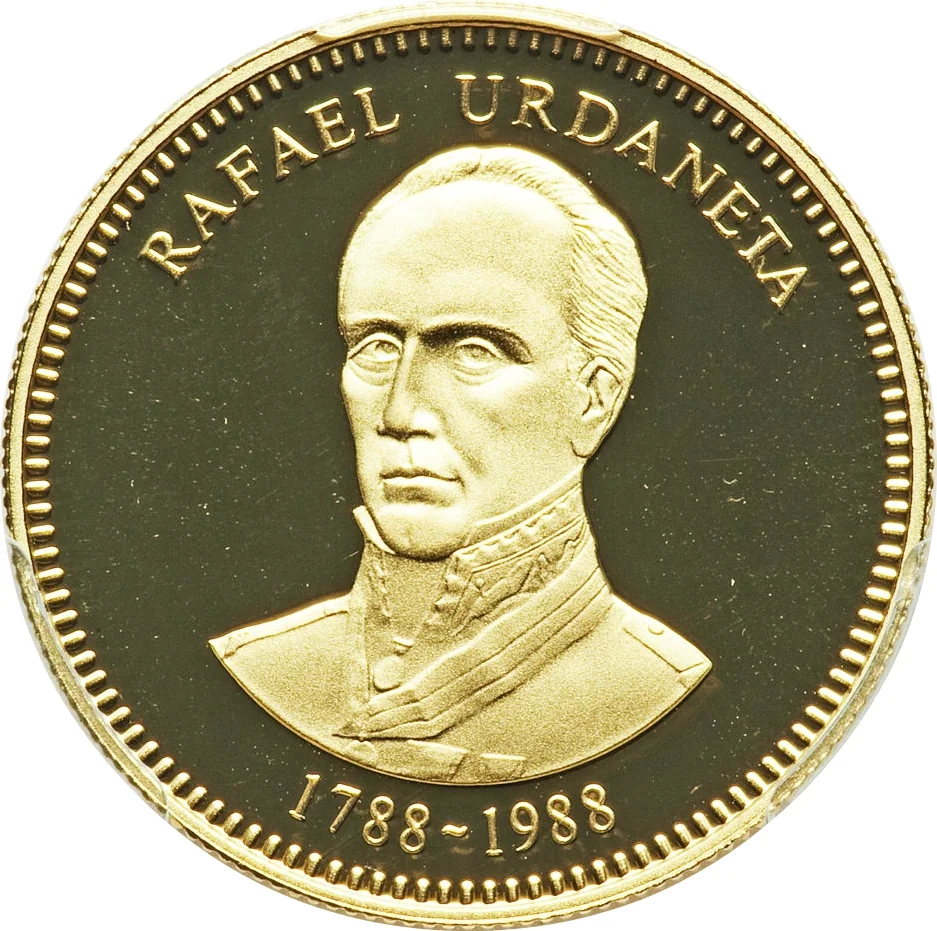
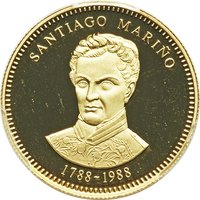
Obverse
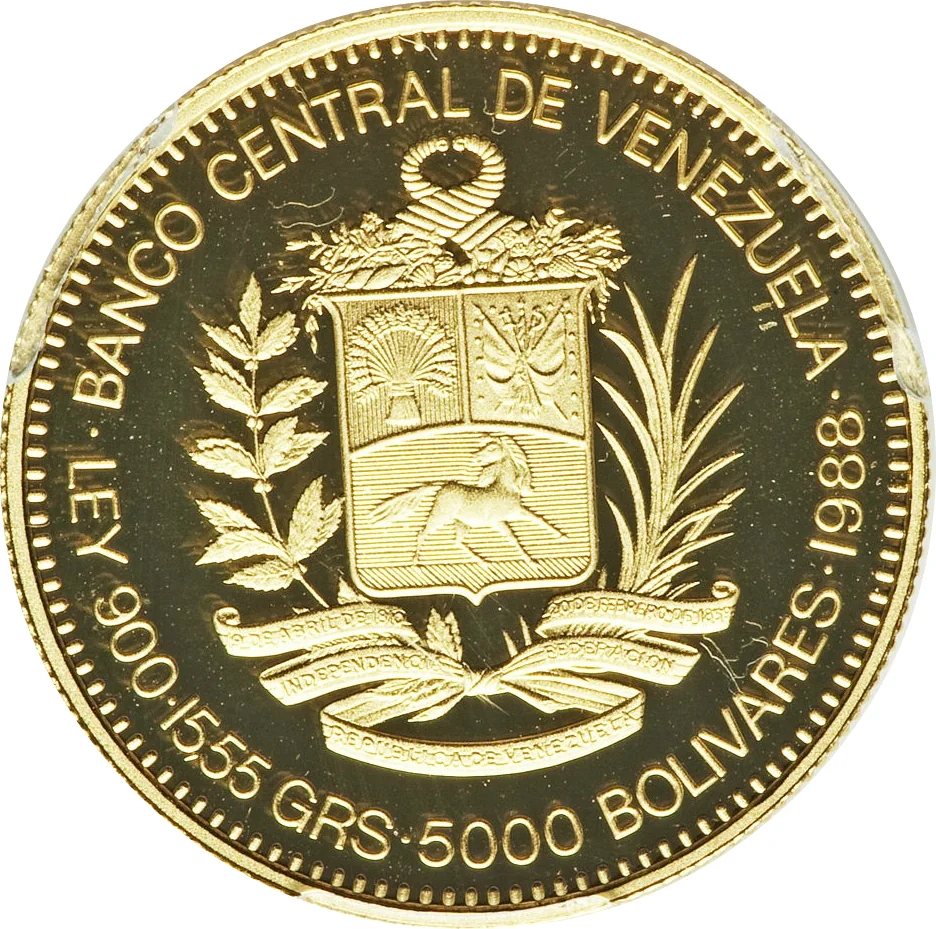
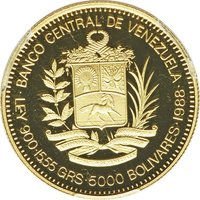
Reverse
Description:
Bust left, 1/4 profile. Name above, dates below.
Inscription:
RAFAEL URDANETA
1788 - 1988
1788 - 1988
Script: Latin
Edge
Reeded
Categories
| Event> Birth anniversary |
Mints
| Name | Mark |
|---|---|
| Royal Canadian Mint of Ottawa | — |
Mintings
| Year | Mint Mark | Mintage | Quality | Collection |
|---|---|---|---|---|
| 1988 | — | 25,000 | Proof |
Historical background
In 1988, Venezuela's currency situation was characterized by a rigid and overvalued official exchange rate that masked severe underlying economic strains. The country operated under a multi-tiered exchange control system established in 1983 (known as RECADI), which pegged the bolívar at artificially strong rates for priority imports, while a parallel, significantly depreciated black market rate reflected the currency's true market value. This disparity created massive distortions, fostering corruption, capital flight, and a heavy dependence on oil revenues, which accounted for over 80% of export earnings, to subsidize the strong official rate.
The backdrop to this fragile system was the culmination of the "Venezuelan Miracle's" collapse, marked by the 1980s debt crisis and a dramatic fall in global oil prices after 1985. President Jaime Lusinchi's administration (1984-1989) responded to the crisis with expansionary policies and maintained the strong bolívar to control inflation, but this eroded non-oil exports and drained international reserves. By 1988, the fiscal deficit had ballooned, foreign debt remained cripplingly high, and the economy was plagued by shortages of goods as individuals and businesses exploited the lucrative arbitrage opportunities between the official and black-market rates.
Consequently, the currency regime of 1988 was a pressure cooker waiting to explode. The overvaluation was unsustainable, and the vast gap between the official rate (approximately 14.50 bolívares to the US dollar for preferential goods) and the black-market rate (over 40 bolívares per dollar) signaled a profound loss of confidence in the national currency and economic management. This set the stage for the profound economic shock and political upheaval that would follow in February 1989, just weeks after the inauguration of President Carlos Andrés Pérez, when a necessary but abrupt devaluation and austerity package triggered the Caracazo riots.
The backdrop to this fragile system was the culmination of the "Venezuelan Miracle's" collapse, marked by the 1980s debt crisis and a dramatic fall in global oil prices after 1985. President Jaime Lusinchi's administration (1984-1989) responded to the crisis with expansionary policies and maintained the strong bolívar to control inflation, but this eroded non-oil exports and drained international reserves. By 1988, the fiscal deficit had ballooned, foreign debt remained cripplingly high, and the economy was plagued by shortages of goods as individuals and businesses exploited the lucrative arbitrage opportunities between the official and black-market rates.
Consequently, the currency regime of 1988 was a pressure cooker waiting to explode. The overvaluation was unsustainable, and the vast gap between the official rate (approximately 14.50 bolívares to the US dollar for preferential goods) and the black-market rate (over 40 bolívares per dollar) signaled a profound loss of confidence in the national currency and economic management. This set the stage for the profound economic shock and political upheaval that would follow in February 1989, just weeks after the inauguration of President Carlos Andrés Pérez, when a necessary but abrupt devaluation and austerity package triggered the Caracazo riots.
✨ Legendary