

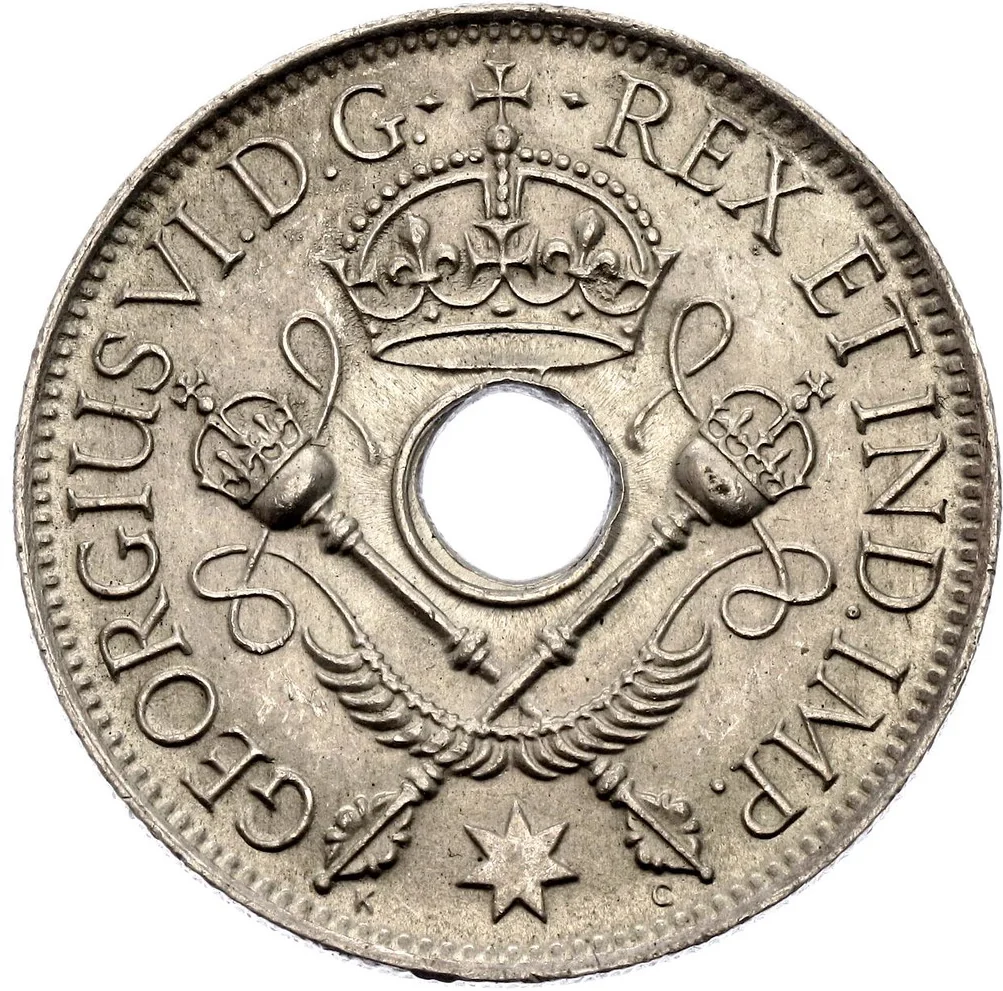
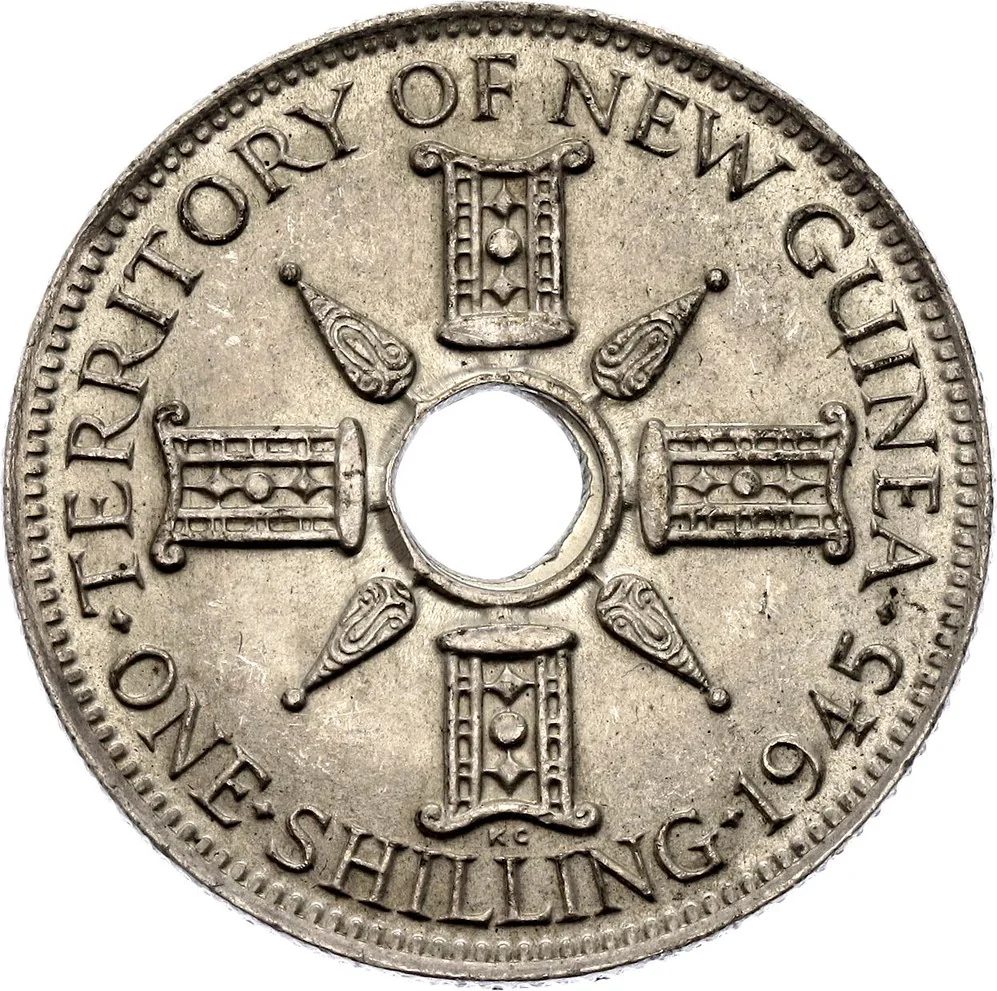
1 shilling – New Guinea
Add to wishlist
Papua New Guinea
Context
Years: 1938–1945
Country: Papua New Guinea
Issuer: New Guinea
Ruler: George VI
Currency:
(1915—1966)
Demonetized: Yes
Total mintage: 5,400,000
Material
Diameter: 23.5 mm
Weight: 5.38 g
Silver Weight:: 4.98 g
Thickness: 1.2 mm
Shape: Round with a round hole
Composition: 92.5% Silver
Magnetic: No
Technique: Milled
Alignment: Medal alignment
flip
References
KM: #
Numista: #7601
Value
Bullion value: $12.49
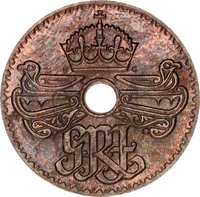
Obverse
Description:
Crowned crossed sceptres with encircling text.
Inscription:
GEORGIUS VI.D G.· ·REX ET IND.IMP.
K G
K G
Translation:
George VI by the Grace of God, King and Emperor of India.
K G
K G
Script: Latin
Language: Latin
Engraver: George Kruger Gray
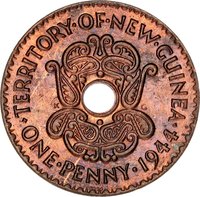
Reverse
Description:
Lettering encircling hole
Inscription:
TERRITORY OF NEW GUINEA
KG
·ONE·SHILLING·1938·
KG
·ONE·SHILLING·1938·
Script: Latin
Engraver: George Kruger Gray
Edge
Reeded
Mints
| Name | Mark |
|---|---|
| Royal Mint | — |
Mintings
| Year | Mint Mark | Mintage | Quality | Collection |
|---|---|---|---|---|
| 1938 | — | 3,400,000 | ||
| 1945 | — | 2,000,000 |
Historical background
In 1938, the island of New Guinea was divided into three separate political territories, each with its own distinct currency system linked to a colonial power. The eastern half, the Territory of New Guinea, was an Australian-administered League of Nations mandate, while the southern quarter, Papua, was an Australian colony. Both used the Australian pound as their official currency, with Australian coins and notes circulating alongside some distinctive Papua and New Guinea shilling and penny tokens issued by the Bank of New South Wales for local use. The western half, known as Dutch New Guinea, was governed by the Netherlands and used the Dutch East Indies gulden.
The monetary landscape was complex and reflected the island's underdeveloped economy and rugged terrain. In the Australian territories, the cash economy was largely confined to coastal plantations, missionary stations, and administrative centres. In the vast highland interiors, only recently contacted, traditional shell money and barter remained predominant for internal trade. The limited penetration of official currency meant that labourers on plantations were often paid in a mixture of cash and trade goods like tobacco, knives, and cloth.
This period was one of transition and increasing colonial integration. The Australian administration was actively promoting economic development, which required a more standardized and reliable currency to facilitate tax collection, wage payments, and trade. However, the outbreak of the Pacific War in 1941 would soon disrupt this gradual monetary integration, with Australian currency being withdrawn and later replaced by Japanese occupation money in many areas, before a unified currency system was eventually established in the post-war period.
The monetary landscape was complex and reflected the island's underdeveloped economy and rugged terrain. In the Australian territories, the cash economy was largely confined to coastal plantations, missionary stations, and administrative centres. In the vast highland interiors, only recently contacted, traditional shell money and barter remained predominant for internal trade. The limited penetration of official currency meant that labourers on plantations were often paid in a mixture of cash and trade goods like tobacco, knives, and cloth.
This period was one of transition and increasing colonial integration. The Australian administration was actively promoting economic development, which required a more standardized and reliable currency to facilitate tax collection, wage payments, and trade. However, the outbreak of the Pacific War in 1941 would soon disrupt this gradual monetary integration, with Australian currency being withdrawn and later replaced by Japanese occupation money in many areas, before a unified currency system was eventually established in the post-war period.
🌱 Common