

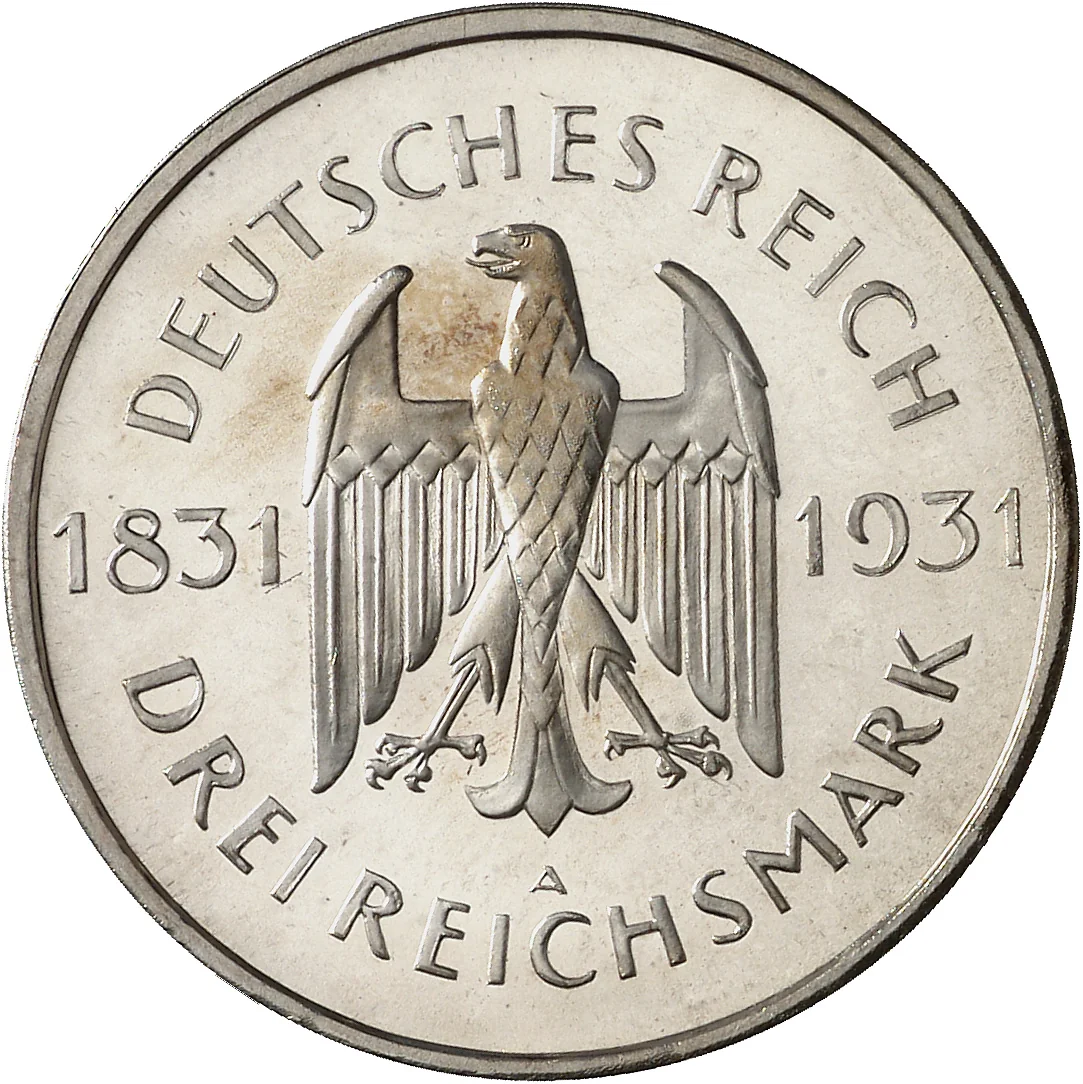
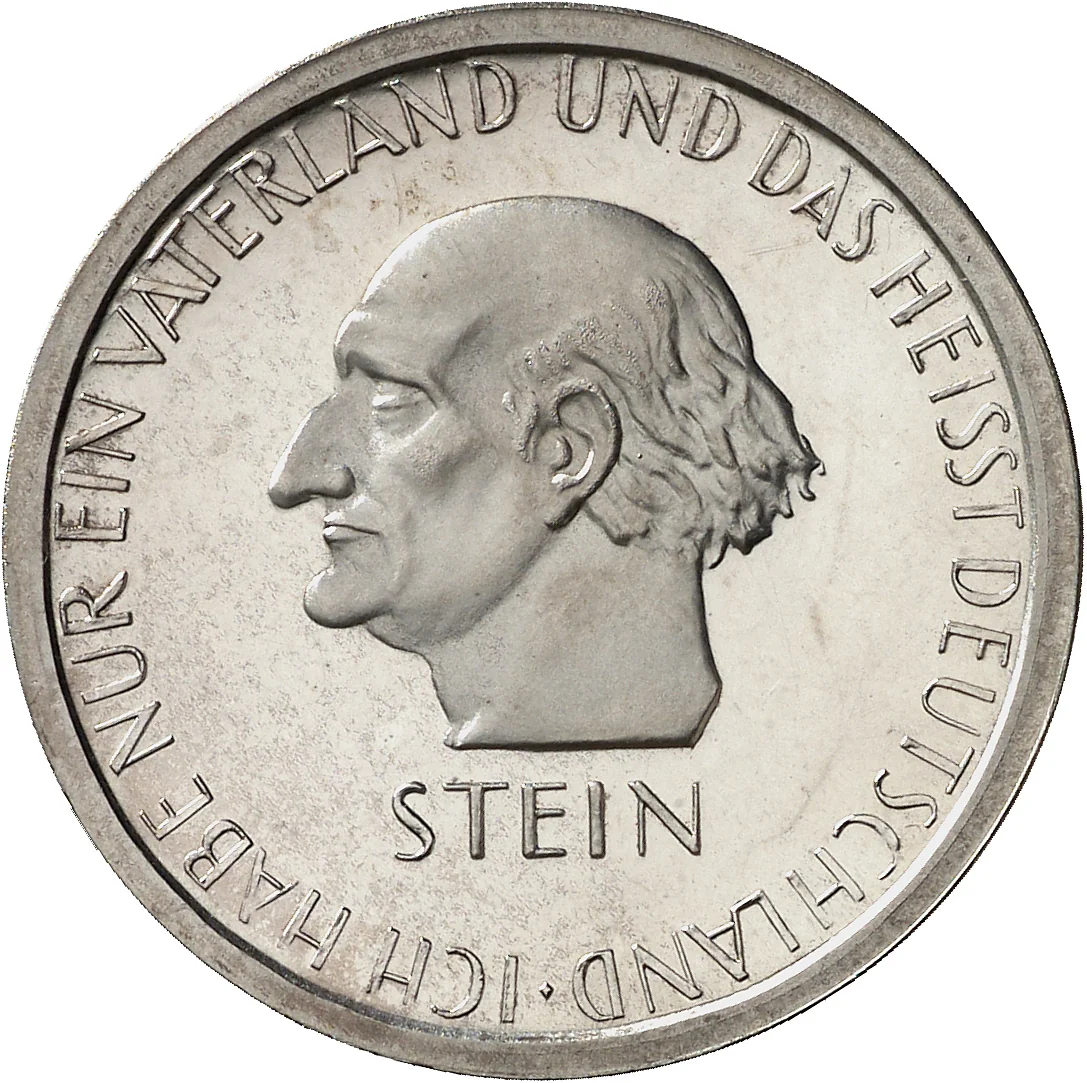
3 marks (Heinrich vom Stein) – Germany
Add to wishlist
Circulating commemorative coins
Commemoration: 100th Anniversary - Death of Heinrich vom Stein
Germany
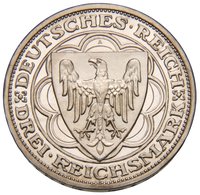
Obverse
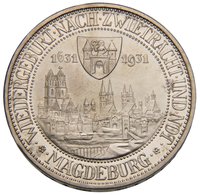
Reverse
Edge
Mints
| Name | Mark |
|---|---|
| Berlin | A |
Mintings
| Year | Mint Mark | Mintage | Quality | Collection |
|---|---|---|---|---|
| 1931 | A | 150,000 |
Historical background
By 1931, Germany's currency situation was a crisis of confidence rooted in the punitive reparations imposed by the Treaty of Versailles. The Weimar Republic had financed its obligations and postwar reconstruction largely through foreign loans, particularly short-term American capital. This created a fragile financial structure where the Reichsmark's stability depended on continuous international credit and a belief in Germany's ability to pay. The onset of the Great Depression in 1929 shattered this foundation, as foreign lenders began rapidly withdrawing their funds, draining the Reichsbank's gold and foreign currency reserves.
The crisis escalated dramatically in the summer of 1931. The collapse of Austria's largest bank, the Creditanstalt, triggered a panic that spread to Germany, leading to a run on its major banks. Facing imminent financial collapse, President Hindenburg issued an emergency decree on July 13, 1931, closing all banks for two days and imposing strict capital controls. This was followed by the standstill agreement (Stillhalteabkommen) with foreign creditors, which froze the repayment of short-term loans. While these drastic measures prevented a complete banking system failure, they effectively acknowledged that Germany was insolvent and isolated from international capital markets.
Consequently, although the Reichsmark did not hyperinflate as it had in 1923, it became a heavily controlled and weakened currency. The government resorted to issuing scrip and emergency notes, while foreign trade stalled due to a lack of convertible currency. The social and political fallout was catastrophic, with mass unemployment soaring and middle-class savings trapped in failing banks. This economic devastation fatally undermined the democratic Weimar Republic, creating the profound disillusionment and social unrest that the Nazi Party would successfully exploit in the coming years.
The crisis escalated dramatically in the summer of 1931. The collapse of Austria's largest bank, the Creditanstalt, triggered a panic that spread to Germany, leading to a run on its major banks. Facing imminent financial collapse, President Hindenburg issued an emergency decree on July 13, 1931, closing all banks for two days and imposing strict capital controls. This was followed by the standstill agreement (Stillhalteabkommen) with foreign creditors, which froze the repayment of short-term loans. While these drastic measures prevented a complete banking system failure, they effectively acknowledged that Germany was insolvent and isolated from international capital markets.
Consequently, although the Reichsmark did not hyperinflate as it had in 1923, it became a heavily controlled and weakened currency. The government resorted to issuing scrip and emergency notes, while foreign trade stalled due to a lack of convertible currency. The social and political fallout was catastrophic, with mass unemployment soaring and middle-class savings trapped in failing banks. This economic devastation fatally undermined the democratic Weimar Republic, creating the profound disillusionment and social unrest that the Nazi Party would successfully exploit in the coming years.
⭐ Rare