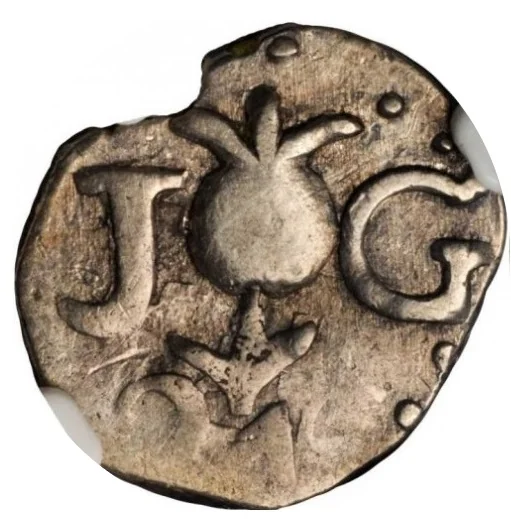
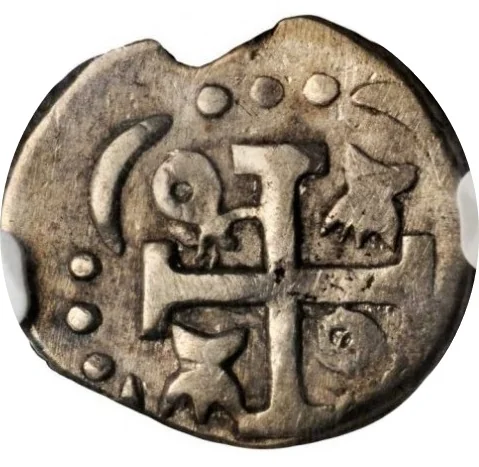
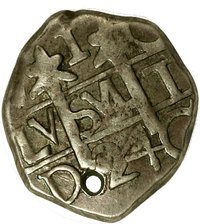
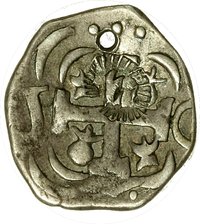
In 1823, the Municipality of Granada, within the Captaincy General of Guatemala (part of the dissolved First Mexican Empire), faced a complex and unstable currency situation rooted in regional fragmentation and economic crisis. Following the independence from Spain in 1821, the fledgling Central American provinces lacked a unified monetary authority. The circulation was a chaotic mix of coins from the former colonial mint in Guatemala City, foreign coins (especially Spanish colonial
reales and pesos, but also coins from Peru, Mexico, and beyond), and a severe shortage of small-denomination currency for daily transactions. This scarcity crippled local commerce and market exchanges in Granada, a key trading center on Lake Nicaragua.
The political turmoil of 1823 directly exacerbated this monetary disorder. As the Central American provinces broke from Mexico and formed the United Provinces of Central America, the overarching political instability prevented the establishment of a strong, centralized fiscal or monetary policy. Local governments and municipalities, including Granada, had limited power to regulate the value or authenticity of the multitude of coins in use, leading to confusion, counterfeiting, and arbitrary valuation by merchants. The economic aftermath of the independence wars further drained specie (hard coin) from circulation, pushing the local economy toward informal barter and deepening public distrust in the monetary medium.
Consequently, the currency situation in Granada was characterized by uncertainty and inconvenience. The lack of a standardized, trustworthy currency hindered Granada's commercial potential and reflected the broader challenges of post-independence state-building. This monetary instability would persist until the Federal Republic of Central America eventually established its own mint and began issuing its own currency later in the decade, a process that remained fraught with difficulties in achieving uniform acceptance across the fractured region.