

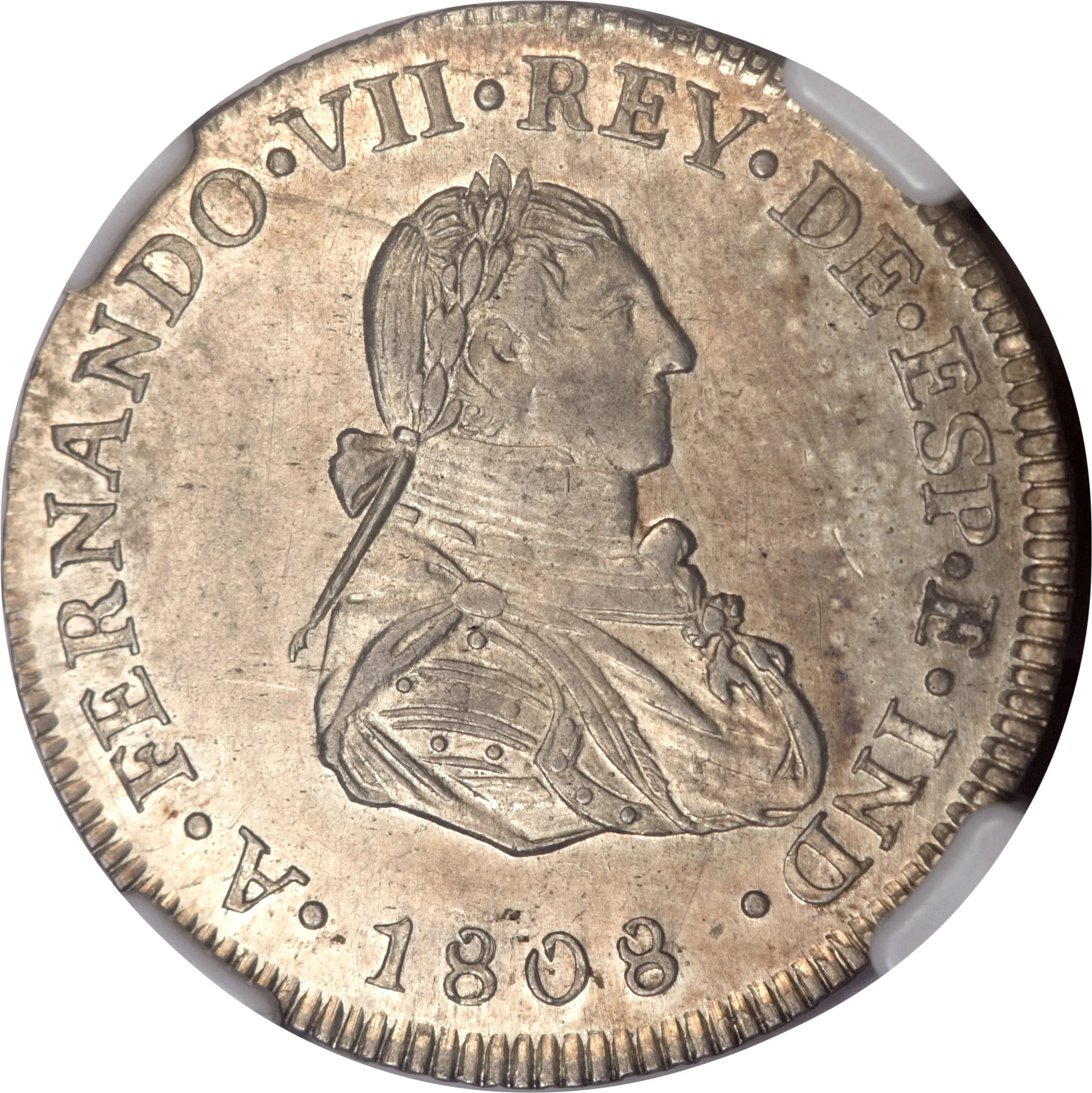
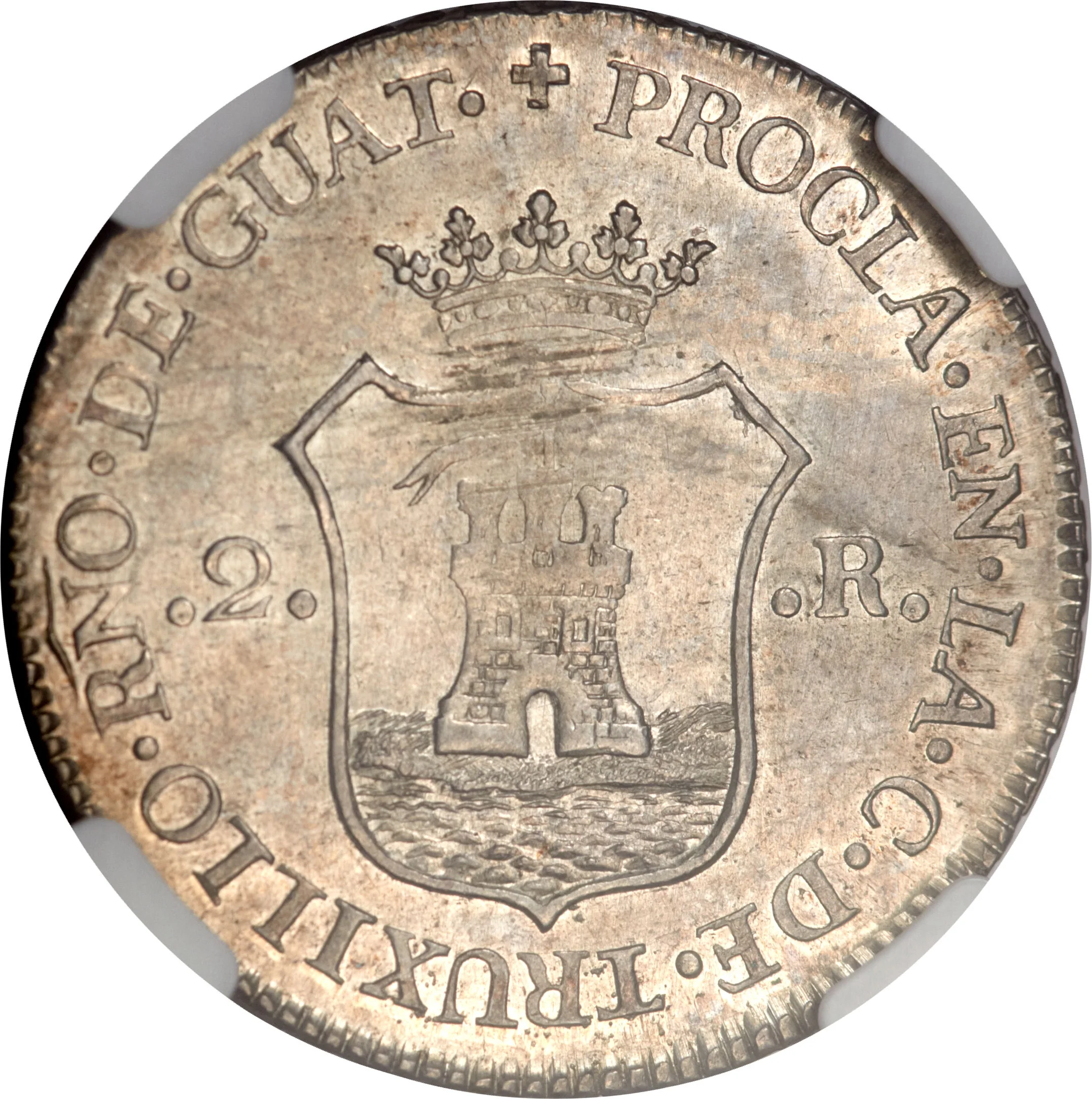
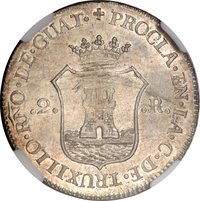
2 Reales – Honduras
Circulating commemorative coins
Commemoration: Fernando VII Proclamation
Honduras
Context
Material
References
KM: #Click to copy to clipboard2
Numista: #75496
Value
Bullion value: $16.72
Obverse
Reverse
Edge
Categories
| Symbols> Coat of Arms |
Mintings
| Year | Mint Mark | Mintage | Quality | Collection |
|---|---|---|---|---|
| 1808 | — | — |
Historical background
In 1808, Honduras was not an independent nation but a colonial province within the Captaincy General of Guatemala, itself part of the Spanish Empire. The official currency was Spanish colonial reales, minted from silver, with the peso (or "piece of eight") being the dominant unit of account for larger transactions. However, the monetary system was chronically strained. The empire's mercantilist policies severely restricted trade, and Honduras's remote geography meant that physical specie was often scarce in circulation, leading to a reliance on barter for local exchange.
This scarcity was exacerbated by global events. Spain was embroiled in the Peninsular War (1807-1814) against Napoleonic France, which crippled metropolitan authority and disrupted transatlantic supply chains. The flow of official coinage from Spain to its colonies became increasingly unreliable. Furthermore, the legal trade restrictions fostered widespread contraband, particularly with British colonies in the Caribbean, which introduced foreign coins like British pounds and cut Spanish pieces into smaller "bits" for change. This created a de facto multi-currency environment despite official prohibition.
Consequently, the monetary landscape in Honduras in 1808 was one of underlying fragility and informal adaptation. While the Spanish peso remained the official standard, the practical economy operated on a patchwork of scarce official coinage, illegally circulating foreign money, and primitive barter. This instability reflected the weakening grip of Spanish colonial administration and foreshadowed the greater economic dislocations that would accompany the wars of independence soon to follow in the 1810s.
This scarcity was exacerbated by global events. Spain was embroiled in the Peninsular War (1807-1814) against Napoleonic France, which crippled metropolitan authority and disrupted transatlantic supply chains. The flow of official coinage from Spain to its colonies became increasingly unreliable. Furthermore, the legal trade restrictions fostered widespread contraband, particularly with British colonies in the Caribbean, which introduced foreign coins like British pounds and cut Spanish pieces into smaller "bits" for change. This created a de facto multi-currency environment despite official prohibition.
Consequently, the monetary landscape in Honduras in 1808 was one of underlying fragility and informal adaptation. While the Spanish peso remained the official standard, the practical economy operated on a patchwork of scarce official coinage, illegally circulating foreign money, and primitive barter. This instability reflected the weakening grip of Spanish colonial administration and foreshadowed the greater economic dislocations that would accompany the wars of independence soon to follow in the 1810s.
✨ Legendary