

20 cents – French Indochina
Add to wishlist
Context
Years: 1898–1916
Issuer: French Indochina
Period:
(1870—1940)
Currency:
(1880—1952)
Demonetized: Yes
Total mintage: 17,877,000
Material
References
KM: #
Numista: #11284
Value
Exchange value: 0.20 ICFP
Bullion value: $11.52
Obverse
Description:
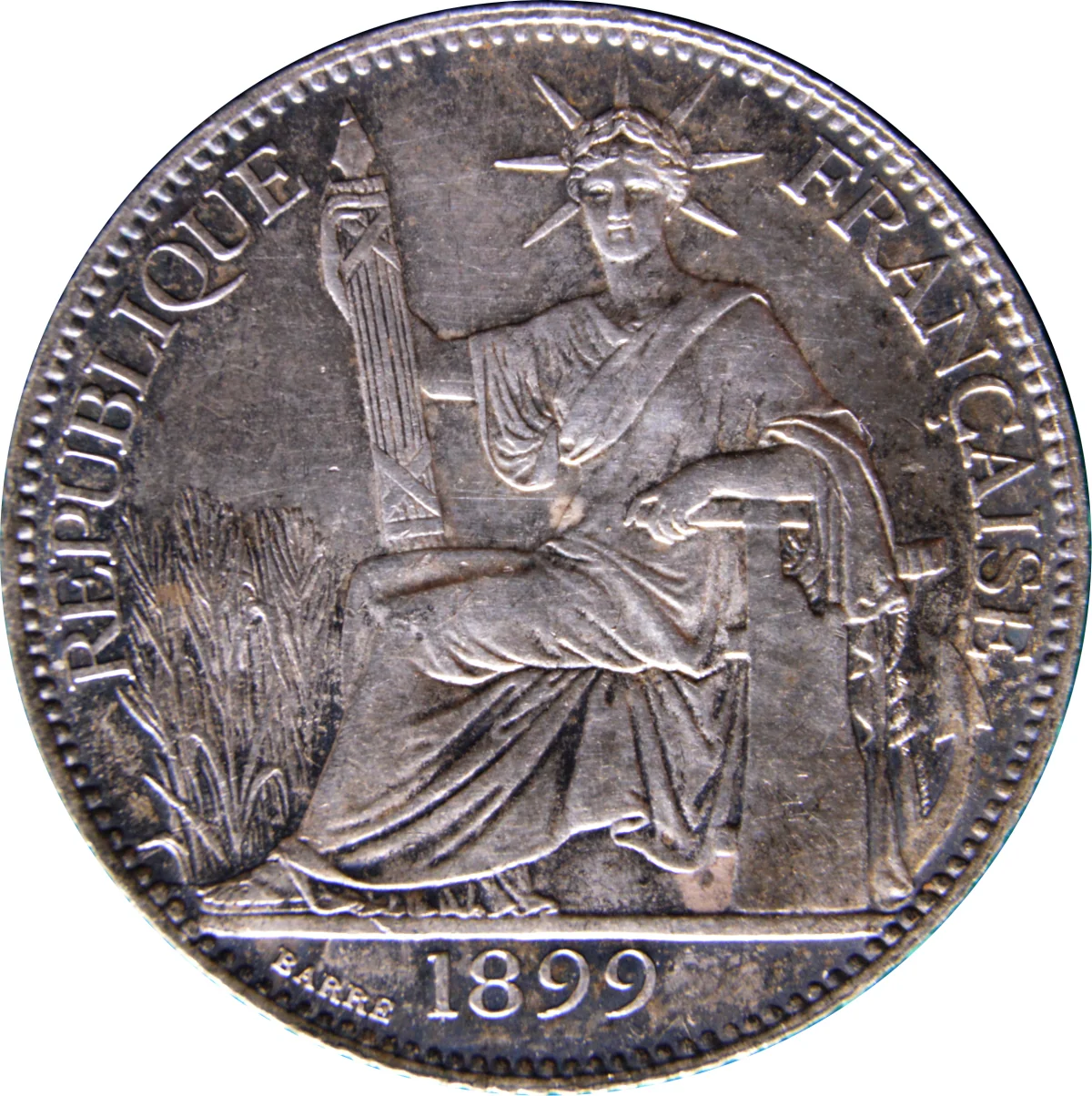
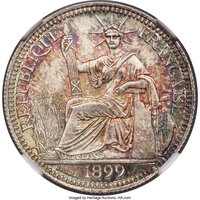
Marianne seated left, holding fasces, date below.
Inscription:
REPUBLIQUE FRANÇAISE
BARRE
1899
BARRE
1899
Translation:
FRENCH REPUBLIC
BARRE
1899
BARRE
1899
Script: Latin
Language: French
Engraver: Jean-Auguste Barre
Reverse
Description:
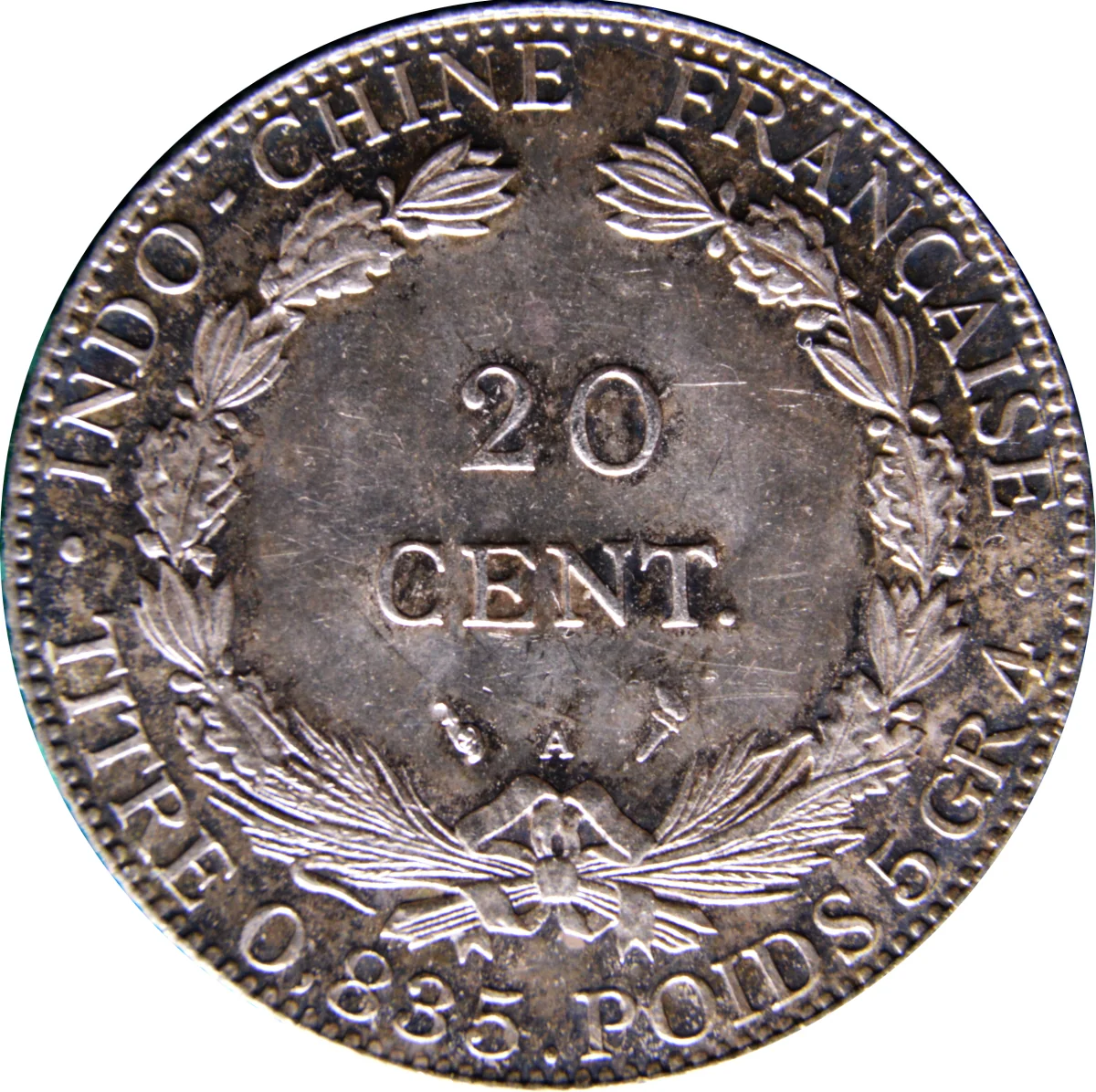
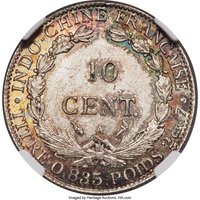
Wreath denomination
Inscription:
· INDO - CHINE FRANÇAISE ·
20 CENT.
A
TITRE 0,835 . POIDS 5 GR.4
20 CENT.
A
TITRE 0,835 . POIDS 5 GR.4
Translation:
FRENCH INDO-CHINA
20 CENT.
A
TITLE 0.835 . WEIGHT 5 GR.4
20 CENT.
A
TITLE 0.835 . WEIGHT 5 GR.4
Script: Latin
Language: French
Engraver: Jean-Auguste Barre
Edge
Reeded
Mints
| Name | Mark |
|---|---|
| Monnaie de Paris | (A) |
Mintings
| Year | Mint Mark | Mintage | Quality | Collection |
|---|---|---|---|---|
| 1898 | A | 250,000 | ||
| 1899 | A | 2,050,000 | ||
| 1900 | — | — | Proof | |
| 1900 | A | 1,750,000 | ||
| 1901 | A | 1,375,000 | ||
| 1902 | A | 3,525,000 | ||
| 1903 | A | 675,000 | ||
| 1908 | A | 500,000 | ||
| 1909 | A | 500,000 | ||
| 1911 | A | 2,340,000 | ||
| 1912 | A | 160,000 | ||
| 1913 | A | 1,252,000 | ||
| 1914 | A | 2,500,000 | ||
| 1916 | A | 1,000,000 |
Historical background
By 1898, the currency situation in French Indochina was a complex and transitional hybrid system, reflecting both the colony's deep integration into the regional trade networks of East Asia and France's efforts to impose monetary sovereignty. The primary circulating medium was the Mexican silver dollar (piastre de commerce), a trusted trade coin used across Asia. Alongside it, various subsidiary silver coins, French francs, and a multitude of local currencies—including Chinese cash coins and Annamese zinc and copper coins—facilitated daily transactions. This multiplicity created chronic instability, as exchange rates between these currencies fluctuated with the volatile global price of silver, complicating commerce and colonial administration.
Recognizing these challenges, the French colonial administration had taken its first major step toward reform with the establishment of the Banque de l'Indochine in 1875, granting it the exclusive right to issue currency for the colony. However, by 1898, a unified, state-backed currency was still not fully realized. The Bank issued silver piastre notes and coins, but they competed with, rather than immediately replaced, the physical Mexican dollars and other traditional monies. The public, particularly in commercial centers like Saigon and Hanoi, remained skeptical of paper money and often preferred tangible silver.
Therefore, 1898 represents a pivotal moment within a longer monetary transition. The framework for a modern, decimalized currency system (the Indochinese piastre, pegged to the French franc at a fixed rate) was being constructed, but the practical reality on the ground was one of duality. The colonial state was actively promoting its new currency to simplify tax collection and economic control, while the entrenched habits of local populations and merchants, along with the inertia of the silver-based regional economy, ensured that the older, heterogeneous monetary landscape persisted. Full consolidation and the demonetization of foreign silver would take several more decades to achieve.
Recognizing these challenges, the French colonial administration had taken its first major step toward reform with the establishment of the Banque de l'Indochine in 1875, granting it the exclusive right to issue currency for the colony. However, by 1898, a unified, state-backed currency was still not fully realized. The Bank issued silver piastre notes and coins, but they competed with, rather than immediately replaced, the physical Mexican dollars and other traditional monies. The public, particularly in commercial centers like Saigon and Hanoi, remained skeptical of paper money and often preferred tangible silver.
Therefore, 1898 represents a pivotal moment within a longer monetary transition. The framework for a modern, decimalized currency system (the Indochinese piastre, pegged to the French franc at a fixed rate) was being constructed, but the practical reality on the ground was one of duality. The colonial state was actively promoting its new currency to simplify tax collection and economic control, while the entrenched habits of local populations and merchants, along with the inertia of the silver-based regional economy, ensured that the older, heterogeneous monetary landscape persisted. Full consolidation and the demonetization of foreign silver would take several more decades to achieve.
🌟 Uncommon