

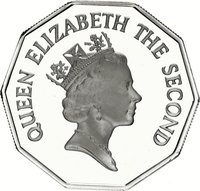
Obverse
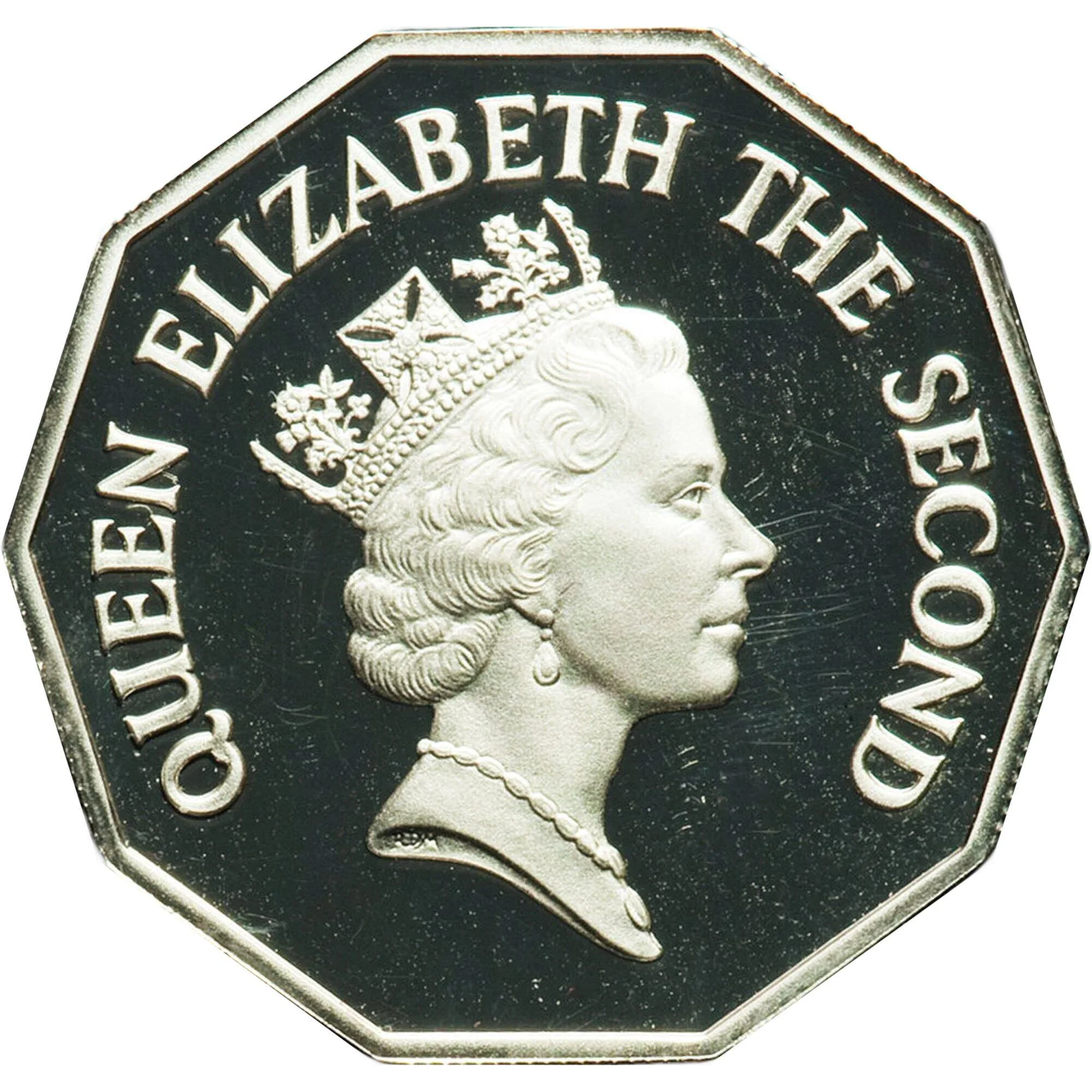
Description:
Queen Elizabeth II facing right.
Inscription:
QUEEN ELIZABETH THE SECOND
Script: Latin
Designer: Raphael David Maklouf
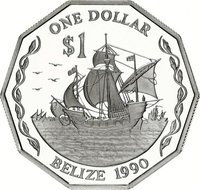
Reverse
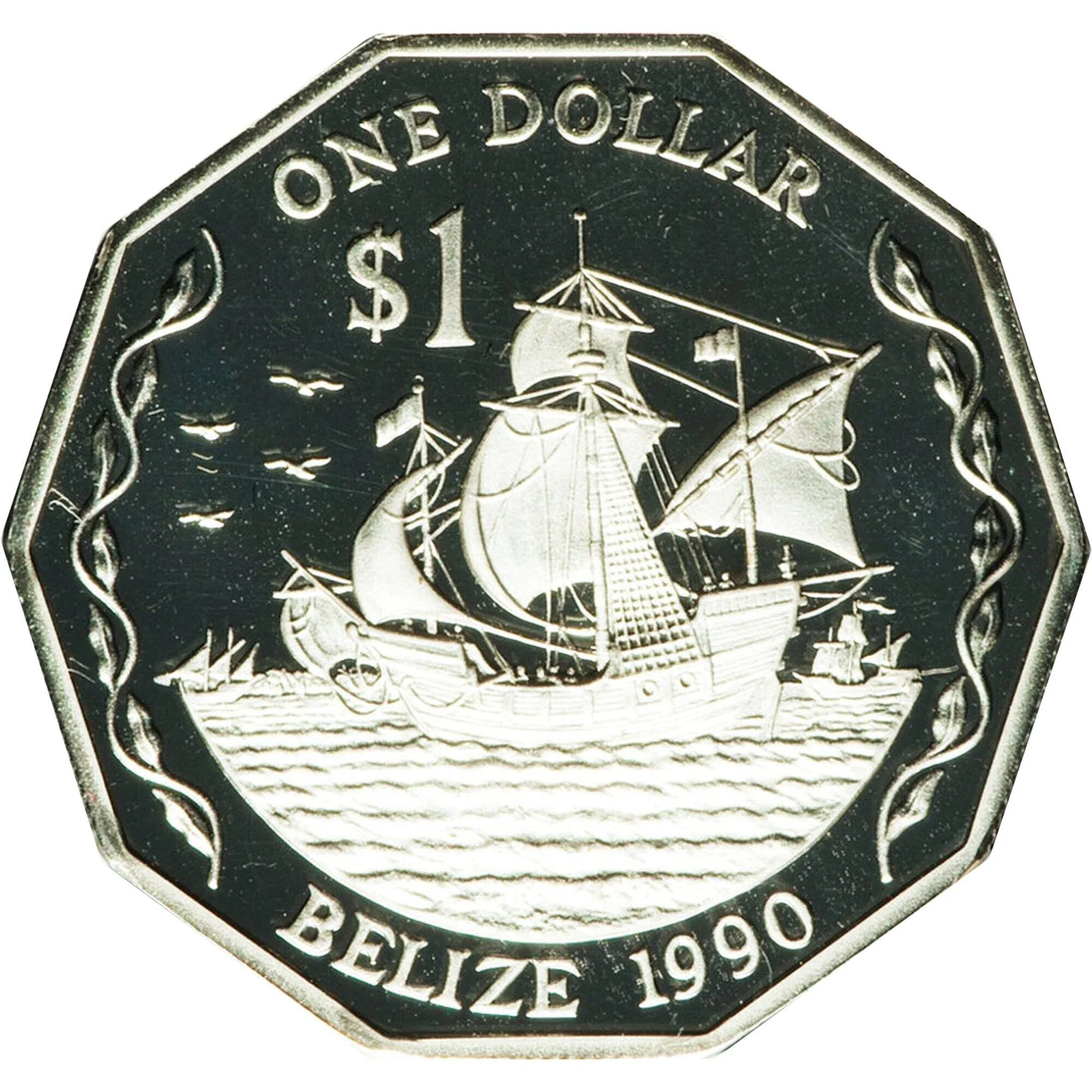
Description:
Santa Maria center, Nina and Pinta behind.
Inscription:
ONE DOLLAR
$1
BELIZE 1990
$1
BELIZE 1990
Script: Latin
Edge
Smooth with intermittent milling
Categories
| Person> Monarch |
| Transportation> Watercraft |
Mints
| Name | Mark |
|---|---|
| Royal Mint | — |
Mintings
| Year | Mint Mark | Mintage | Quality | Collection |
|---|---|---|---|---|
| 1990 | — | 1,000 | Proof |
Historical background
In 1990, Belize's currency situation was defined by its fixed peg to the U.S. dollar, a regime established in 1976. The Belize dollar (BZD) was officially set at an exchange rate of BZ$2.00 = US$1.00, a parity that has remained remarkably stable for decades and continues to this day. This peg was managed by the Central Bank of Belize, which was established in 1982, and provided a crucial anchor for price stability and international trade confidence in a small, open economy heavily reliant on imports and susceptible to external shocks.
The economy during this period was emerging from a difficult decade marked by the global oil crises and a significant hurricane in 1978, with key sectors like sugar, citrus, and bananas driving exports. The fixed exchange rate facilitated planning for these export industries and helped control inflation, but it also required careful management of foreign exchange reserves to defend the peg. The country's external debt burden was a pressing concern, limiting fiscal flexibility and making the maintenance of sufficient reserves a priority for monetary authorities.
Overall, the currency framework in 1990 was one of deliberate stability. While the peg offered predictability, it also meant Belize forfeited independent monetary policy, as interest rates and money supply were largely geared toward maintaining the U.S. dollar parity. The system's success hinged on maintaining disciplined fiscal policy and competitive exports to generate the foreign exchange needed to support the currency, setting the stage for the economic challenges and adjustments of the 1990s.
The economy during this period was emerging from a difficult decade marked by the global oil crises and a significant hurricane in 1978, with key sectors like sugar, citrus, and bananas driving exports. The fixed exchange rate facilitated planning for these export industries and helped control inflation, but it also required careful management of foreign exchange reserves to defend the peg. The country's external debt burden was a pressing concern, limiting fiscal flexibility and making the maintenance of sufficient reserves a priority for monetary authorities.
Overall, the currency framework in 1990 was one of deliberate stability. While the peg offered predictability, it also meant Belize forfeited independent monetary policy, as interest rates and money supply were largely geared toward maintaining the U.S. dollar parity. The system's success hinged on maintaining disciplined fiscal policy and competitive exports to generate the foreign exchange needed to support the currency, setting the stage for the economic challenges and adjustments of the 1990s.
💎 Extremely Rare