

25 centimos – Costa Rica
Add to wishlist
Costa Rica
Context
Year: 1980
Issuer: Costa Rica
Issuing organization: Central Bank of Costa Rica
Period:
(since 1948)
Currency:
(since 1896)
Demonetized: Yes
Total mintage: 30,000,000
Material
References
KM: #
Numista: #7408
Value
Exchange value: 0.25 CRC
Obverse
Description:
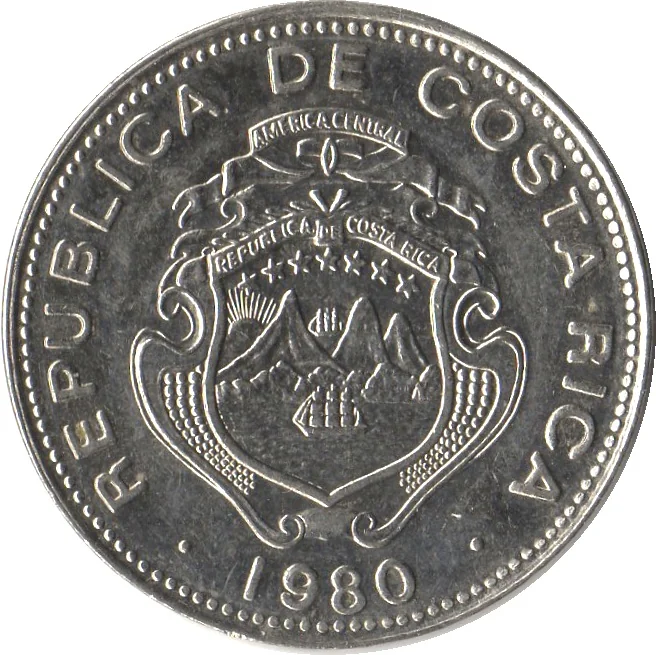
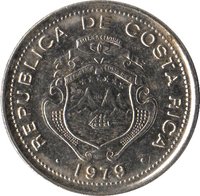
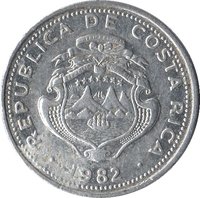
Costa Rica's coat of arms features seven stars for its provinces, three volcanoes for its mountain ranges, two ships for its position between the Atlantic and Pacific, and a sunrise.
Inscription:
REPUBLICA DE COSTA RICA
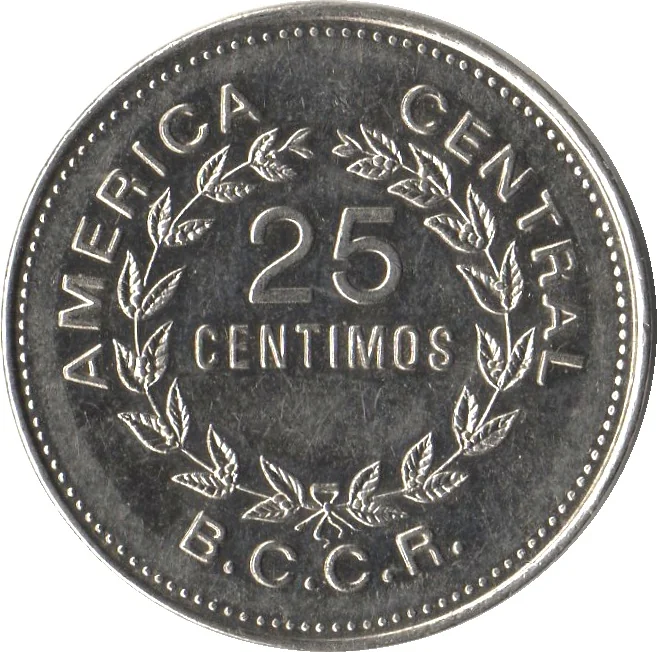
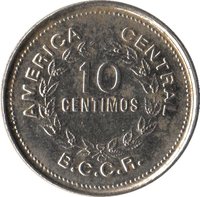
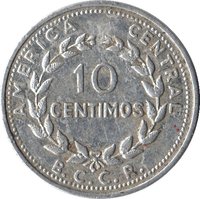
AMERICA CENTRAL
REPUBLICA DE COSTA RICA
1980
AMERICA CENTRAL
REPUBLICA DE COSTA RICA
1980
Translation:
REPUBLIC OF COSTA RICA
CENTRAL AMERICA
REPUBLIC OF COSTA RICA
1980
CENTRAL AMERICA
REPUBLIC OF COSTA RICA
1980
Script: Latin
Language: Spanish
Reverse
Edge
Smooth with lettering
Legend:
B C C R -
Translation:
Benevolentia Caesaris Conservata Respublica
Language: Latin
Categories
| Symbols> Coat of Arms |
| Symbol> Wreath |
Mints
| Name | Mark |
|---|---|
| Sherritt Mint | — |
Mintings
| Year | Mint Mark | Mintage | Quality | Collection |
|---|---|---|---|---|
| 1980 | — | 30,000,000 |
Historical background
In 1980, Costa Rica's currency situation was characterized by a managed exchange rate system under significant strain. The country maintained a fixed peg to the U.S. dollar, a policy intended to provide stability and control inflation. However, this stability was increasingly artificial, supported by Central Bank interventions and strict capital controls. The underlying economic reality was dire: the nation was grappling with the tail end of the 1970s oil crises, a severe debt burden, and a sharp decline in prices for its key exports like coffee and bananas. This created a growing imbalance, where the official colón was overvalued compared to its true market strength, leading to a scarcity of foreign reserves.
The overvaluation fueled a thriving black market for U.S. dollars, where the colón traded at a significantly depreciated rate compared to the official peg. This parallel market exposed the lack of confidence in the currency and the government's ability to maintain the fixed rate. Economically, the overvalued colón made Costa Rica's exports less competitive internationally while making imports artificially cheap, worsening the trade deficit and further draining the country's already low foreign currency reserves. The government, led by President Rodrigo Carazo Odio, was simultaneously locked in difficult negotiations with the International Monetary Fund (IMF) for emergency financing, which demanded devaluation and austerity measures as conditions.
Consequently, 1980 served as the final year before a major monetary crisis and a pivotal policy shift. The persistent loss of reserves and failed stabilization attempts made the fixed exchange rate untenable. In late 1980, under immense pressure, the government initiated a series of controlled devaluations, effectively abandoning the old peg. This set the stage for the deep economic crisis of 1981-1982 and the eventual adoption of a crawling peg system in the mid-1980s, which allowed for gradual, regular adjustments of the colón's value and became a hallmark of Costa Rica's subsequent monetary policy.
The overvaluation fueled a thriving black market for U.S. dollars, where the colón traded at a significantly depreciated rate compared to the official peg. This parallel market exposed the lack of confidence in the currency and the government's ability to maintain the fixed rate. Economically, the overvalued colón made Costa Rica's exports less competitive internationally while making imports artificially cheap, worsening the trade deficit and further draining the country's already low foreign currency reserves. The government, led by President Rodrigo Carazo Odio, was simultaneously locked in difficult negotiations with the International Monetary Fund (IMF) for emergency financing, which demanded devaluation and austerity measures as conditions.
Consequently, 1980 served as the final year before a major monetary crisis and a pivotal policy shift. The persistent loss of reserves and failed stabilization attempts made the fixed exchange rate untenable. In late 1980, under immense pressure, the government initiated a series of controlled devaluations, effectively abandoning the old peg. This set the stage for the deep economic crisis of 1981-1982 and the eventual adoption of a crawling peg system in the mid-1980s, which allowed for gradual, regular adjustments of the colón's value and became a hallmark of Costa Rica's subsequent monetary policy.
🌱 Common