

100 Euro (first Slovenian printed text) – Slovenia
Non-circulating coins
Commemoration: 500th anniversary of the first Slovenian printed text
Slovenia
Context
Material
References
KM: #Click to copy to clipboard125
Numista: #73703
Value
Exchange value: 100 EUR = $118.14
Bullion value: $1050.42
Inflation-adjusted value: 132.01 EUR
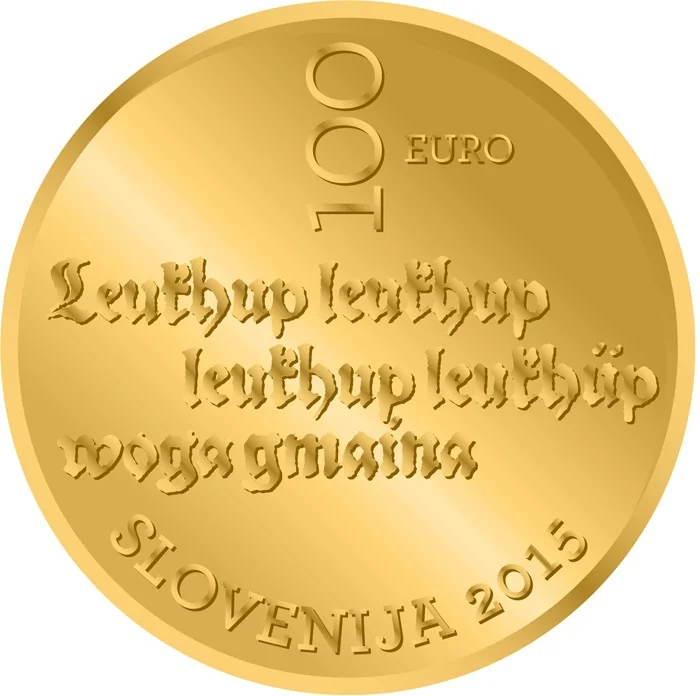
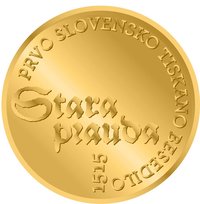
Obverse
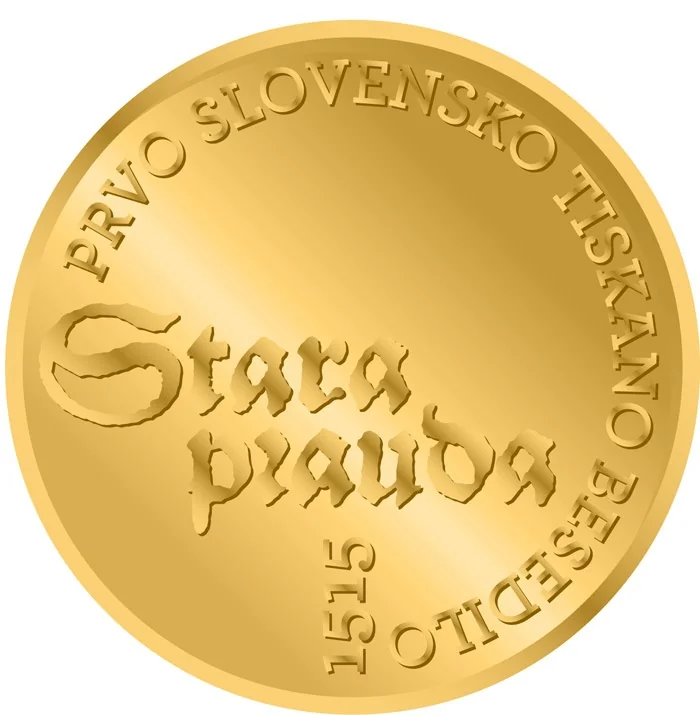
Reverse
Edge
Mints
| Name | Mark |
|---|---|
| Kremnica | — |
Mintings
| Year | Mint Mark | Mintage | Quality | Collection |
|---|---|---|---|---|
| 2015 | — | 1,500 | Proof |
Historical background
In 2015, Slovenia was a stable member of the Eurozone, having adopted the euro as its sole legal tender in 2007. Therefore, the year was not marked by a national "currency situation" in the traditional sense, as monetary policy was set by the European Central Bank (ECB) for the entire currency bloc. Slovenia's economic focus in 2015 was instead on post-crisis recovery and banking sector stability, following a deep recession and a state-funded bailout of its major banks in 2013 that narrowly avoided an international bailout.
The primary financial context for Slovenia in 2015 was its ongoing effort to exit the European Commission's Excessive Deficit Procedure (EDP), which it successfully achieved in June of that year. This marked a significant milestone, indicating that the government had brought its budget deficit below the EU's 3% of GDP threshold. The country's economic performance was improving, with GDP growth resuming and a gradual reduction in public debt, all underpinned by the stability provided by the common euro currency.
However, Slovenia remained sensitive to broader Eurozone monetary dynamics. The ECB's announcement and implementation of its expanded asset purchase programme (quantitative easing) in early 2015 was the dominant currency-related event, aimed at combating deflationary pressures across the Eurozone. For Slovenia, this meant continued low interest rates and a relatively weak euro, which supported its export-oriented economy. Thus, Slovenia's 2015 currency situation was one of passive stability within the Eurozone framework, allowing domestic policymakers to concentrate on fiscal consolidation and structural reforms without the volatility of an independent currency.
The primary financial context for Slovenia in 2015 was its ongoing effort to exit the European Commission's Excessive Deficit Procedure (EDP), which it successfully achieved in June of that year. This marked a significant milestone, indicating that the government had brought its budget deficit below the EU's 3% of GDP threshold. The country's economic performance was improving, with GDP growth resuming and a gradual reduction in public debt, all underpinned by the stability provided by the common euro currency.
However, Slovenia remained sensitive to broader Eurozone monetary dynamics. The ECB's announcement and implementation of its expanded asset purchase programme (quantitative easing) in early 2015 was the dominant currency-related event, aimed at combating deflationary pressures across the Eurozone. For Slovenia, this meant continued low interest rates and a relatively weak euro, which supported its export-oriented economy. Thus, Slovenia's 2015 currency situation was one of passive stability within the Eurozone framework, allowing domestic policymakers to concentrate on fiscal consolidation and structural reforms without the volatility of an independent currency.
✨ Legendary