

Obverse
Description:
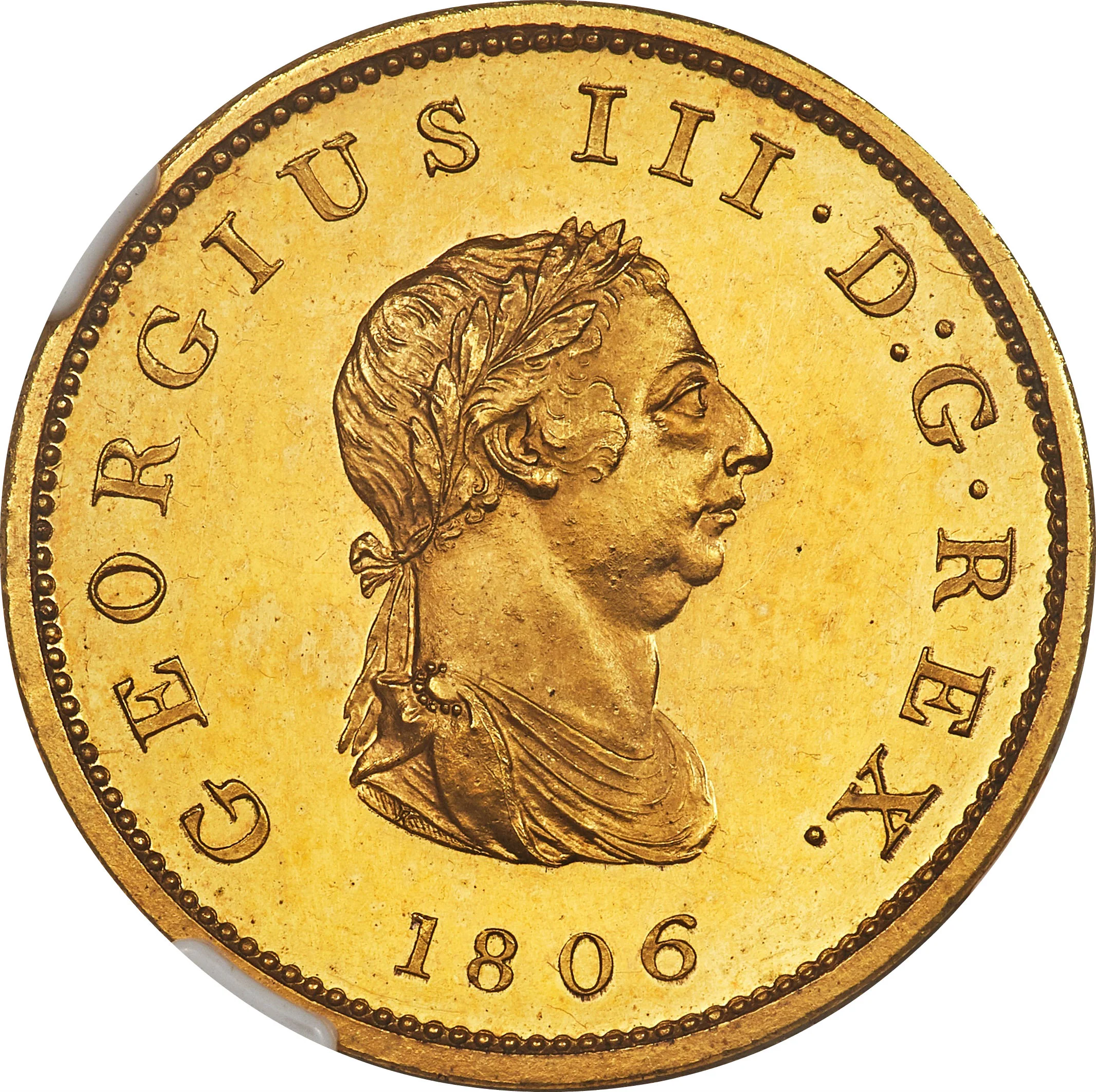
King George III bust right above date.
Inscription:
GEORGIUS III·D:G·REX.
1806
1806
Translation:
George III, by the Grace of God, King.
1806
1806
Script: Latin
Engraver: Conrad Heinrich Küchler
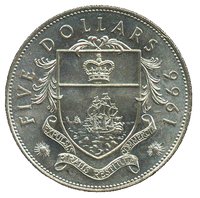
Reverse
Description:
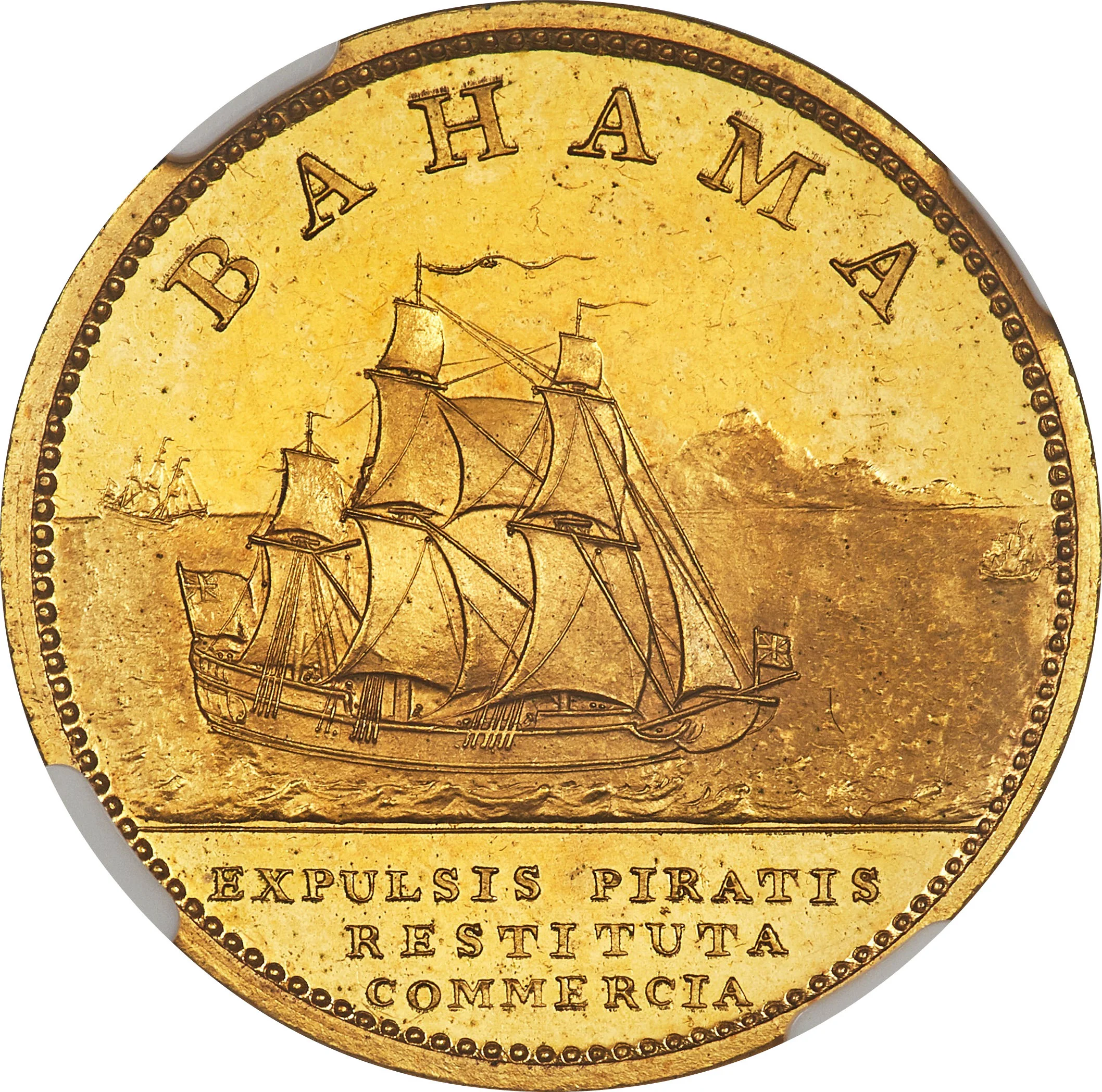
Ship sailing right, motto below.
Inscription:
BAHAMA
EXPULSIS PIRATIS
RESTITUTA
COMMERCIA
EXPULSIS PIRATIS
RESTITUTA
COMMERCIA
Translation:
Pirates Expelled,
Commerce Restored.
Commerce Restored.
Script: Latin
Language: Latin
Engraver: Conrad Heinrich Küchler
Edge
Engrailed
Categories
| Person> Monarch |
| Geography> Sea |
| Transportation> Watercraft |
| Symbol> Wreath |
Mints
| Name | Mark |
|---|---|
| Soho Mint | — |
Mintings
| Year | Mint Mark | Mintage | Quality | Collection |
|---|---|---|---|---|
| 1806 | — | — | Proof | |
| 1806 | — | — |
Historical background
In 1806, the currency situation in The Bahamas was complex and challenging, characterized by a severe shortage of official coinage and a reliance on a chaotic mix of foreign currencies. As a British colony, the official currency was sterling, but Spanish silver dollars (pieces of eight) and their fractional parts (bits) were the most common mediums of daily exchange due to the archipelago's extensive trade with Spanish America and the wider Caribbean. This created a dual-system where accounts were often kept in pounds, shillings, and pence, but physical transactions were conducted in dollars and bits, leading to constant confusion and calculation difficulties.
The core of the problem was a chronic lack of British specie (coin), which was constantly drained away to pay for imports from North America. To facilitate trade, the Bahamian government periodically set official exchange rates for the various foreign coins in circulation, but these proclamations often failed to keep pace with market fluctuations. Consequently, merchants and the public dealt in a bewildering array of coins including Portuguese joes, French louis d'or, and even old cut or defaced pieces, all valued by weight and perceived metal content rather than face value, making commerce fraught with risk and dispute.
This unstable monetary environment stifled economic development and was a persistent grievance for the colony's merchants and Assembly. While the situation would eventually lead to the formal adoption of the dollar as the official currency unit in the 1820s, in 1806 the system remained ad-hoc and problematic. The reliance on physical silver also made the economy vulnerable to sudden shortages, a reality keenly felt on the isolated Out Islands, where barter often remained a necessary supplement to the unreliable cash economy.
The core of the problem was a chronic lack of British specie (coin), which was constantly drained away to pay for imports from North America. To facilitate trade, the Bahamian government periodically set official exchange rates for the various foreign coins in circulation, but these proclamations often failed to keep pace with market fluctuations. Consequently, merchants and the public dealt in a bewildering array of coins including Portuguese joes, French louis d'or, and even old cut or defaced pieces, all valued by weight and perceived metal content rather than face value, making commerce fraught with risk and dispute.
This unstable monetary environment stifled economic development and was a persistent grievance for the colony's merchants and Assembly. While the situation would eventually lead to the formal adoption of the dollar as the official currency unit in the 1820s, in 1806 the system remained ad-hoc and problematic. The reliance on physical silver also made the economy vulnerable to sudden shortages, a reality keenly felt on the isolated Out Islands, where barter often remained a necessary supplement to the unreliable cash economy.
✨ Legendary