

2 Dollars – Cook Islands
Non-circulating coins
Commemoration: Silk Road
Context
Material
Weight: 15.55 g
Silver weight: 15.53 g
Shape: Rectangular
Composition: 99.9% Silver
Standard: Silver half ounce
Magnetic: No
Technique: Milled
References
Numista: #73354
Value
Exchange value: 2 NZD = $1.20
Bullion value: $43.94
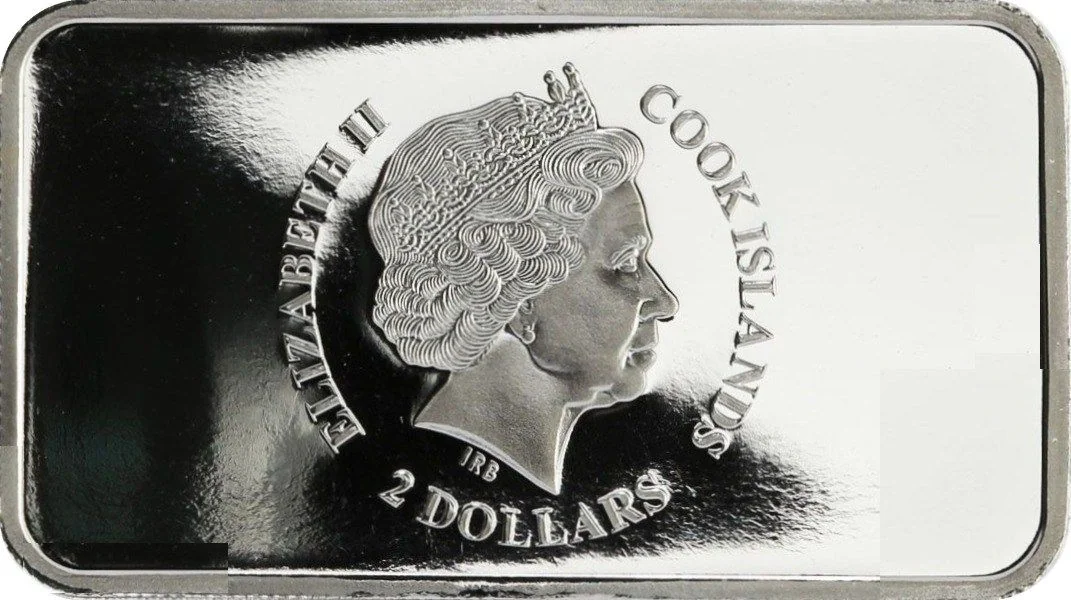
Obverse
Description:
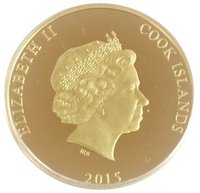
Queen Elizabeth II facing right, denomination below.
Inscription:
ELIZABETH II COOK ISLANDS
IRB
2 DOLLARS
IRB
2 DOLLARS
Translation:
ELIZABETH II COOK ISLANDS
IRB
2 DOLLARS
IRB
2 DOLLARS
Language: English
Engraver: Ian Rank-Broadley
Reverse
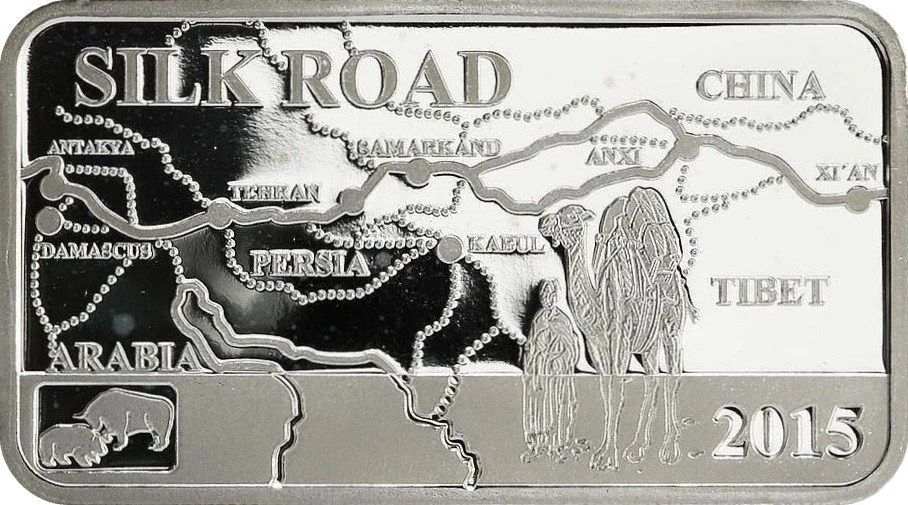
Inscription:
SILK ROAD
2015
2015
Edge
Reeded
Mintings
| Year | Mint Mark | Mintage | Quality | Collection |
|---|---|---|---|---|
| 2015 | — | — | Proof |
Historical background
In 2015, the currency situation in the Cook Islands was defined by its continued use of the New Zealand dollar (NZD) as official legal tender, a relationship formalised in the 1980s. This arrangement provided significant stability, as it outsourced monetary policy to the Reserve Bank of New Zealand, ensuring low inflation and credible currency management for the small, tourism-dependent nation. However, this also meant the Cook Islands had no independent monetary tools to directly respond to local economic conditions, leaving its economy highly sensitive to New Zealand's policy decisions and exchange rate fluctuations.
A distinctive feature of the local currency landscape was the circulation of Cook Islands commemorative coins and its unique banknotes. While NZD coins and polymer notes were used for daily transactions, the government issued its own decorative dollar coins and, notably, continued to circulate its own colourful polymer banknotes (featuring $3, $10, and $20 denominations). These were not a separate currency but were legal tender only within the Cook Islands at a 1:1 parity with the NZD, functioning largely as a numismatic novelty for collectors and tourists, with limited use in everyday commerce.
The year saw no major currency crisis, but underlying challenges persisted. The economy remained vulnerable to external shocks, and the reliance on the NZD sometimes created issues with cash liquidity and the cost of importing physical currency. Furthermore, discussions around financial inclusion and the growth of digital payment methods were beginning to emerge, though they had not yet significantly disrupted the established cash-based system. Thus, 2015 represented a period of monetary stability under the NZD umbrella, albeit with the inherent constraints and dependencies that such an arrangement entails for a small island nation.
A distinctive feature of the local currency landscape was the circulation of Cook Islands commemorative coins and its unique banknotes. While NZD coins and polymer notes were used for daily transactions, the government issued its own decorative dollar coins and, notably, continued to circulate its own colourful polymer banknotes (featuring $3, $10, and $20 denominations). These were not a separate currency but were legal tender only within the Cook Islands at a 1:1 parity with the NZD, functioning largely as a numismatic novelty for collectors and tourists, with limited use in everyday commerce.
The year saw no major currency crisis, but underlying challenges persisted. The economy remained vulnerable to external shocks, and the reliance on the NZD sometimes created issues with cash liquidity and the cost of importing physical currency. Furthermore, discussions around financial inclusion and the growth of digital payment methods were beginning to emerge, though they had not yet significantly disrupted the established cash-based system. Thus, 2015 represented a period of monetary stability under the NZD umbrella, albeit with the inherent constraints and dependencies that such an arrangement entails for a small island nation.
✨ Legendary