

10 Kwacha (Save the Children Fund) – Zambia
Non-circulating coins
Commemoration: 70th Anniversary, Save the Children Fund
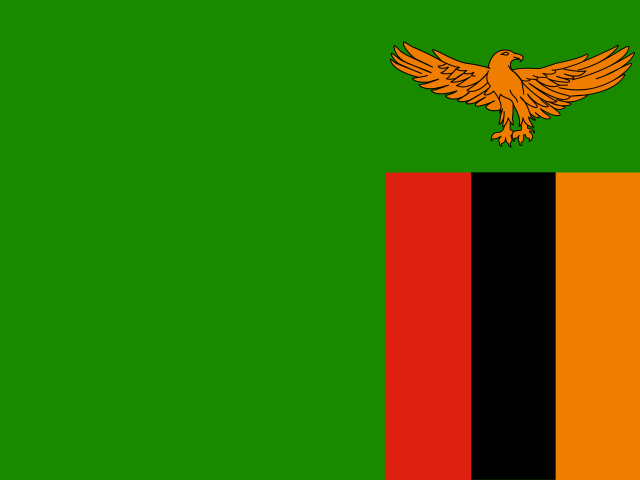
Zambia
Context
Material
References
KM: #Click to copy to clipboard27
Numista: #73048
Value
Exchange value: 10 ZMK
Bullion value: $73.18
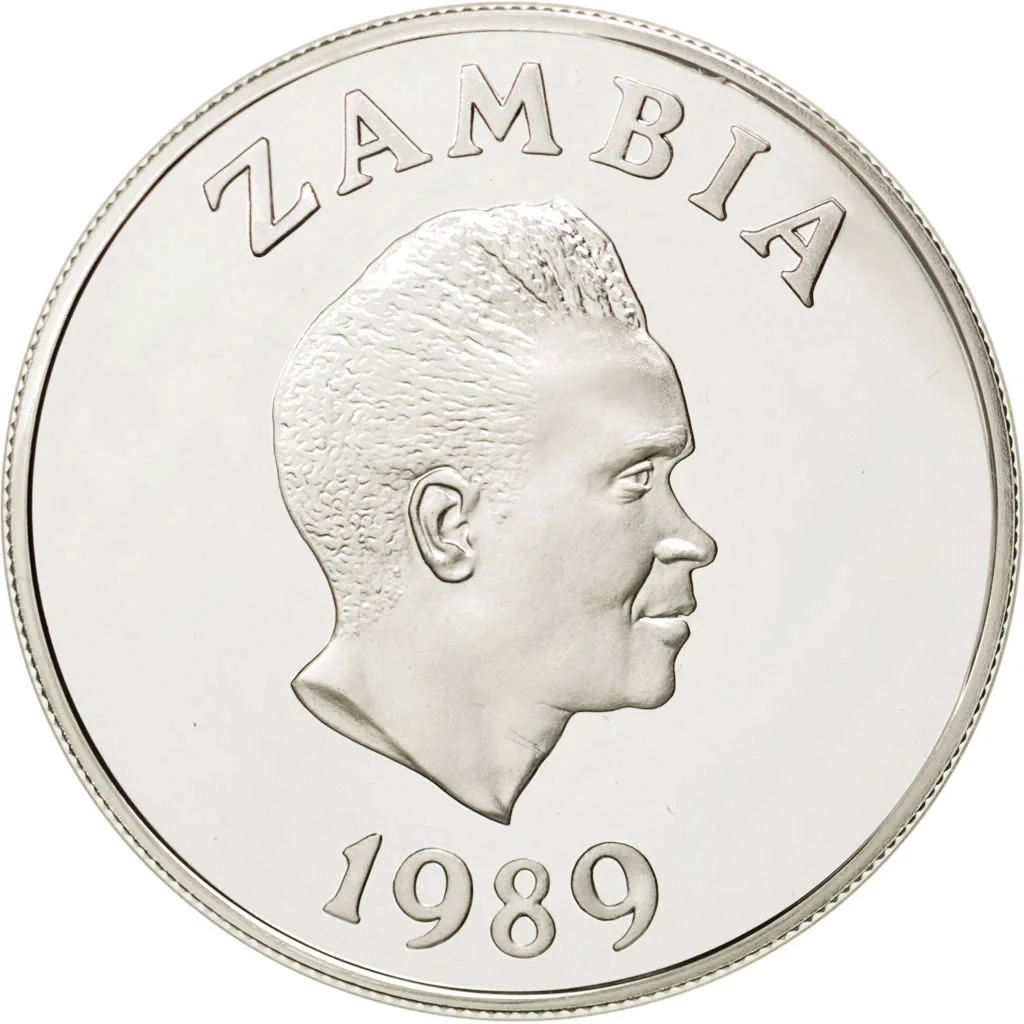
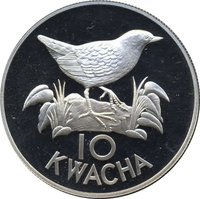
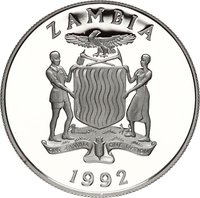
Obverse
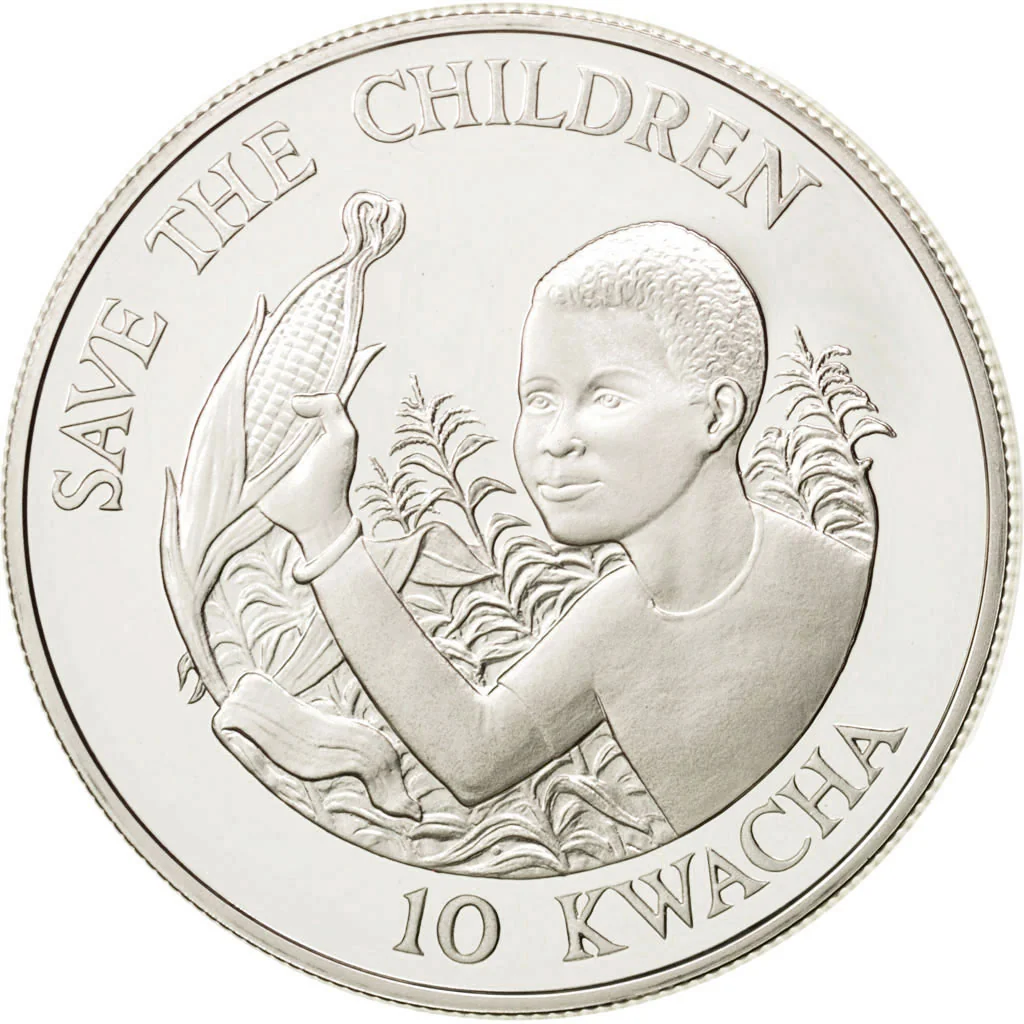
Reverse
Edge
Reeded
Mints
| Name | Mark |
|---|---|
| Royal Mint | — |
Mintings
| Year | Mint Mark | Mintage | Quality | Collection |
|---|---|---|---|---|
| 1989 | — | 20,000 | Proof |
Historical background
In 1989, Zambia was in the midst of a protracted economic crisis, with its currency, the Zambian kwacha (ZMK), under severe strain. The nation's heavy dependence on copper exports, whose global prices had collapsed in the mid-1970s, left it with crippling foreign debt and chronic balance of payments deficits. This led to persistent shortages of foreign exchange, creating a thriving black market where the kwacha traded at a fraction of its official, overvalued rate set by the government of President Kenneth Kaunda. This overvaluation made Zambian exports uncompetitive and discouraged foreign investment, while the government maintained a complex system of exchange controls to ration scarce hard currency.
The economic policies of the time, under the framework of the International Monetary Fund (IMF) and World Bank structural adjustment programmes (SAPs) adopted in the mid-1980s, aimed to rectify this. These programmes demanded the liberalization of the exchange rate, among other austerity measures. However, implementation was halting and inconsistent. By 1989, pressure was mounting for a significant devaluation of the official kwacha to align it with market realities, but the government resisted full liberalization due to fears of triggering hyperinflation and social unrest, as devaluation would drastically increase the cost of essential imported goods like medicine and machinery.
Consequently, the currency situation in 1989 was characterized by a dysfunctional duality: a rigid official exchange rate that failed to reflect economic realities, and a robust parallel market that dictated actual transaction values for most citizens and businesses. This environment fostered corruption, as access to official foreign currency became a prized privilege, and hampered genuine economic recovery. The stalemate set the stage for the more radical economic reforms, including a substantial devaluation and move toward a unified, market-determined exchange rate, that would follow in the early 1990s after the transition to multi-party democracy.
The economic policies of the time, under the framework of the International Monetary Fund (IMF) and World Bank structural adjustment programmes (SAPs) adopted in the mid-1980s, aimed to rectify this. These programmes demanded the liberalization of the exchange rate, among other austerity measures. However, implementation was halting and inconsistent. By 1989, pressure was mounting for a significant devaluation of the official kwacha to align it with market realities, but the government resisted full liberalization due to fears of triggering hyperinflation and social unrest, as devaluation would drastically increase the cost of essential imported goods like medicine and machinery.
Consequently, the currency situation in 1989 was characterized by a dysfunctional duality: a rigid official exchange rate that failed to reflect economic realities, and a robust parallel market that dictated actual transaction values for most citizens and businesses. This environment fostered corruption, as access to official foreign currency became a prized privilege, and hampered genuine economic recovery. The stalemate set the stage for the more radical economic reforms, including a substantial devaluation and move toward a unified, market-determined exchange rate, that would follow in the early 1990s after the transition to multi-party democracy.
✨ Legendary