

50 halierov – Slovakia
Add to wishlist
Slovakia
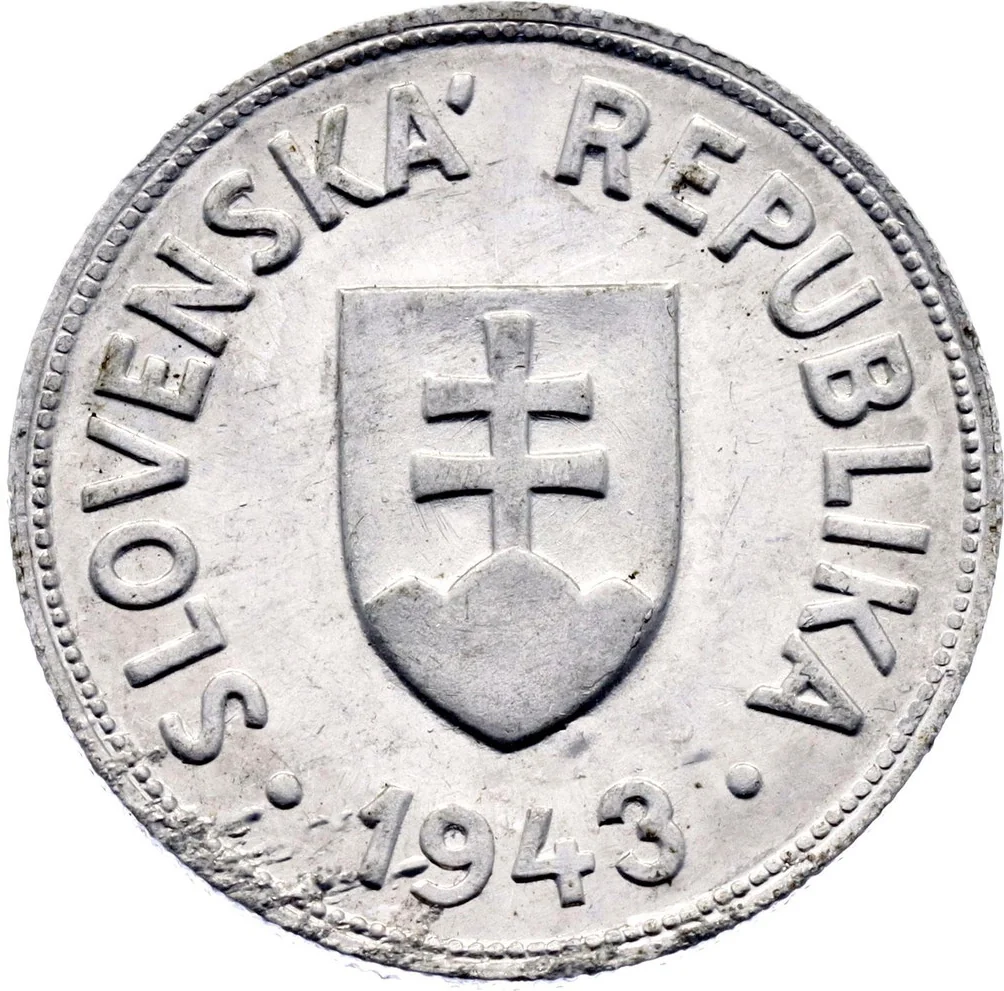
Obverse
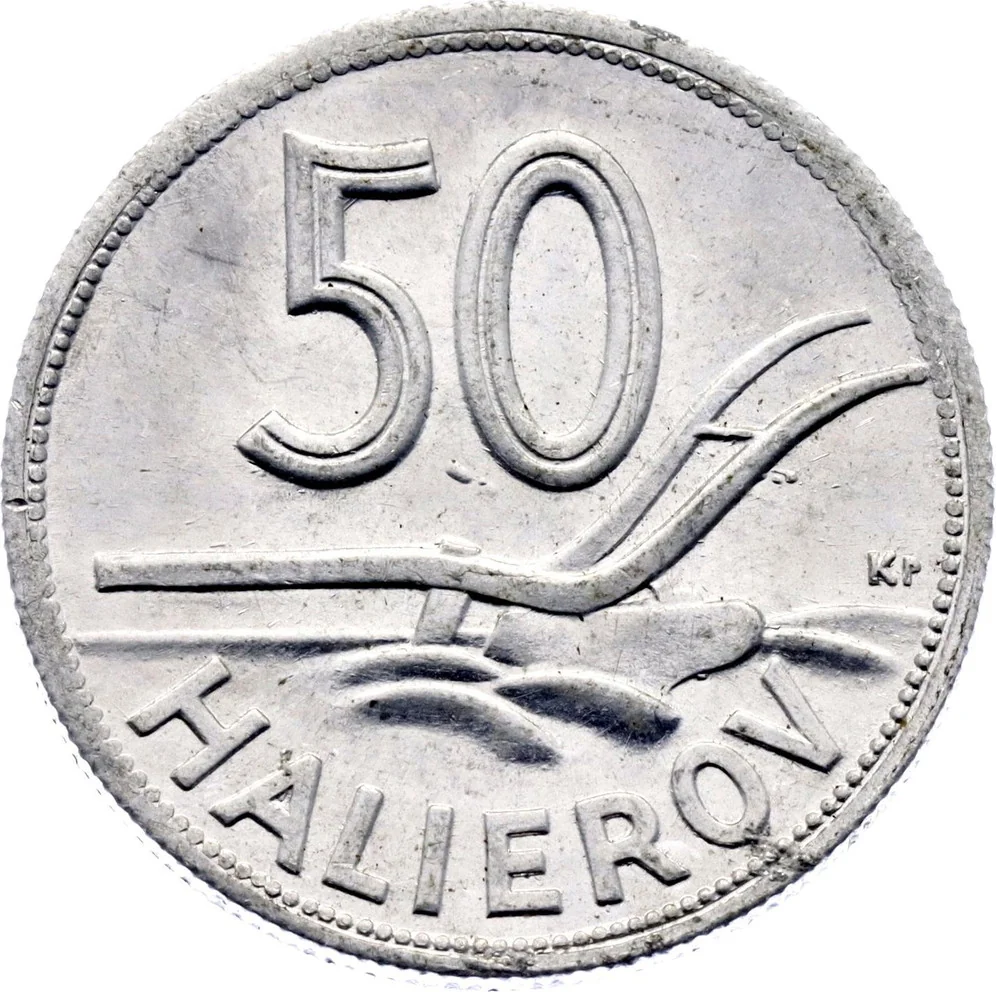
Reverse
Description:
Turns snow into clear pavement.
Inscription:
50
K
HALIEROV
K
HALIEROV
Translation:
Fifty
Haliers
Haliers
Script: Latin
Language: Slovak
Engraver: Gejza Angyal
Edge
Reeded
Categories
| Agriculture |
| Symbols> Coat of Arms |
| Symbol> Cross |
Mintings
| Year | Mint Mark | Mintage | Quality | Collection |
|---|---|---|---|---|
| 1943 | — | 4,400,000 | ||
| 1944 | — | 2,621,000 |
Historical background
In 1943, Slovakia existed as the nominally independent Slovak Republic, a client state of Nazi Germany. Its currency was the Slovak koruna (Sk), which had been established in 1939 following the dissolution of Czechoslovakia. While the Slovak National Bank held the right of issue, the currency's fate was inextricably tied to the German Reichsmark through a fixed exchange rate and Slovakia's integration into the German economic sphere. This linkage meant Slovak monetary policy was subordinated to German wartime needs, primarily focused on financing arms production and supplying the German war machine.
The domestic economic situation was characterized by growing inflation and severe shortages. Wartime demands, resource extraction for Germany, and the disruption of normal trade networks led to a scarcity of consumer goods. While official prices were controlled, a thriving black market emerged where essentials commanded prices far beyond their nominal value. This inflationary pressure was exacerbated by the government's own deficit spending to support its military and the state apparatus, leading to an increase in the money supply without corresponding economic output.
Furthermore, the currency system was deeply compromised by the regime's actions. A significant portion of the state's financial resources was directed towards the deportation and confiscation of property from the Jewish population, with looted assets being used to prop up state finances. By 1943, the war's turning point against the Axis powers began to undermine confidence in the currency's future, though the full consequences of this would only become apparent in the final years of the war as Slovakia faced economic collapse and eventual reintegration into a restored Czechoslovakia.
The domestic economic situation was characterized by growing inflation and severe shortages. Wartime demands, resource extraction for Germany, and the disruption of normal trade networks led to a scarcity of consumer goods. While official prices were controlled, a thriving black market emerged where essentials commanded prices far beyond their nominal value. This inflationary pressure was exacerbated by the government's own deficit spending to support its military and the state apparatus, leading to an increase in the money supply without corresponding economic output.
Furthermore, the currency system was deeply compromised by the regime's actions. A significant portion of the state's financial resources was directed towards the deportation and confiscation of property from the Jewish population, with looted assets being used to prop up state finances. By 1943, the war's turning point against the Axis powers began to undermine confidence in the currency's future, though the full consequences of this would only become apparent in the final years of the war as Slovakia faced economic collapse and eventual reintegration into a restored Czechoslovakia.
🌱 Common