



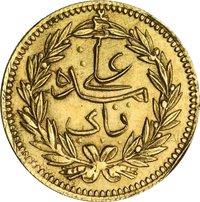
Obverse
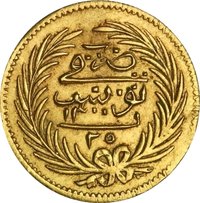
Reverse
Edge
Mintings
| Year | Mint Mark | Mintage | Quality | Collection |
|---|---|---|---|---|
| 1886 | — | — |
Historical background
In 1886, Tunisia's currency situation was a direct reflection of its political status as a French protectorate, established just five years earlier in 1881. The country operated under a complex and unstable bimetallic system, where both gold (the beylical gold bendri) and silver (the piastre) were legal tender. However, the fixed exchange rate between them, set by the Beylical decree of 1856, had become divorced from global market values, leading to severe economic distortions. Silver had depreciated internationally, causing gold coins to be hoarded or exported, while a flood of overvalued and often debased foreign silver coins (especially Spanish and Mexican piastres) circulated for daily transactions, creating a chaotic and unreliable monetary environment.
This monetary confusion was a major impediment to French colonial economic objectives. European settlers and merchants conducting trade with France faced significant exchange risks and losses. The instability also hampered tax collection and state finances, as the government received revenues in depreciated silver but had obligations, including a large foreign debt, often denominated in gold-backed francs. Consequently, the French Residency viewed monetary reform as an urgent priority to solidify economic control, facilitate the integration of Tunisia into the Franc Zone, and ensure a stable climate for French investment and commercial exploitation.
The year 1886 itself was a pivotal juncture, marking the beginning of the end for the old system. Under the guidance of French authorities, plans were being finalized for a profound reform. This culminated in 1891 with the official adoption of the Tunisian franc, pegged at par with the French franc and placing Tunisia firmly on a gold standard. Therefore, the currency situation in 1886 is best understood as the final, disordered chapter of the pre-colonial system, actively being dismantled to serve the protectorate's new economic order.
This monetary confusion was a major impediment to French colonial economic objectives. European settlers and merchants conducting trade with France faced significant exchange risks and losses. The instability also hampered tax collection and state finances, as the government received revenues in depreciated silver but had obligations, including a large foreign debt, often denominated in gold-backed francs. Consequently, the French Residency viewed monetary reform as an urgent priority to solidify economic control, facilitate the integration of Tunisia into the Franc Zone, and ensure a stable climate for French investment and commercial exploitation.
The year 1886 itself was a pivotal juncture, marking the beginning of the end for the old system. Under the guidance of French authorities, plans were being finalized for a profound reform. This culminated in 1891 with the official adoption of the Tunisian franc, pegged at par with the French franc and placing Tunisia firmly on a gold standard. Therefore, the currency situation in 1886 is best understood as the final, disordered chapter of the pre-colonial system, actively being dismantled to serve the protectorate's new economic order.

✨ Legendary