

2 bahts – Thailand
Add to wishlist
Circulating commemorative coins
Commemoration: International Youth Year
Thailand
Context
Year: 1985
Thai Year:: 2528
Issuer: Thailand
Ruler: Bhumibol Adulyadej
Currency:
(since 1897)
Total mintage: 10,000,000
Material
References
Y: #
Numista: #7235
Value
Exchange value: 2 THB
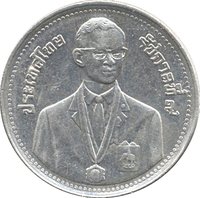
Obverse
Description:
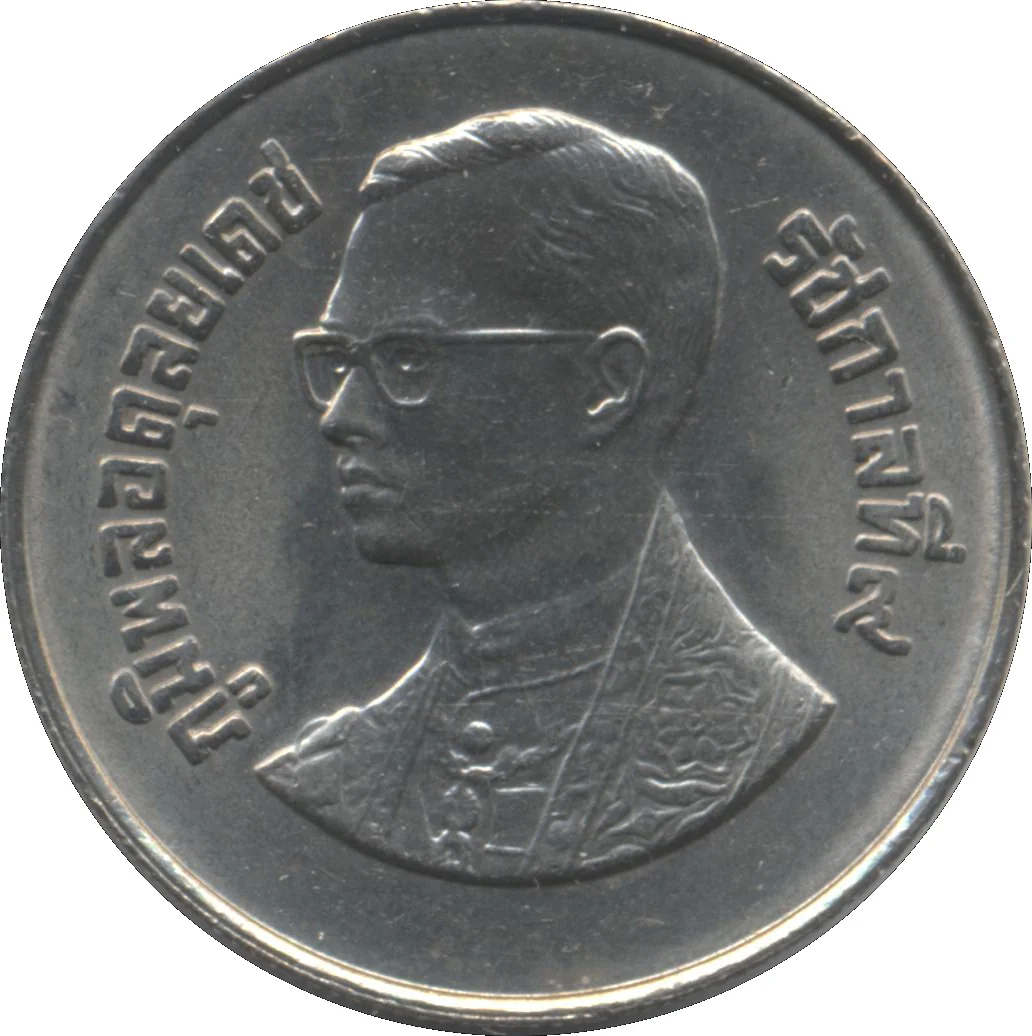
Bust of King Bhumibol Adulyadej facing left.
Inscription:
ภูมิพลอดุลยเดช รัชกาลที่ ๙
Translation:
Bhumibol Adulyadej, the Ninth Reign.
Script: Thai
Language: Thai
Engraver: Wuthichai Saengngoen
Reverse
Description:
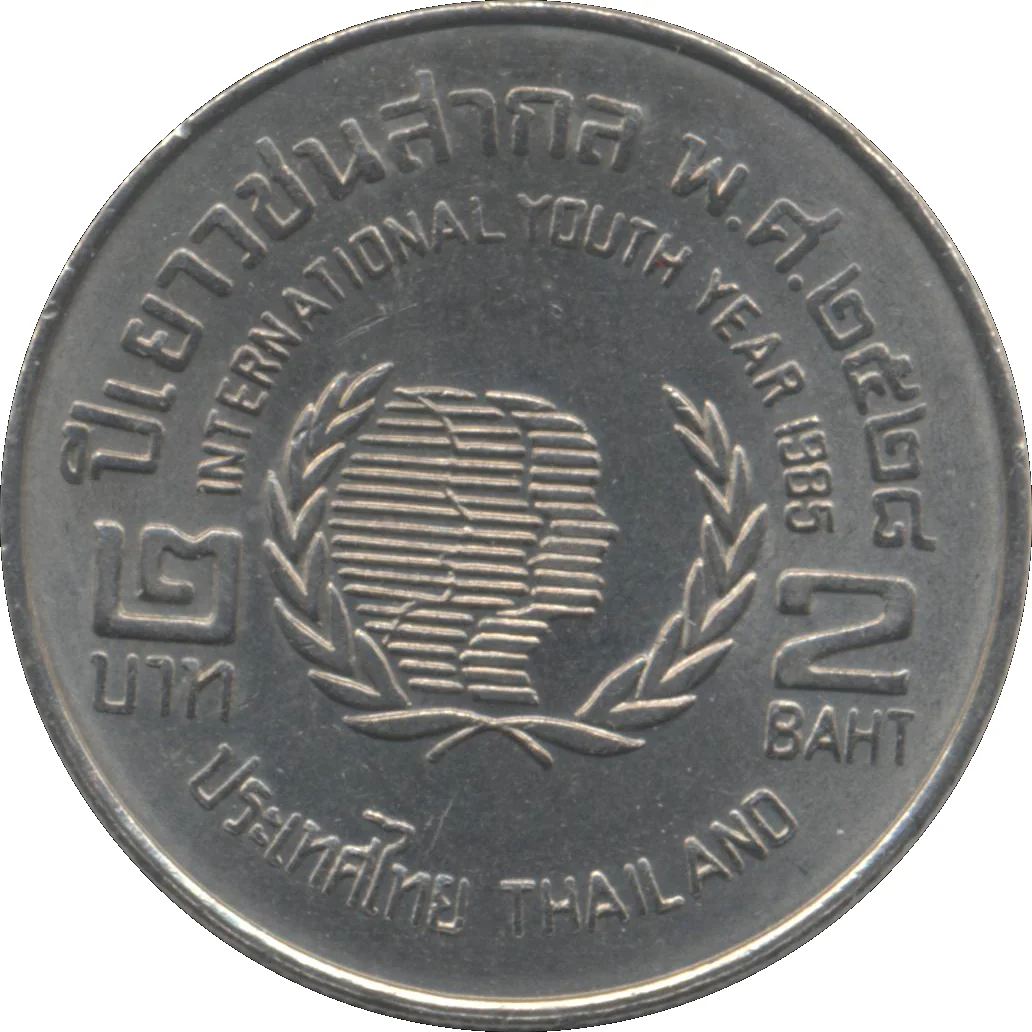
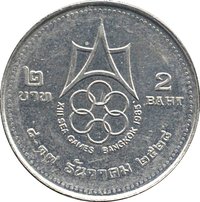
International Youth Year emblem: three youthful profiles in motion within a UN olive wreath, symbolizing the dynamism and themes of Participation, Development, and Peace.
Inscription:
ปีเยาวชนสากล พ.ศ.๒๕๒๘
INTERNATIONAL YOUTH YEAR 1985
๒ 2
บาท BAHT
ประเทศไทย THAILAND
INTERNATIONAL YOUTH YEAR 1985
๒ 2
บาท BAHT
ประเทศไทย THAILAND
Translation:
INTERNATIONAL YOUTH YEAR 1985
2
BAHT
THAILAND
2
BAHT
THAILAND
Language: Thai
Edge
Reeded.
Mintings
| Year | Mint Mark | Mintage | Quality | Collection |
|---|---|---|---|---|
| 1985 | — | 10,000,000 | ||
| 1985 | — | — | Proof |
Historical background
In 1985, Thailand’s currency situation was defined by its managed peg to the US dollar, a system maintained by the Bank of Thailand. This arrangement provided stability for trade and investment, anchoring the Thai baht (THB) at a fixed rate of approximately 23 baht to one US dollar. This policy was a cornerstone of the country's export-oriented growth strategy, fostering a favorable environment for foreign investment during a period of rapid industrialization and economic expansion, often referred to as the prelude to the "Asian Tiger" boom.
However, this fixed exchange rate regime existed within a complex global financial context. The Plaza Accord of September 1985, a major agreement among the G5 nations to depreciate the US dollar against the Japanese yen and German Deutsche Mark, created significant indirect pressures. As the dollar weakened, the baht—pegged to it—also depreciated against other major currencies. This provided a temporary boost to Thailand's export competitiveness against Japanese and European goods, but also increased the cost of servicing dollar-denominated debt and importing crucial capital goods.
Consequently, while the immediate currency situation in 1985 appeared stable on the surface, underlying vulnerabilities were being seeded. The reliance on the dollar peg, combined with large-scale capital inflows and a growing current account deficit, began to create economic imbalances. These conditions, largely unaddressed in 1985, would accumulate over the next decade, ultimately contributing to the severe financial pressures that culminated in the 1997 Asian Financial Crisis, which forced the abandonment of the fixed peg.
However, this fixed exchange rate regime existed within a complex global financial context. The Plaza Accord of September 1985, a major agreement among the G5 nations to depreciate the US dollar against the Japanese yen and German Deutsche Mark, created significant indirect pressures. As the dollar weakened, the baht—pegged to it—also depreciated against other major currencies. This provided a temporary boost to Thailand's export competitiveness against Japanese and European goods, but also increased the cost of servicing dollar-denominated debt and importing crucial capital goods.
Consequently, while the immediate currency situation in 1985 appeared stable on the surface, underlying vulnerabilities were being seeded. The reliance on the dollar peg, combined with large-scale capital inflows and a growing current account deficit, began to create economic imbalances. These conditions, largely unaddressed in 1985, would accumulate over the next decade, ultimately contributing to the severe financial pressures that culminated in the 1997 Asian Financial Crisis, which forced the abandonment of the fixed peg.
🌱 Common