

5 pounds – Egypt
Add to wishlist
Non-circulating coins
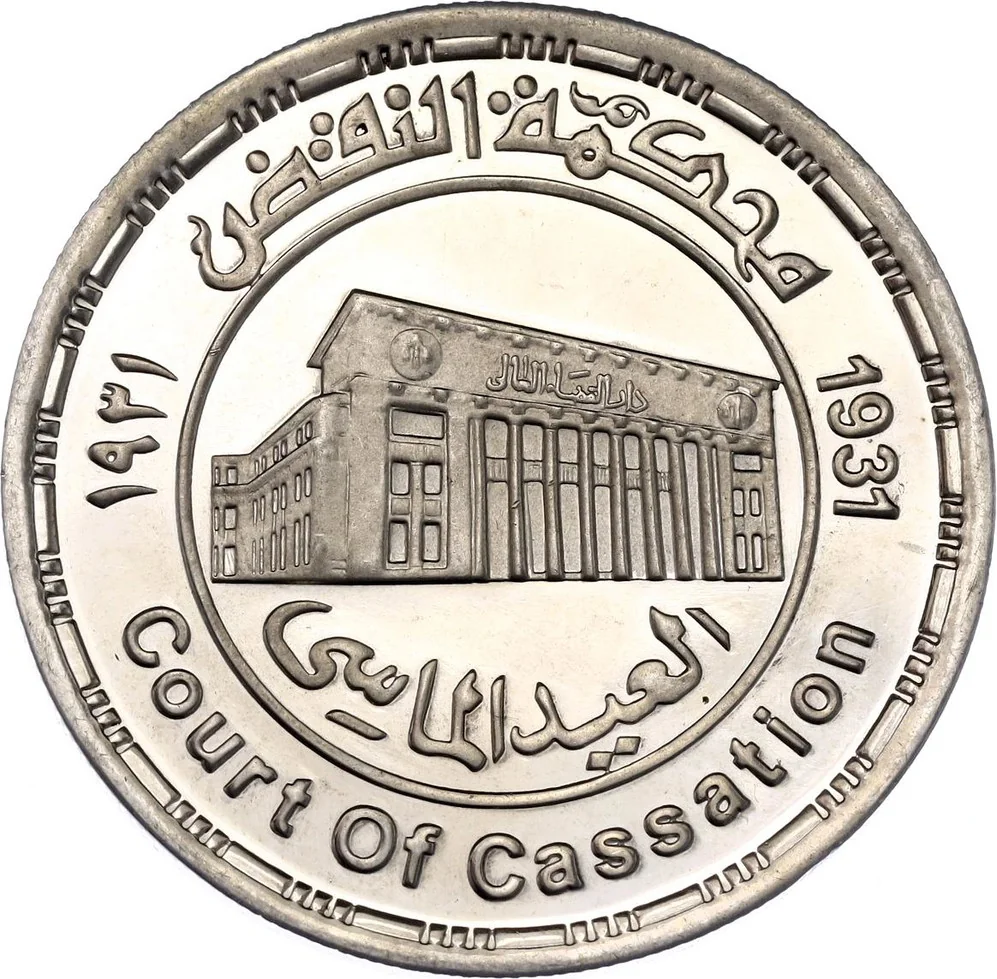
Commemoration: Court of Cassation
Egypt
Context
Year: 2007
Islamic (Hijri) Year:: 1428
Issuer: Egypt
Period:
(since 1971)
Currency:
(since 1916)
Total mintage: 450
Material

References
KM: #
Numista: #71924
Value
Exchange value: 5 EGP
Bullion value: $31.19
Obverse
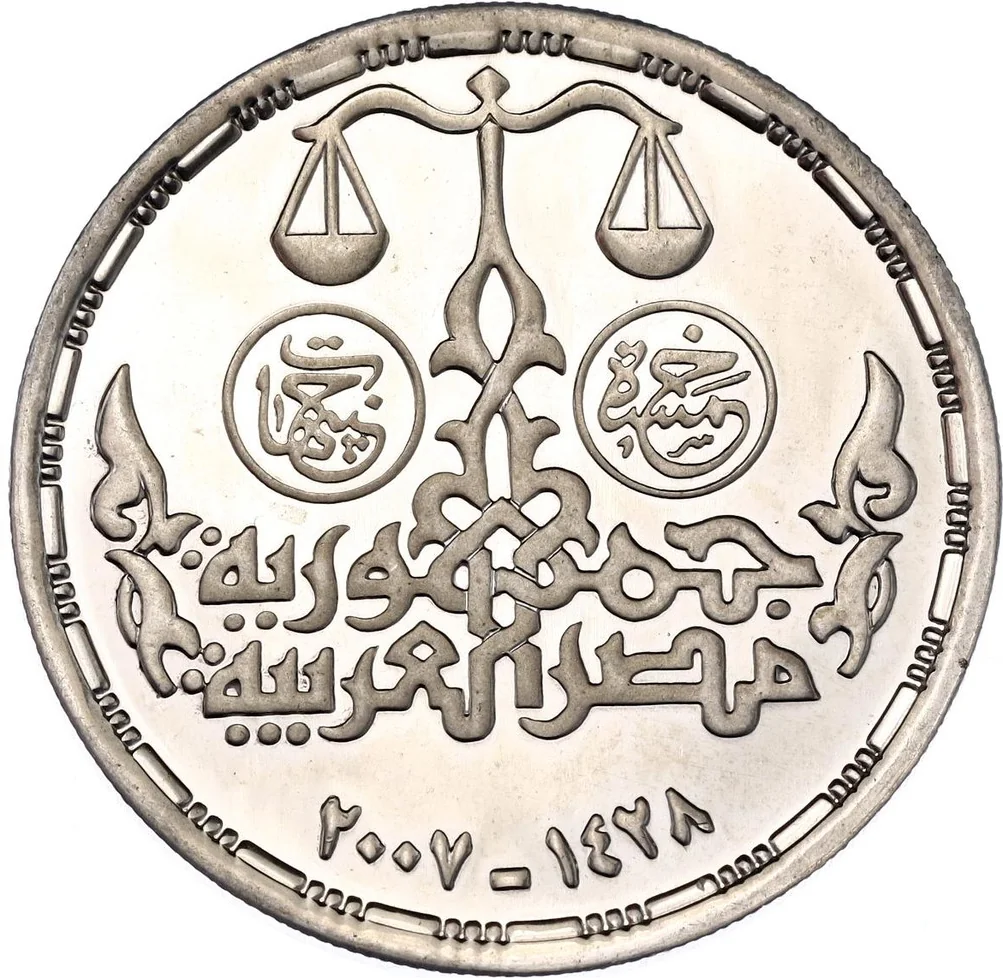
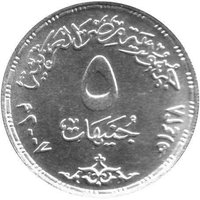
Description:
Scaled ornament
Inscription:
خمسة جنيهات
جمهورية
مصر العربية
١٤٢٨-٢٠٠٧
جمهورية
مصر العربية
١٤٢٨-٢٠٠٧
Translation:
Five Pounds
Arab Republic
of Egypt
1428-2007
Arab Republic
of Egypt
1428-2007
Script: Arabic (kufic)
Language: Arabic
Reverse
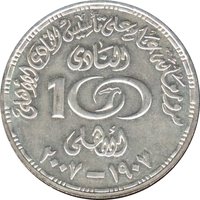
Description:
Central Courthouse
Edge
Reeded
Categories
| Building> Governmental building |
Mints
| Name | Mark |
|---|---|
| Egyptian Mint Authority | — |
Mintings
| Year | Mint Mark | Mintage | Quality | Collection |
|---|---|---|---|---|
| 2007 | — | 450 |
Historical background
In 2007, Egypt's currency situation was characterized by a period of managed stability and mounting underlying pressures. The Egyptian pound (EGP) was under a de facto peg to the US dollar, maintained by the Central Bank of Egypt (CBE) within a narrow band. This policy, supported by strong inflows of foreign currency from tourism, Suez Canal revenues, and rising remittances, provided a facade of calm. However, this stability was increasingly artificial, as the CBE was actively defending the pound's value by spending its foreign reserves to meet high domestic demand for dollars.
Beneath the surface, significant economic vulnerabilities were eroding this position. A persistent and widening current account deficit, driven by a growing import bill for food and fuel, was draining foreign exchange. Furthermore, inflation was becoming a serious concern, reaching double digits by mid-2007, partly fueled by global commodity price shocks. This created a policy dilemma: maintaining the pound's strength helped curb imported inflation but made Egyptian exports less competitive and encouraged more imports, worsening the trade imbalance. The fixed exchange rate was increasingly misaligned with economic fundamentals.
Consequently, 2007 served as the final year of apparent stability before a period of significant adjustment. The global financial crisis of 2008 would later exacerbate these pressures, leading to a gradual but sustained depreciation of the pound in the following years. The situation in 2007 thus represented the end of an unsustainable peg, highlighting the accumulated imbalances that would eventually force Egypt toward a more flexible exchange rate regime in the face of mounting inflationary and balance-of-payments pressures.
Beneath the surface, significant economic vulnerabilities were eroding this position. A persistent and widening current account deficit, driven by a growing import bill for food and fuel, was draining foreign exchange. Furthermore, inflation was becoming a serious concern, reaching double digits by mid-2007, partly fueled by global commodity price shocks. This created a policy dilemma: maintaining the pound's strength helped curb imported inflation but made Egyptian exports less competitive and encouraged more imports, worsening the trade imbalance. The fixed exchange rate was increasingly misaligned with economic fundamentals.
Consequently, 2007 served as the final year of apparent stability before a period of significant adjustment. The global financial crisis of 2008 would later exacerbate these pressures, leading to a gradual but sustained depreciation of the pound in the following years. The situation in 2007 thus represented the end of an unsustainable peg, highlighting the accumulated imbalances that would eventually force Egypt toward a more flexible exchange rate regime in the face of mounting inflationary and balance-of-payments pressures.
✨ Legendary