

½ Penny – United Kingdom
United Kingdom
Context
Years: 1925–1927
Issuer: United Kingdom 
Ruler: George V
Currency:
(1158—1970)
Demonetization: 1 August 1969
Total mintage: 34,518,000
Material
References
KM: #Click to copy to clipboard824
Numista: #7173
Obverse
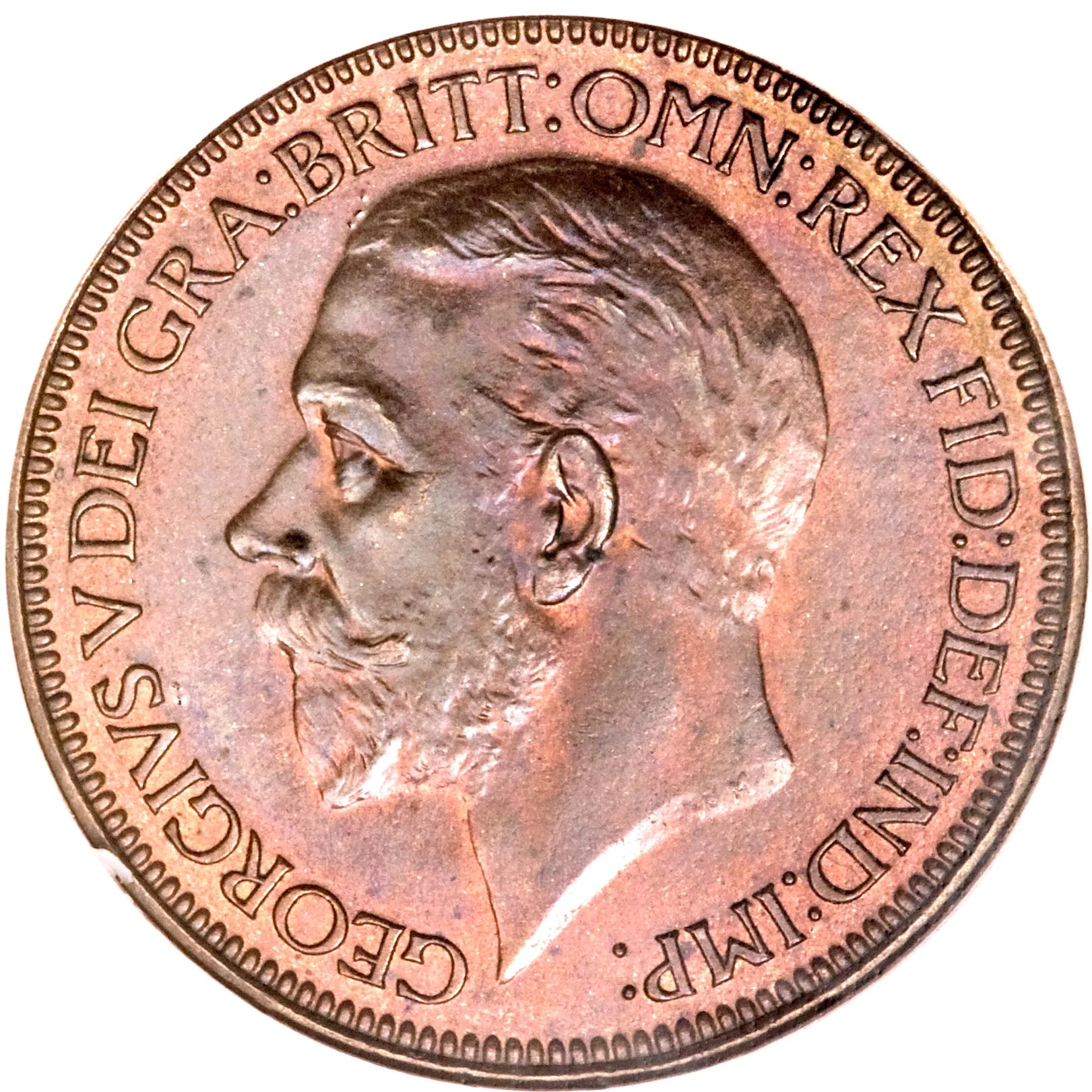
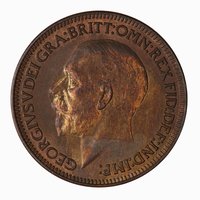
Description:
King George V left-facing portrait, legend encircling.
Inscription:
GEORGIVS V DEI GRA:BRITT:OMN:REX FID:DEF:IND:IMP:
BM
BM
Translation:
George V by the Grace of God King of all the Britains Defender of the Faith Emperor of India.
Script: Latin
Language: Latin
Engraver: Edgar Bertram MacKennal
Reverse
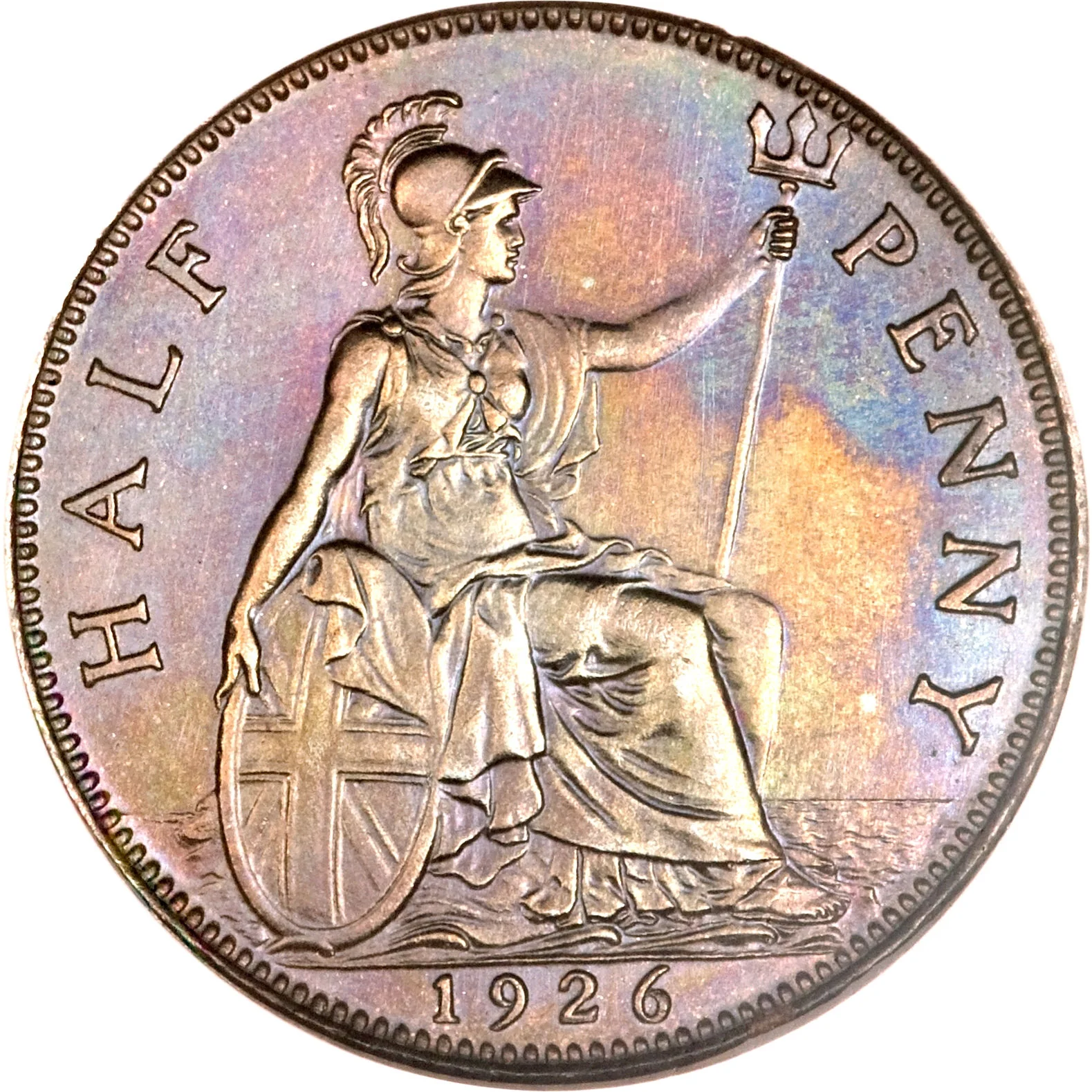
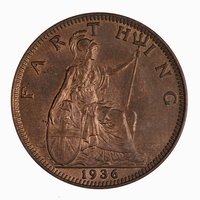
Description:
Britannia seated right, holding trident and shield with Union flag, sea background, denomination around, date below.
Inscription:
HALF PENNY
1926
1926
Script: Latin
Engraver: Leonard Charles Wyon
Edge
Plain
Mints
| Name | Mark |
|---|---|
| Royal Mint (Tower Hill) | — |
Mintings
| Year | Mint Mark | Mintage | Quality | Collection |
|---|---|---|---|---|
| 1925 | — | 12,216,100 | ||
| 1926 | — | 6,712,300 | ||
| 1926 | — | — | Proof | |
| 1927 | — | 15,589,600 | ||
| 1927 | — | — | Proof |
Historical background
In 1925, the United Kingdom faced a pivotal economic decision: whether to return to the Gold Standard at the pre-war parity of $4.86 to the pound sterling. This policy, championed by Chancellor of the Exchequer Winston Churchill and backed by the Bank of England, aimed to restore the City of London's financial prestige and signal a return to the perceived stability of the pre-1914 global order. The government believed that a strong pound, pegged to gold, would bolster Britain's international credit and reassert its dominance in world finance. However, this decision was taken against a backdrop of a fundamentally changed post-war economy, where British industry had lost competitiveness and was burdened by higher costs.
The restoration at the pre-war parity proved to be a profound error. It effectively overvalued the pound by an estimated 10-15%, making British exports like coal, steel, and textiles more expensive on the world market. This crippled key industries, particularly in the already struggling industrial heartlands, leading to falling profits, wage cuts, and heightened industrial unrest, most notably the 1926 General Strike. Domestically, the policy forced the government and the Bank of England to maintain high interest rates to defend the gold peg, which stifled investment and prolonged deflation and mass unemployment throughout the late 1920s.
Consequently, the 1925 return to gold is widely regarded by economic historians as a deflationary mistake that sacrificed domestic industrial prosperity for international financial orthodoxy. It locked the UK economy into a cycle of austerity and stagnation, exacerbating the difficulties of the interwar period. The policy's failure ultimately contributed to the UK's forced abandonment of the Gold Standard in 1931 during the Great Depression, a move that, by contrast, allowed for a necessary devaluation and a period of economic recovery.
The restoration at the pre-war parity proved to be a profound error. It effectively overvalued the pound by an estimated 10-15%, making British exports like coal, steel, and textiles more expensive on the world market. This crippled key industries, particularly in the already struggling industrial heartlands, leading to falling profits, wage cuts, and heightened industrial unrest, most notably the 1926 General Strike. Domestically, the policy forced the government and the Bank of England to maintain high interest rates to defend the gold peg, which stifled investment and prolonged deflation and mass unemployment throughout the late 1920s.
Consequently, the 1925 return to gold is widely regarded by economic historians as a deflationary mistake that sacrificed domestic industrial prosperity for international financial orthodoxy. It locked the UK economy into a cycle of austerity and stagnation, exacerbating the difficulties of the interwar period. The policy's failure ultimately contributed to the UK's forced abandonment of the Gold Standard in 1931 during the Great Depression, a move that, by contrast, allowed for a necessary devaluation and a period of economic recovery.
🌱 Very Common