

200 francs (Dian Fossey) – Rwanda
Add to wishlist
Non-circulating coins
Commemoration: 75th Anniversary of the birth of Dian Fossey
Rwanda
Context
Material
References
KM: #
Numista: #71627
Value
Exchange value: 200 RWF
Bullion value: $154.10
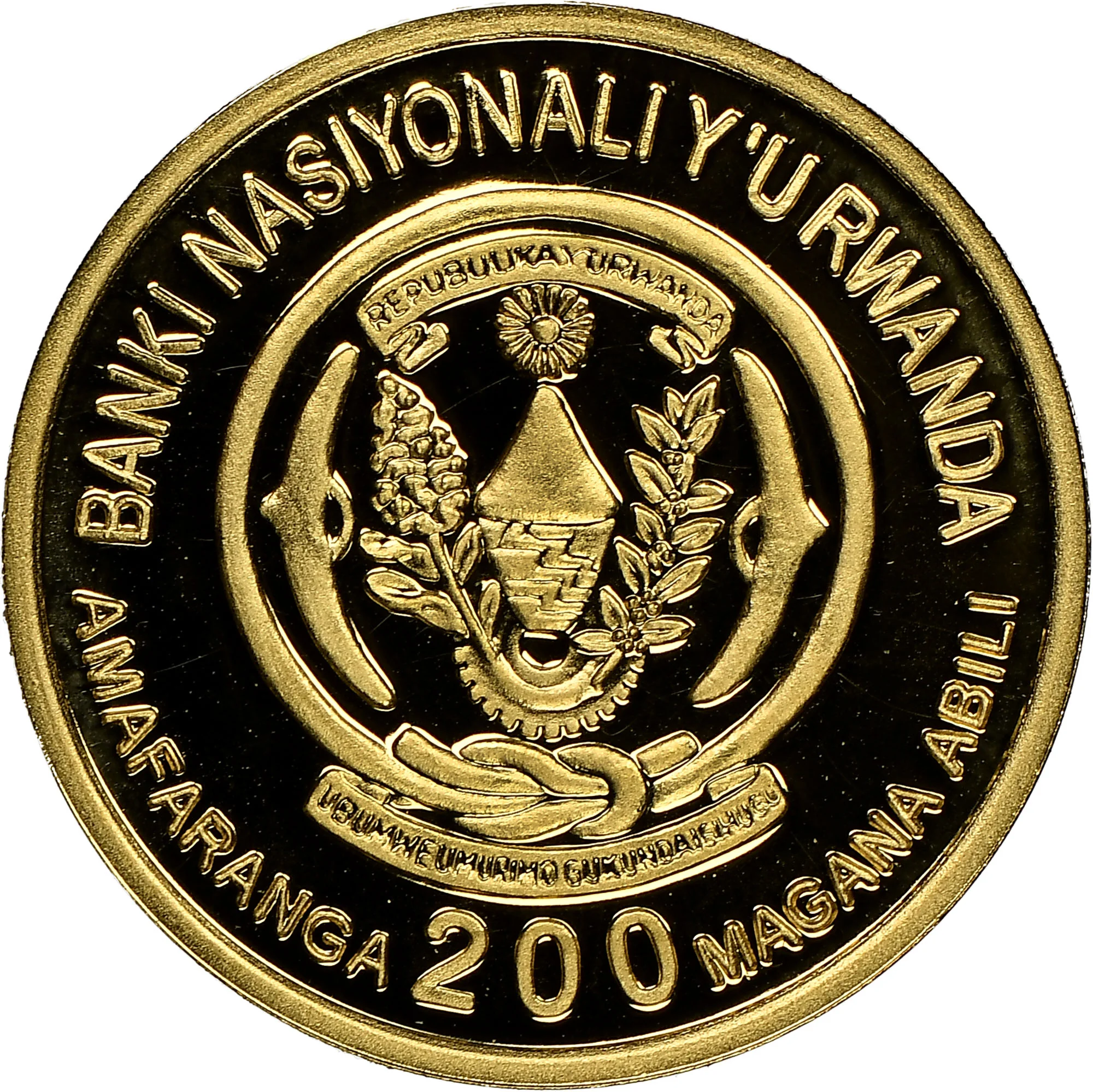
Obverse
Description:
Rwanda's national emblem.
Inscription:
BANKI NASIYONALI Y'U RWANDA
REPUBLIKA Y'U RWANDA
UBUMWI UMURIMO GUKUNDA IGIHUGU
AMAFARANCA 200 MAGANA ABILI
REPUBLIKA Y'U RWANDA
UBUMWI UMURIMO GUKUNDA IGIHUGU
AMAFARANCA 200 MAGANA ABILI
Translation:
NATIONAL BANK OF RWANDA
REPUBLIC OF RWANDA
UNITY WORK PATRIOTISM
TWO HUNDRED FRANCS
REPUBLIC OF RWANDA
UNITY WORK PATRIOTISM
TWO HUNDRED FRANCS
Script: Latin
Language: Kinyarwanda
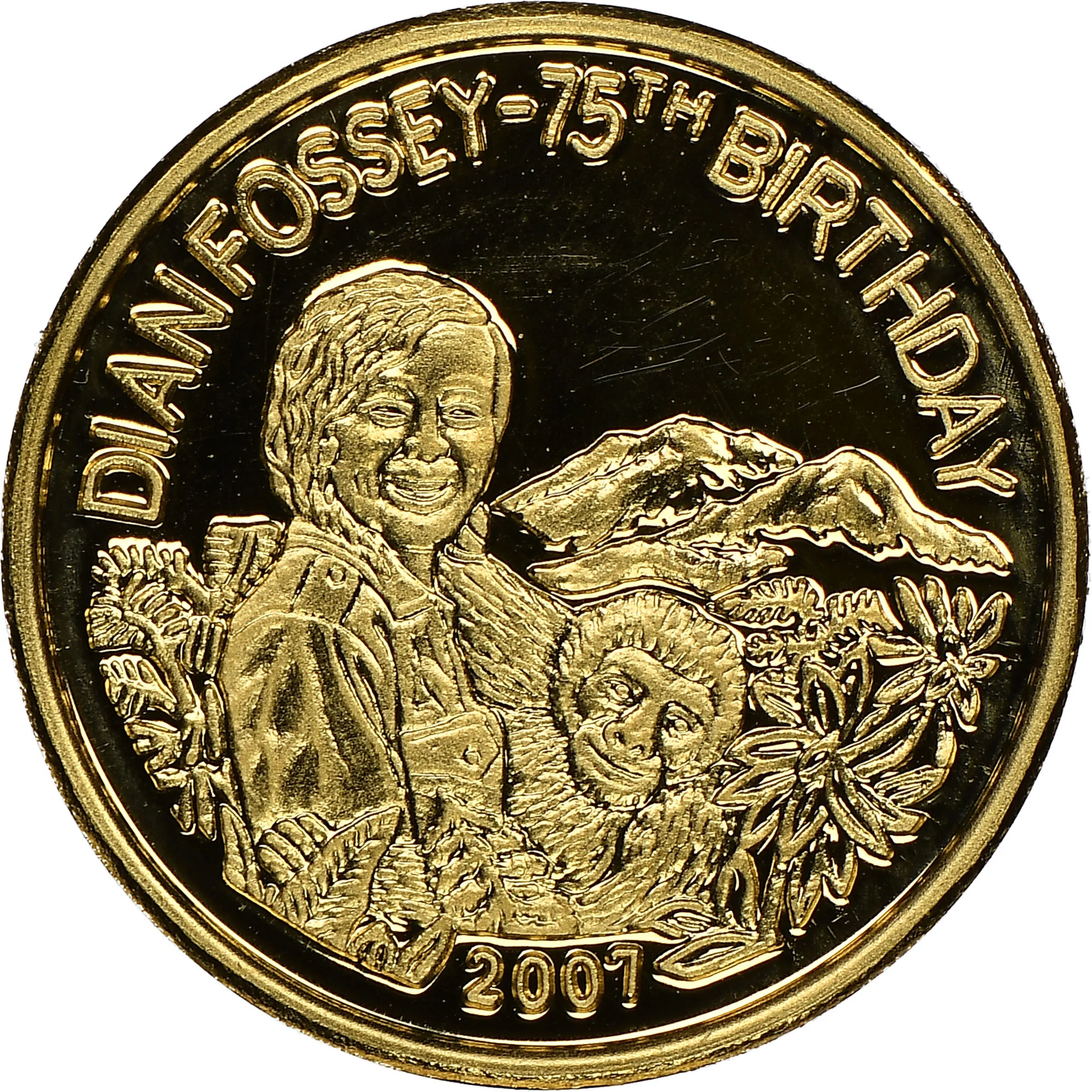
Reverse
Description:
Dian Fossey holding a baby gorilla, mountains behind.
Inscription:
DIAN FOSSEY - 75th BIRTHDAY
2007
2007
Script: Latin
Edge
Plain
Mintings
| Year | Mint Mark | Mintage | Quality | Collection |
|---|---|---|---|---|
| 2007 | — | 15,000 | Proof |
Historical background
In 2007, Rwanda's currency situation was characterized by a period of relative stability and cautious optimism under the stewardship of the National Bank of Rwanda (BNR). The Rwandan franc (RWF) operated within a managed float exchange rate regime, where its value was primarily determined by market forces in the foreign exchange market, but with the central bank intervening occasionally to smooth out excessive volatility. This policy aimed to maintain macroeconomic stability, control inflation, and build foreign exchange reserves, which were crucial for a small, landlocked economy heavily dependent on imports and foreign aid.
The macroeconomic context was one of post-conflict recovery and growth, with Rwanda experiencing strong GDP expansion. A key focus was on maintaining low and stable inflation, which had been successfully reduced from high double-digits in the 1990s to a more manageable level. In 2007, annual inflation averaged around 9.1%, driven largely by global factors like high food and fuel prices, rather than domestic monetary policy. The BNR's prudent management, including the use of tools like treasury bill auctions to manage liquidity, helped anchor expectations and prevent the currency from experiencing sharp, destabilizing depreciations.
Furthermore, the currency stability was supported by substantial inflows of foreign aid and donor support, which bolstered the country's foreign exchange reserves. This external support, coupled with growing revenues from exports like coffee and tea, provided a buffer for the franc. However, underlying challenges persisted, including a persistent trade deficit and the economy's vulnerability to external shocks. Thus, while the Rwandan franc was stable in 2007, the situation underscored the ongoing journey toward a more resilient and self-sufficient economic framework.
The macroeconomic context was one of post-conflict recovery and growth, with Rwanda experiencing strong GDP expansion. A key focus was on maintaining low and stable inflation, which had been successfully reduced from high double-digits in the 1990s to a more manageable level. In 2007, annual inflation averaged around 9.1%, driven largely by global factors like high food and fuel prices, rather than domestic monetary policy. The BNR's prudent management, including the use of tools like treasury bill auctions to manage liquidity, helped anchor expectations and prevent the currency from experiencing sharp, destabilizing depreciations.
Furthermore, the currency stability was supported by substantial inflows of foreign aid and donor support, which bolstered the country's foreign exchange reserves. This external support, coupled with growing revenues from exports like coffee and tea, provided a buffer for the franc. However, underlying challenges persisted, including a persistent trade deficit and the economy's vulnerability to external shocks. Thus, while the Rwandan franc was stable in 2007, the situation underscored the ongoing journey toward a more resilient and self-sufficient economic framework.

💎 Extremely Rare