

1 real (Central Bank history) – Brazil
Add to wishlist
Circulating commemorative coins
Commemoration: 50 Years of Central Bank
Brazil
Context
Year: 2015
Issuer: Brazil
Issuing organization: Central Bank of Brazil
Period:
(since 1967)
Currency:
(since 1994)
Total mintage: 48,789,180
Material
References
KM: #
Numista: #71605
Value
Exchange value: 1 BRL
Inflation-adjusted value: 1.76 BRL
Obverse
Description:
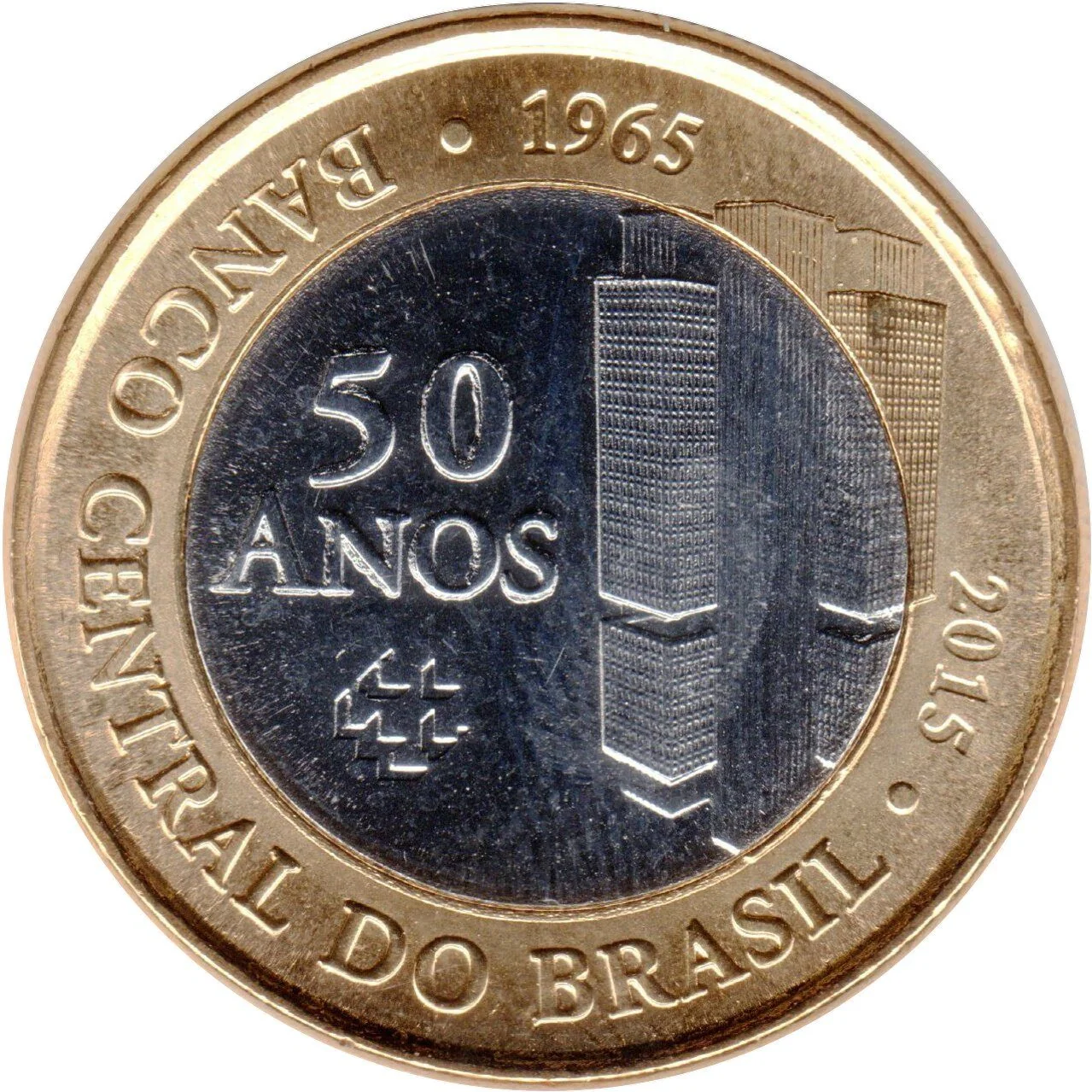
Central Bank of Brazil building in Brasília with "50 Anos" commemorative logo.
Inscription:
1965 ∙ BANCO CENTRAL DO BRASIL ∙ 2015
50
ANOS
50
ANOS
Translation:
1965 ∙ CENTRAL BANK OF BRAZIL ∙ 2015
50
YEARS
50
YEARS
Script: Latin
Language: Portuguese
Engravers: Glória Aparecida Ferreira Dias, Kátia Maria Abreu Dias
Designer: Luis Henrique Ferreira
Reverse
Description:
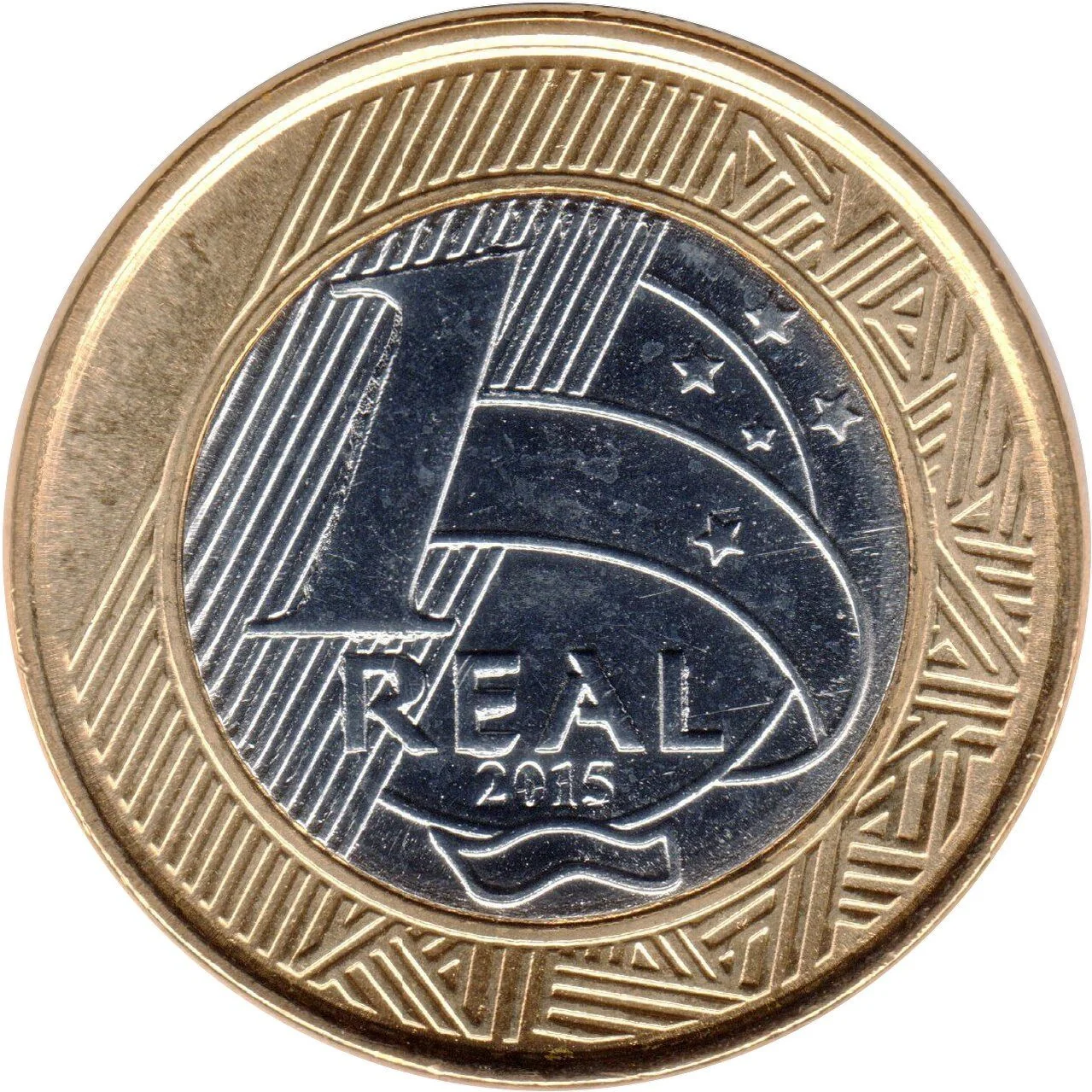
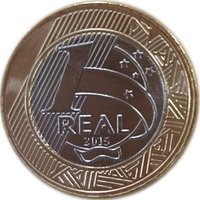
A jubilant band and Southern Cross overlap a sphere, with Marajoara ceramic graphics on the ring, evoking the Brazilian flag.
Inscription:
1
REAL
2015
REAL
2015
Script: Latin
Edge
Mills and smooth section
Categories
| Building |
Mints
| Name | Mark |
|---|---|
| Casa da Moeda do Brasil | — |
Mintings
| Year | Mint Mark | Mintage | Quality | Collection |
|---|---|---|---|---|
| 2015 | — | 48,789,180 |
Historical background
In 2015, Brazil was grappling with a severe economic and political crisis that placed immense pressure on its currency, the Real (BRL). The year was marked by a "perfect storm" of factors: a sharp decline in global commodity prices, which crippled a key export sector; a deep domestic recession with contracting GDP and rising unemployment; and a sprawling corruption scandal known as Operação Lava Jato (Operation Car Wash). This scandal paralyzed major corporations, eroded investor confidence, and created profound political instability, undermining the economic agenda of President Dilma Rousseff.
Consequently, the Brazilian Real experienced a dramatic depreciation, losing approximately 50% of its value against the US dollar over the course of the year. This sharp devaluation was driven by capital flight as investors sought safer assets, coupled with expectations of further economic deterioration. The Central Bank of Brazil responded aggressively, raising the benchmark Selic interest rate to 14.25% by year's end in an effort to combat spiraling inflation—which exceeded 10%—and to stabilize the currency, though this also had the effect of deepening the ongoing recession.
The currency crisis of 2015 was therefore a core symptom of Brazil's broader troubles, reflecting a loss of faith in both the economic outlook and political governance. The weak Real exacerbated inflation through higher import costs, reduced purchasing power for Brazilians, and increased the burden of dollar-denominated debt for companies. This turbulent period set the stage for the political upheaval that would follow in 2016, culminating in the impeachment of President Rousseff, as the country sought a path toward economic stabilization.
Consequently, the Brazilian Real experienced a dramatic depreciation, losing approximately 50% of its value against the US dollar over the course of the year. This sharp devaluation was driven by capital flight as investors sought safer assets, coupled with expectations of further economic deterioration. The Central Bank of Brazil responded aggressively, raising the benchmark Selic interest rate to 14.25% by year's end in an effort to combat spiraling inflation—which exceeded 10%—and to stabilize the currency, though this also had the effect of deepening the ongoing recession.
The currency crisis of 2015 was therefore a core symptom of Brazil's broader troubles, reflecting a loss of faith in both the economic outlook and political governance. The weak Real exacerbated inflation through higher import costs, reduced purchasing power for Brazilians, and increased the burden of dollar-denominated debt for companies. This turbulent period set the stage for the political upheaval that would follow in 2016, culminating in the impeachment of President Rousseff, as the country sought a path toward economic stabilization.
🌱 Very Common