

500 lire (International Fund for Agricultural Development) – Italy
Add to wishlist
Circulating commemorative coins
Commemoration: 20th Anniversary of the International Fund for Agricultural Development
Italy
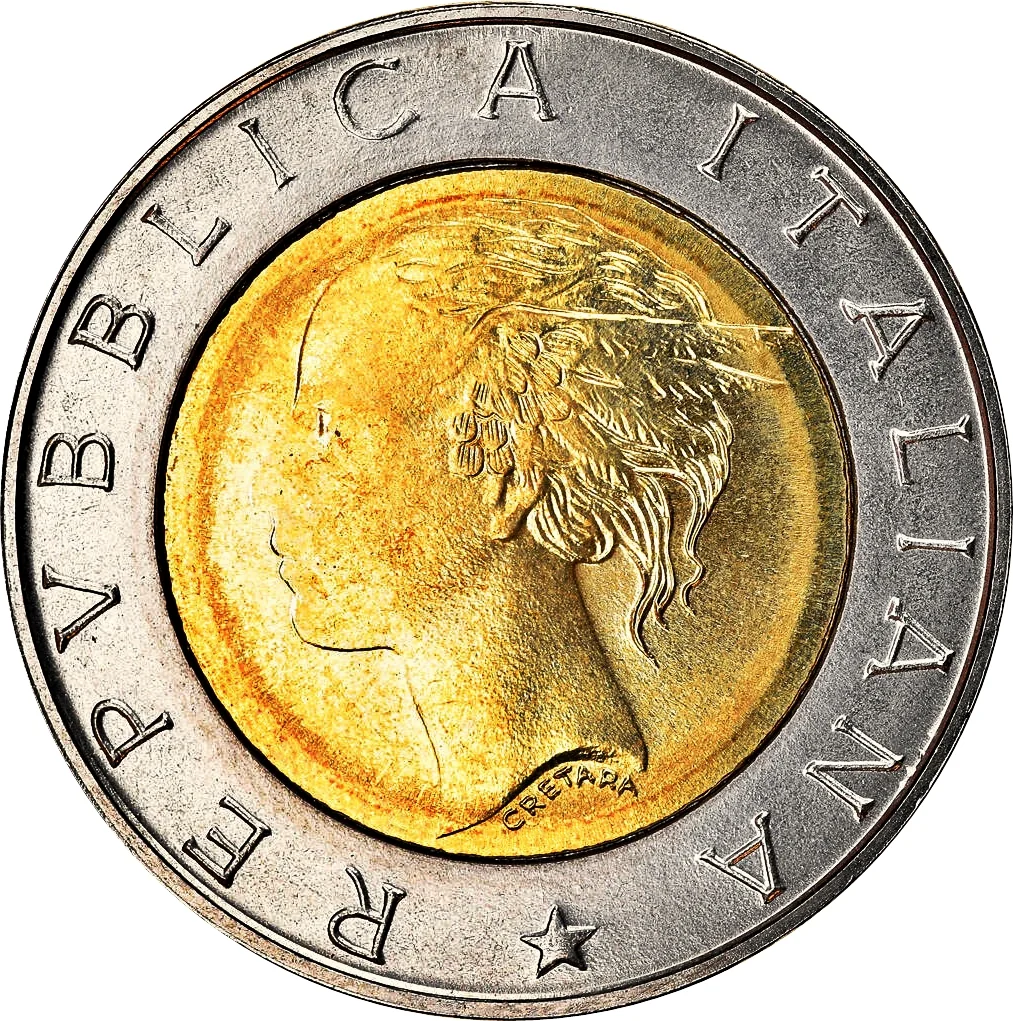
Obverse
Description:
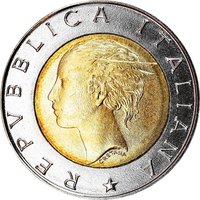
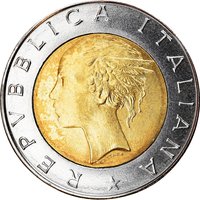
Woman facing left, symbolizing the Italian Republic with feathered wings at her temples (intelligence and freedom). Engraver's name below.
Inscription:
REPVBBLICA ITALIANA
CRETARA
CRETARA
Translation:
Italian Republic
Cretara
Cretara
Script: Latin
Engraver: Laura Cretara
Reverse
Description:
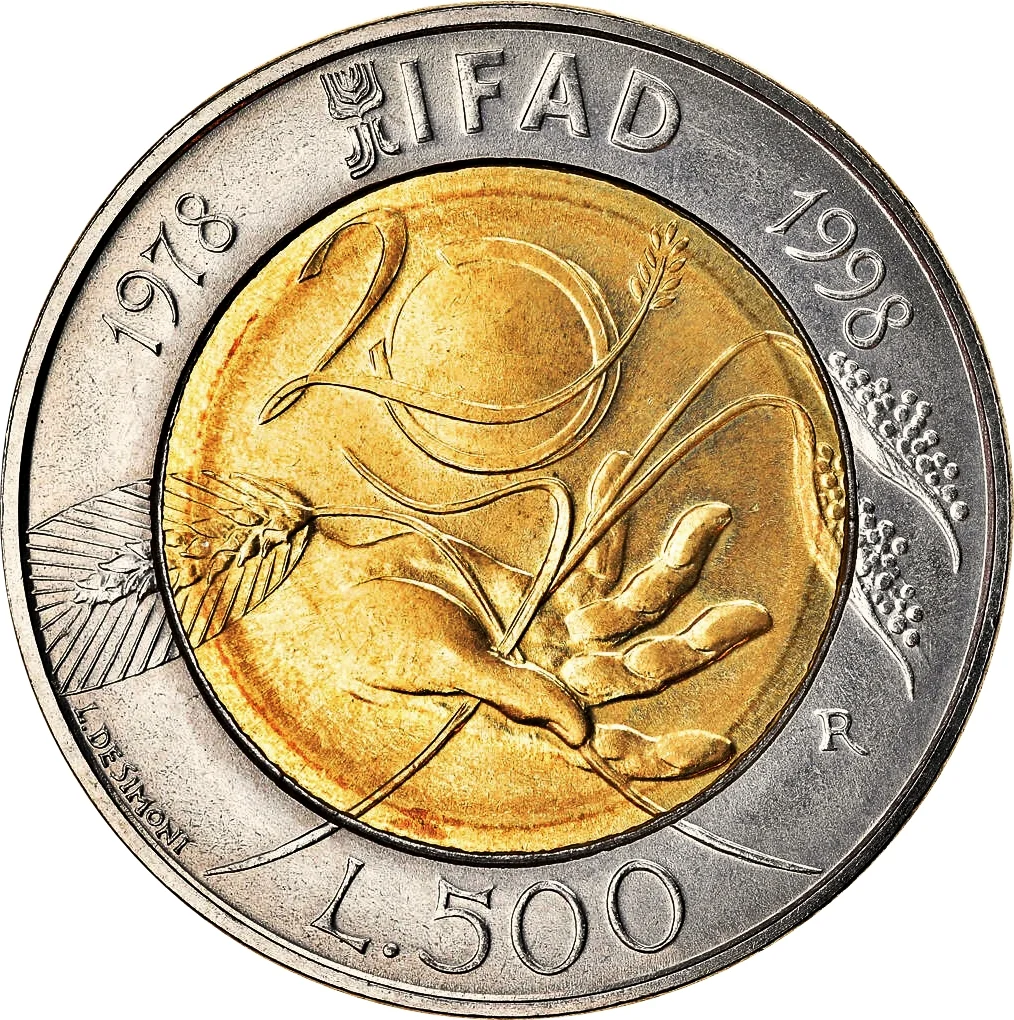
An open hand holds an ear and sorghum. Above, a sun and twisted wheat form "20" for the anniversary years. The outer ring features "IFAD" and dates above, the value and mintmark below, and the designer's name along the rim.
Inscription:
IFAD
1978 1998
20
L. DE SIMONI
L.500 R
1978 1998
20
L. DE SIMONI
L.500 R
Script: Latin
Engraver: Luciana De Simoni
Edge
Alternating smooth and reeded segments
Categories
| Organization> FAO |
| Symbol> Hand |
Mints
| Name | Mark |
|---|---|
| Rome | R |
Historical background
In 1998, Italy was in the final, intense phase of a multi-decade effort to qualify for the European Union's Economic and Monetary Union (EMU). The goal was to be among the founding members of the euro, set to launch in 1999. This required meeting the strict convergence criteria of the Maastricht Treaty, including limits on budget deficits, public debt, inflation, and interest rates, and maintaining stable exchange rates within the European Exchange Rate Mechanism (ERM). For Italy, a country historically plagued by high public debt and fiscal instability, this was a monumental challenge, often referred to as "lo strappo" (the tear) from its inflationary past.
The Prodi government, in power from 1996, had implemented severe austerity measures, including a one-time "Eurotax," to curb the budget deficit. By 1998, these efforts had borne fruit: the deficit was brought down to 2.7% of GDP (below the 3% Maastricht limit), and inflation was under control. However, Italy's colossal public debt, at around 120% of GDP, remained far above the 60% reference value. Its admission, therefore, hinged on a political interpretation of the Treaty's clause that debt must be "sufficiently diminishing and approaching the reference value at a satisfactory pace."
On May 2, 1998, the EU Council made the historic decision to include Italy in the first wave of euro participants. This was a politically charged choice, rewarding the country's recent fiscal discipline and reform momentum over its still-daunting debt burden. Consequently, for the remainder of 1998, the Italian lira operated with its exchange rate irrevocably fixed first against other ERM currencies and then, as of December 31, against the euro itself (1 EUR = 1936.27 ITL). The year thus marked Italy's successful, if hard-won, passage from a period of monetary vulnerability into the core of a new European monetary era.
The Prodi government, in power from 1996, had implemented severe austerity measures, including a one-time "Eurotax," to curb the budget deficit. By 1998, these efforts had borne fruit: the deficit was brought down to 2.7% of GDP (below the 3% Maastricht limit), and inflation was under control. However, Italy's colossal public debt, at around 120% of GDP, remained far above the 60% reference value. Its admission, therefore, hinged on a political interpretation of the Treaty's clause that debt must be "sufficiently diminishing and approaching the reference value at a satisfactory pace."
On May 2, 1998, the EU Council made the historic decision to include Italy in the first wave of euro participants. This was a politically charged choice, rewarding the country's recent fiscal discipline and reform momentum over its still-daunting debt burden. Consequently, for the remainder of 1998, the Italian lira operated with its exchange rate irrevocably fixed first against other ERM currencies and then, as of December 31, against the euro itself (1 EUR = 1936.27 ITL). The year thus marked Italy's successful, if hard-won, passage from a period of monetary vulnerability into the core of a new European monetary era.
🌱 Very Common