

10 lari (Georgian State System) – Georgia
Add to wishlist
Non-circulating coins
Commemoration: 3000th Anniversary of the Georgian State System
Georgia
Context
Material
Diameter: 38.61 mm
Weight: 28.28 g
Shape: Round
Composition: Copper-nickel
Technique: Milled
Alignment: Coin alignment
flip
References
KM: #
Numista: #71314
Value
Exchange value: 10 GEL
Obverse
Description:
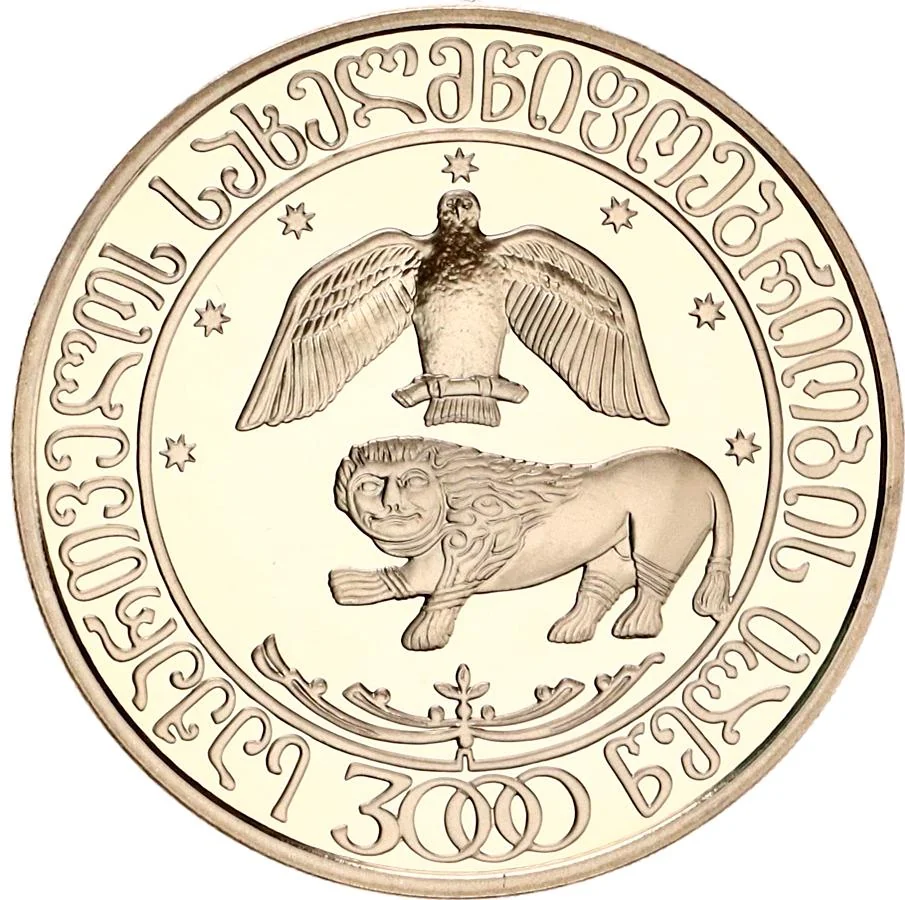
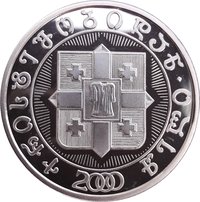
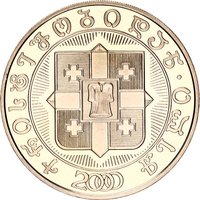
Eleventh-century Svetitskhoveli Cathedral bas-reliefs of the eagle and lion, symbols of state strength, are framed by leaf ornament and seven stars. The legend encircling the coin reads "3000th anniversary of Georgian statehood" in Georgian.
Inscription:
3000
Script: Georgian (Mkhedruli)
Engravers: Tinatin Tevzadze, Emir Burdjanadze
Reverse
Description:
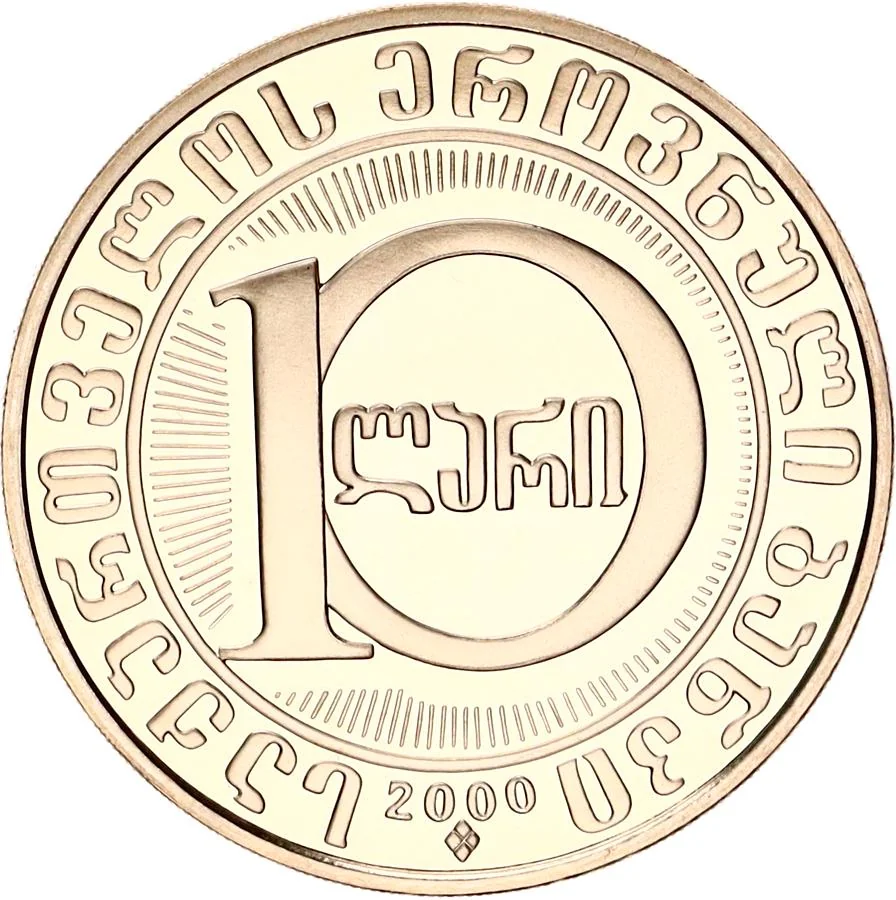
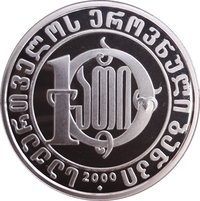
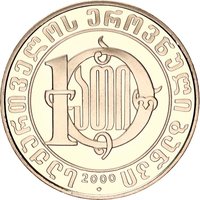
"10 lari" centered, surrounded by "National Bank of Georgia - 2000" in Georgian along the edge.
Inscription:
10
2000
2000
Script: Georgian (Mkhedruli)
Engravers: Tinatin Tevzadze, Emir Burdjanadze
Edge
Reeded with lettering
Legend:
* TEN LARI * GEORGIA
Mints
| Name | Mark |
|---|---|
| Royal Mint | — |
Mintings
| Year | Mint Mark | Mintage | Quality | Collection |
|---|---|---|---|---|
| 2000 | — | 2,000 | Proof |
Historical background
In the year 2000, Georgia’s currency situation was defined by the stable, yet still fragile, dominance of the lari (GEL), which had successfully replaced the catastrophic hyperinflation of the interim coupon currency by 1995. Under the rigorous supervision of the National Bank of Georgia (NBG) and its then-President, Irakli Managadze, a tight monetary policy and a de facto peg to the US dollar were maintained. This stability was a hard-won achievement, providing a crucial anchor for an economy still recovering from civil strife and the collapse of the Soviet Union, though it came at the cost of limited control over independent monetary policy.
However, this stability existed within a context of severe economic challenges. Georgia remained one of the poorest post-Soviet states, with a narrow production base, widespread poverty, and a significant shadow economy that limited the formal use of the lari in many transactions. External debt was crippling, and state finances were weak, reliant on international financial institutions like the IMF and World Bank for critical support. Their programs mandated strict fiscal discipline as a condition for loans, directly influencing the NBG's ability to manage the currency.
Consequently, the primary risks to the lari in 2000 were not market-driven fluctuations but structural and fiscal vulnerabilities. Any loss of confidence, potentially triggered by a failure to meet international obligations or a political shock, could have threatened the peg. Therefore, the currency's stability was paradoxically both Georgia’s key macroeconomic success story and a symptom of its deep dependence on external aid and stringent reform programs to maintain equilibrium in a still-fragile economic environment.
However, this stability existed within a context of severe economic challenges. Georgia remained one of the poorest post-Soviet states, with a narrow production base, widespread poverty, and a significant shadow economy that limited the formal use of the lari in many transactions. External debt was crippling, and state finances were weak, reliant on international financial institutions like the IMF and World Bank for critical support. Their programs mandated strict fiscal discipline as a condition for loans, directly influencing the NBG's ability to manage the currency.
Consequently, the primary risks to the lari in 2000 were not market-driven fluctuations but structural and fiscal vulnerabilities. Any loss of confidence, potentially triggered by a failure to meet international obligations or a political shock, could have threatened the peg. Therefore, the currency's stability was paradoxically both Georgia’s key macroeconomic success story and a symptom of its deep dependence on external aid and stringent reform programs to maintain equilibrium in a still-fragile economic environment.
⭐ Rare