

1 penny – United Kingdom
Add to wishlist
United Kingdom
Context
Years: 1806–1807
Issuer: United Kingdom
Ruler: George III
Currency:
(1158—1970)
Demonetization: 31 August 1971
Material
References
KM: #
Numista: #70865
Obverse
Description:
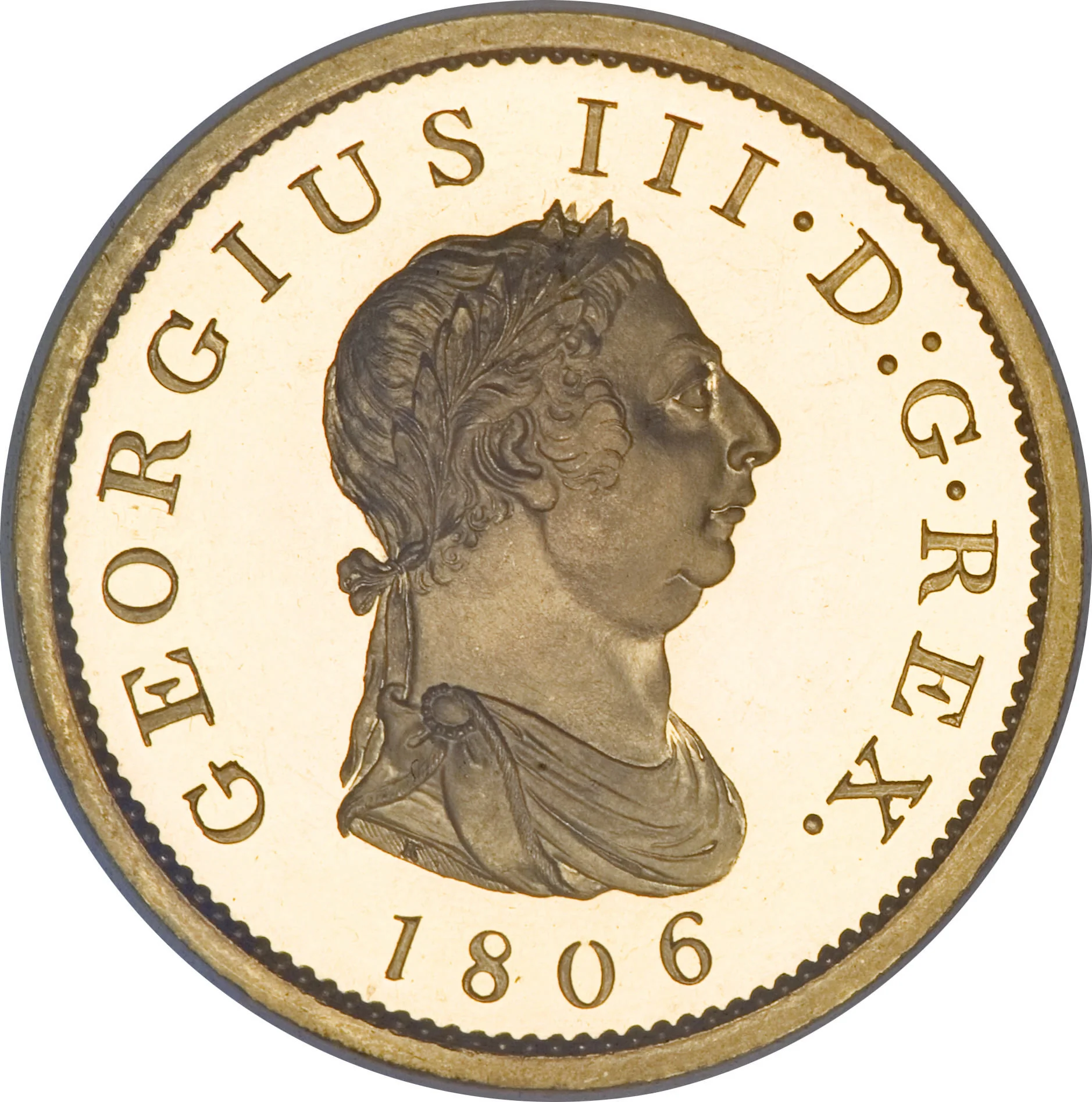
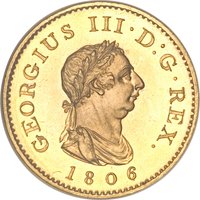
King George III laureate, draped, facing right; legend surrounds, date below.
Inscription:
GEORGIUS III·D:G·REX.
1806
1806
Translation:
George the Third, by the Grace of God, King.
1806
1806
Script: Latin
Language: Latin
Engraver: Conrad Heinrich Küchler
Reverse
Description:
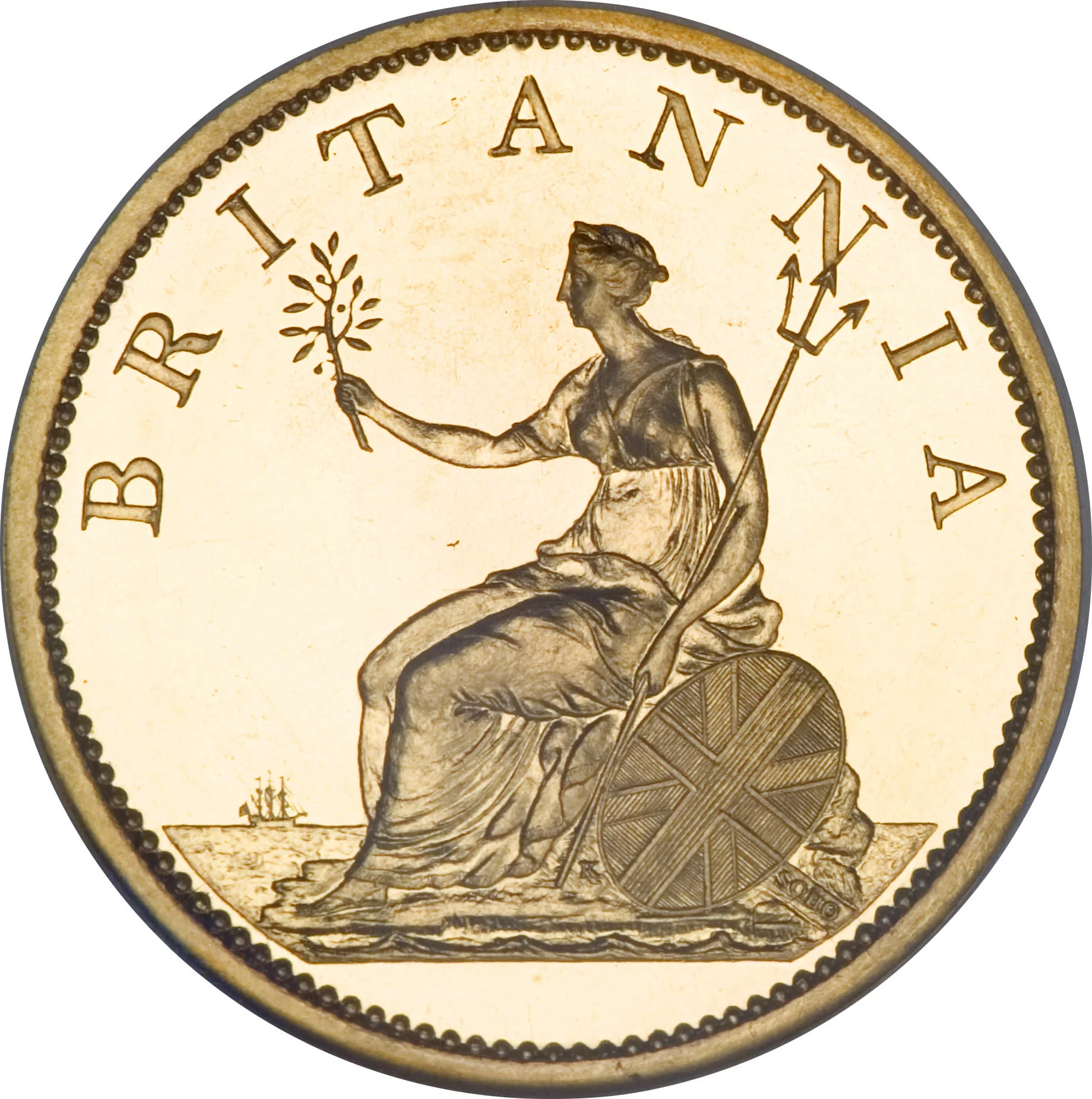
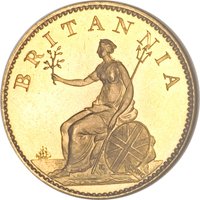
Britannia seated left, holding trident and olive branch, with Union Jack shield beside her. A ship sails in the background.
Inscription:
BRITANNIA
SOHO
SOHO
Script: Latin
Engraver: Conrad Heinrich Küchler
Edge
Obliquely grained or plain
Categories
| Object> Armour |
| Geography> Sea |
| Transportation> Watercraft |
Mints
| Name | Mark |
|---|---|
| Soho Mint | SOHO |
Mintings
| Year | Mint Mark | Mintage | Quality | Collection |
|---|---|---|---|---|
| 1806 | — | — | Proof | |
| 1807 | — | — | Proof |
Historical background
In 1806, the United Kingdom was embroiled in the Napoleonic Wars, a conflict that placed immense strain on its financial system and currency. The government, funding a vast military effort through borrowing, had suspended the convertibility of Bank of England notes into gold in 1797 under the Bank Restriction Act. This meant the pound sterling was no longer on the gold standard, operating as a fiat currency where its value was based on public confidence rather than a precious metal guarantee. While this allowed for greater flexibility in war financing, it opened the door to inflation and a volatile exchange rate.
The period was characterised by a complex "two-tier" currency system. Gold coins, like guineas, had largely disappeared from circulation, hoarded for their intrinsic value. In their place, the economy relied on Bank of England notes (for large transactions) and a flood of often dubious private banknotes issued by hundreds of country banks. These private notes were of uncertain quality and prone to depreciation, especially if the issuing bank failed, which was common. Alongside these, a crucial medium of exchange was the overstruck Spanish silver dollar (the "piece of eight"), which the Bank of England had officially countermarked for use within Britain to alleviate the small-change shortage.
Consequently, the financial landscape was one of significant instability and debate. Prices had risen sharply since the suspension, leading to widespread discussion about the depreciation of paper money and its impact on the cost of living. Figures like David Ricardo began to articulate theories linking the note issue to inflation, laying groundwork for future monetary policy. Thus, in 1806, Britain’s currency was a wartime expedient: a managed but fragile system of paper and token coinage, the stability of which was a central concern for both the government and the public.
The period was characterised by a complex "two-tier" currency system. Gold coins, like guineas, had largely disappeared from circulation, hoarded for their intrinsic value. In their place, the economy relied on Bank of England notes (for large transactions) and a flood of often dubious private banknotes issued by hundreds of country banks. These private notes were of uncertain quality and prone to depreciation, especially if the issuing bank failed, which was common. Alongside these, a crucial medium of exchange was the overstruck Spanish silver dollar (the "piece of eight"), which the Bank of England had officially countermarked for use within Britain to alleviate the small-change shortage.
Consequently, the financial landscape was one of significant instability and debate. Prices had risen sharply since the suspension, leading to widespread discussion about the depreciation of paper money and its impact on the cost of living. Figures like David Ricardo began to articulate theories linking the note issue to inflation, laying groundwork for future monetary policy. Thus, in 1806, Britain’s currency was a wartime expedient: a managed but fragile system of paper and token coinage, the stability of which was a central concern for both the government and the public.
💎 Extremely Rare