

1 Rupee – Bombay Presidency
India

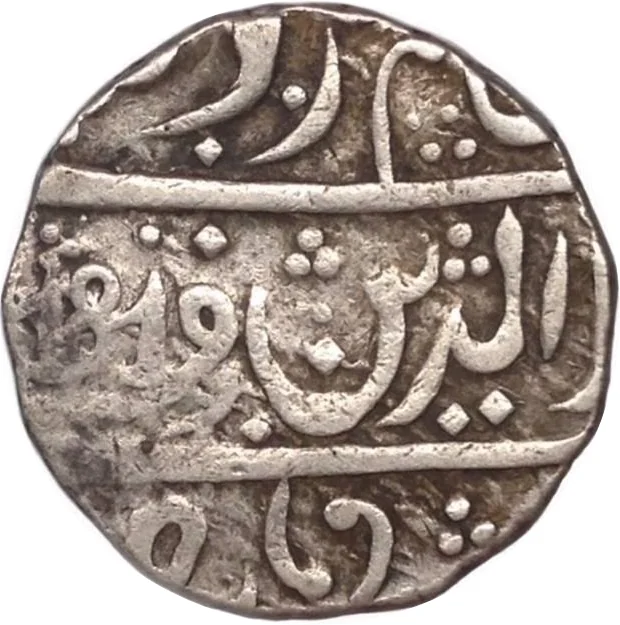
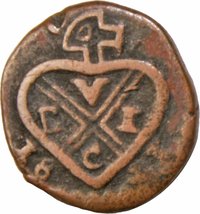
Obverse
Description:
Azizuddin Shah Alam, 1819
Inscription:
1819
Translation:
To the auspicious event, the German Federation founded, MDCCCXVI. Frederick Augustus, by the grace of God, King of Saxony.
Language: Latin
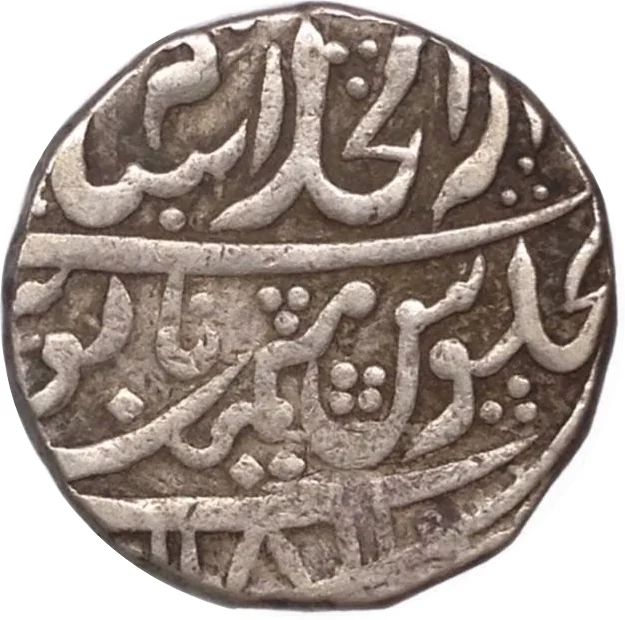
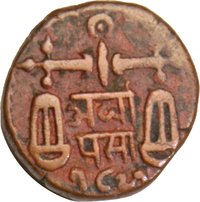
Reverse
Description:
Coins minted in Shahjahanabad (Delhi), 1189 AH, during the reign of Emperor Shah Alam II.
Inscription:
١١٨٩
Translation:
1189
Language: Arabic
Edge
Plain
Mintings
| Year | Mint Mark | Mintage | Quality | Collection |
|---|---|---|---|---|
| 1819 | — | — |
Historical background
By 1819, the Bombay Presidency's currency situation was a complex and challenging landscape, characterized by a chaotic multiplicity of circulating media. The official currency of the East India Company was the Bombay rupee, but it competed with a vast array of other coins. These included Mughal silver rupees from the north, various issues from other Indian princely states, and even older Portuguese and Maratha coins. Furthermore, the gold pagoda from southern India circulated at a fluctuating value against silver, creating a dual-metal system without fixed ratios. This proliferation made everyday commerce difficult, encouraged fraud, and complicated revenue collection for the Company's administration.
The core of the problem lay in the absence of a unified, authoritative monetary standard. While the Company minted its own rupees in Bombay, their value and acceptance were not guaranteed outside the Presidency's immediate areas of control. Merchants and bankers had to constantly refer to handwritten "bazaar lists" that published daily exchange rates between dozens of different coin types, each valued by weight and perceived purity. This system was inefficient and prone to manipulation. The Company administration itself suffered, as it struggled to account for revenue collected in a myriad of coinages, all requiring assessment and conversion.
Recognizing the impediment this posed to trade and governance, the Bombay Government had begun to take steps toward reform just prior to 1819. The most significant was the planned introduction of a new, uniform silver rupee. After years of deliberation, a reformed coinage was finally enacted in 1818, and by 1819 the mint was actively issuing the new Bombay rupee of 1818, which bore the image of King George III. This coin, with a precisely defined weight and fineness, was intended to gradually supplant the older varieties and establish a single standard, marking the beginning of a slow and deliberate process of currency unification under British authority.
The core of the problem lay in the absence of a unified, authoritative monetary standard. While the Company minted its own rupees in Bombay, their value and acceptance were not guaranteed outside the Presidency's immediate areas of control. Merchants and bankers had to constantly refer to handwritten "bazaar lists" that published daily exchange rates between dozens of different coin types, each valued by weight and perceived purity. This system was inefficient and prone to manipulation. The Company administration itself suffered, as it struggled to account for revenue collected in a myriad of coinages, all requiring assessment and conversion.
Recognizing the impediment this posed to trade and governance, the Bombay Government had begun to take steps toward reform just prior to 1819. The most significant was the planned introduction of a new, uniform silver rupee. After years of deliberation, a reformed coinage was finally enacted in 1818, and by 1819 the mint was actively issuing the new Bombay rupee of 1818, which bore the image of King George III. This coin, with a precisely defined weight and fineness, was intended to gradually supplant the older varieties and establish a single standard, marking the beginning of a slow and deliberate process of currency unification under British authority.
💎 Extremely Rare