

1⁄12 shilling – Jersey
Add to wishlist
Context
Years: 1931–1935
Country: British Crown dependencies
Issuer: Jersey
Ruler: George V
Currency:
(1813—1971)
Demonetization: 27 December 1971
Total mintage: 612,000
Material
References
KM: #
Numista: #7058
Obverse
Description:
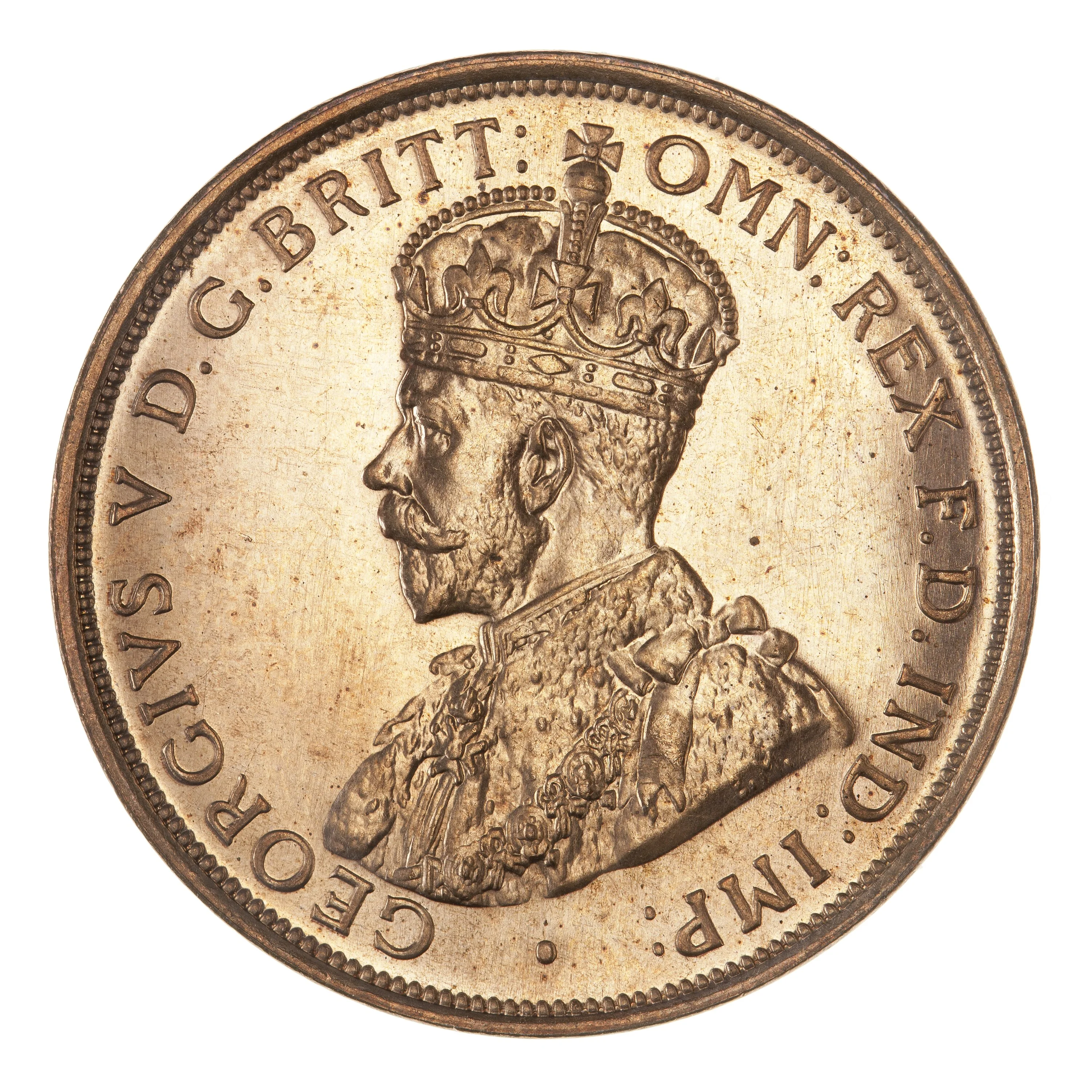
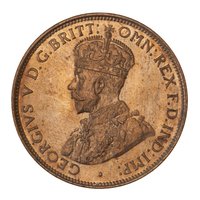
King George V left-facing crowned bust, surrounded by legend.
Inscription:
· GEORGIVS V D.G.BRITT: OMN:REX F.D.IND:IMP:
B. M.
B. M.
Translation:
George V, by the Grace of God, of all the Britains King, Defender of the Faith, Emperor of India.
Script: Latin
Language: Latin
Engraver: Edgar Bertram MacKennal
Reverse
Description:
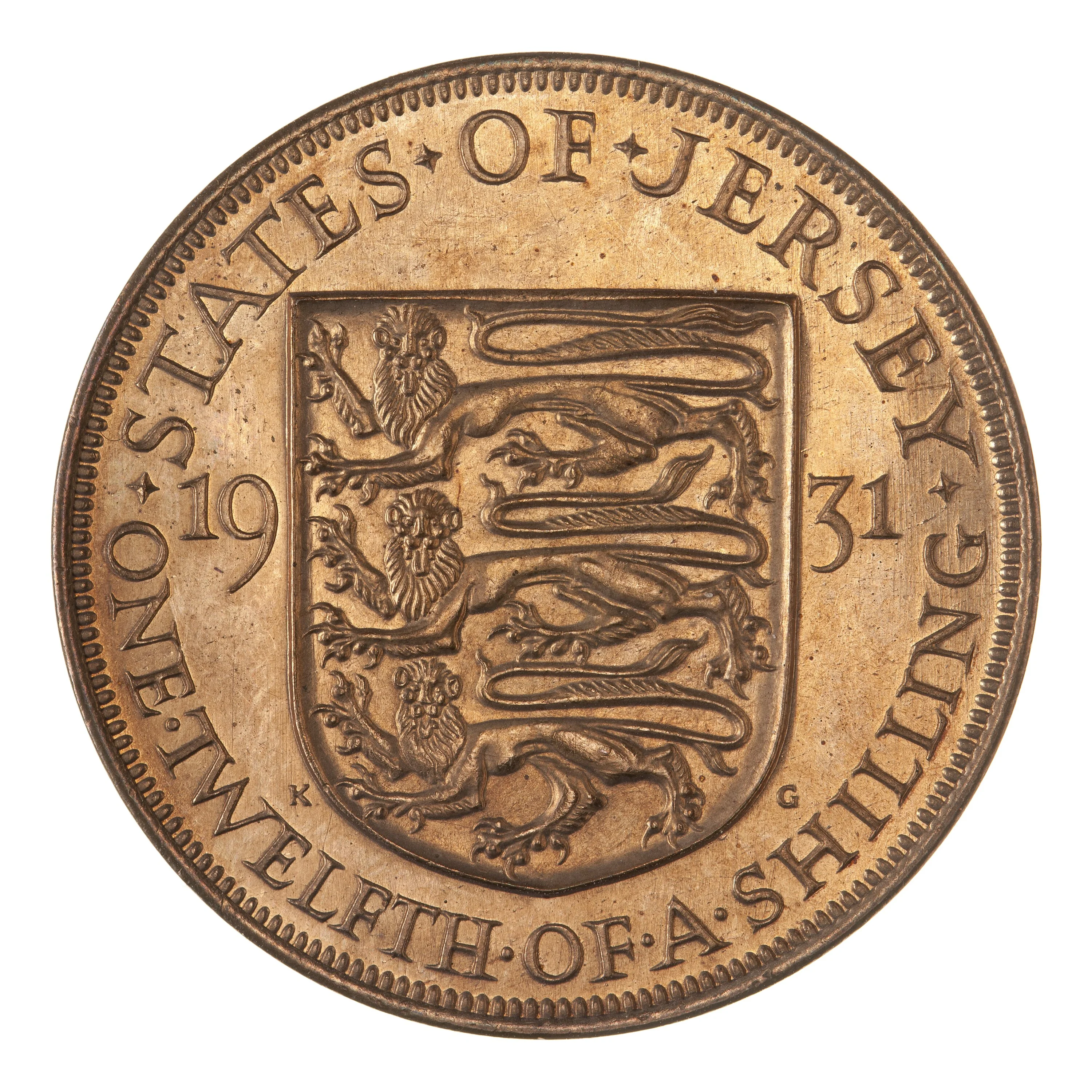
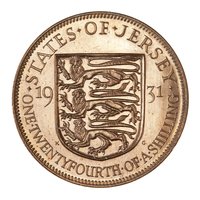
Shield divides date, legend above, denomination below.
Inscription:
·STATES·OF·JERSEY·
19 31
K G
ONE·TWELFTH·OF·A·SHILLING
19 31
K G
ONE·TWELFTH·OF·A·SHILLING
Script: Latin
Engraver: George Kruger Gray
Edge
Plain
Mints
| Name | Mark |
|---|---|
| Royal Mint (Tower Hill) | — |
Mintings
| Year | Mint Mark | Mintage | Quality | Collection |
|---|---|---|---|---|
| 1931 | — | — | Proof | |
| 1931 | — | 204,000 | ||
| 1933 | — | 204,000 | ||
| 1933 | — | — | Proof | |
| 1935 | — | 204,000 | ||
| 1935 | — | — | Proof |
Historical background
In 1931, Jersey, like the rest of the British Isles, was profoundly affected by the global financial crisis and the UK's decision to abandon the gold standard. As a Crown Dependency with its own ancient legislative powers, Jersey did not automatically follow UK currency law, but its economy was deeply intertwined with Britain's. The island's banking system held substantial reserves in sterling, and its primary export, agriculture, depended on the British market. Consequently, the devaluation of sterling in September 1931 created immediate uncertainty, threatening the value of Jersey's reserves and the stability of its local banks.
The States of Jersey moved swiftly to assert control and prevent a banking collapse. On 29 September 1931, just days after the UK's suspension of gold convertibility, the States passed the "Currency Notes (Jersey) Law". This critical legislation authorized the issuance of distinct, island-specific currency notes, which were to be backed not by gold but by sterling securities held in a dedicated fund. This created a de facto Jersey pound, pegged at par with sterling, but legally a separate issue. The move was a defensive measure to localize and secure the island's currency supply, ensuring that notes in circulation were fully backed by assets under the direct control of the Jersey government.
The outcome was a period of monetary stability during a time of international turmoil. The new Jersey notes successfully maintained public confidence, prevented a run on local banks, and allowed commerce to continue smoothly. This episode reinforced Jersey's constitutional autonomy in domestic affairs, particularly in finance, while also cementing its practical economic reliance on sterling. The system established in the crisis of 1931 formed the bedrock of Jersey's modern currency system, where locally issued notes circulate alongside UK coinage, a direct legacy of the decisive actions taken that year.
The States of Jersey moved swiftly to assert control and prevent a banking collapse. On 29 September 1931, just days after the UK's suspension of gold convertibility, the States passed the "Currency Notes (Jersey) Law". This critical legislation authorized the issuance of distinct, island-specific currency notes, which were to be backed not by gold but by sterling securities held in a dedicated fund. This created a de facto Jersey pound, pegged at par with sterling, but legally a separate issue. The move was a defensive measure to localize and secure the island's currency supply, ensuring that notes in circulation were fully backed by assets under the direct control of the Jersey government.
The outcome was a period of monetary stability during a time of international turmoil. The new Jersey notes successfully maintained public confidence, prevented a run on local banks, and allowed commerce to continue smoothly. This episode reinforced Jersey's constitutional autonomy in domestic affairs, particularly in finance, while also cementing its practical economic reliance on sterling. The system established in the crisis of 1931 formed the bedrock of Jersey's modern currency system, where locally issued notes circulate alongside UK coinage, a direct legacy of the decisive actions taken that year.
🌱 Common