

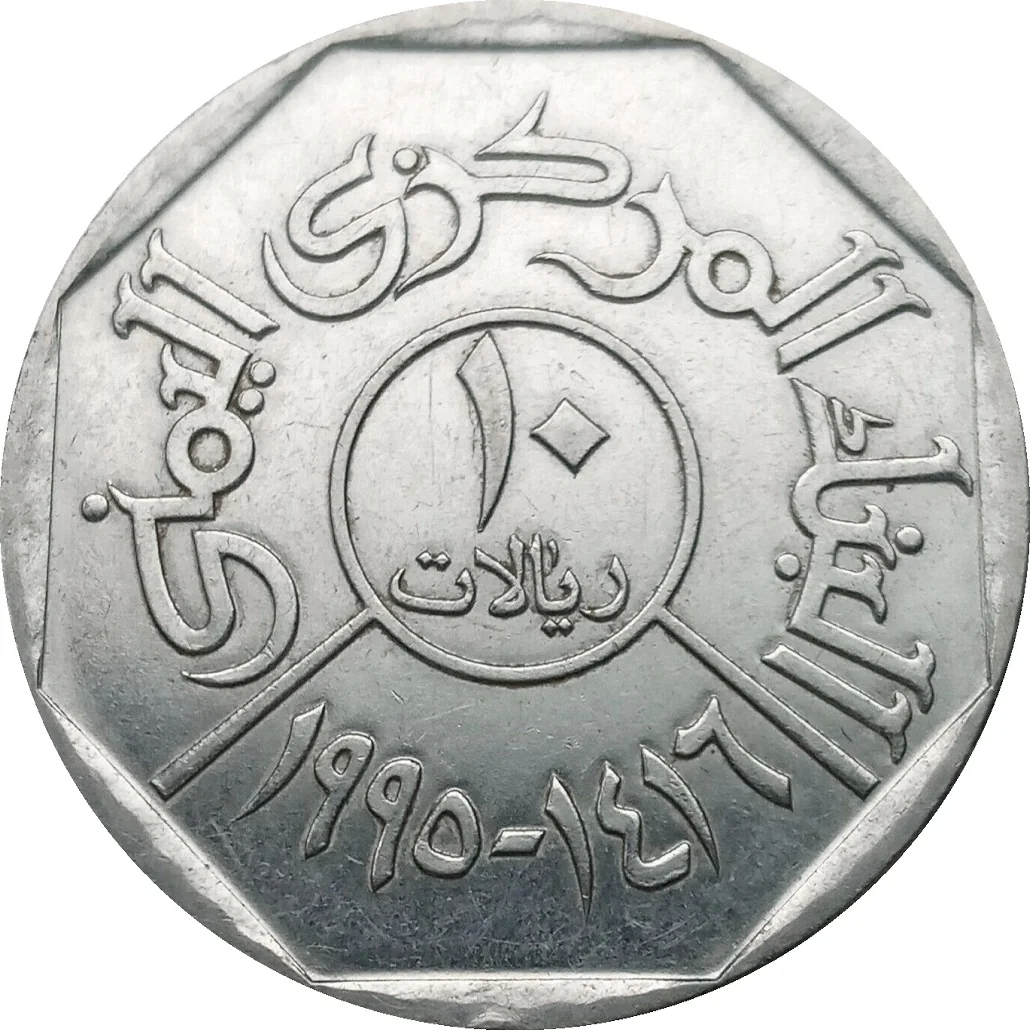
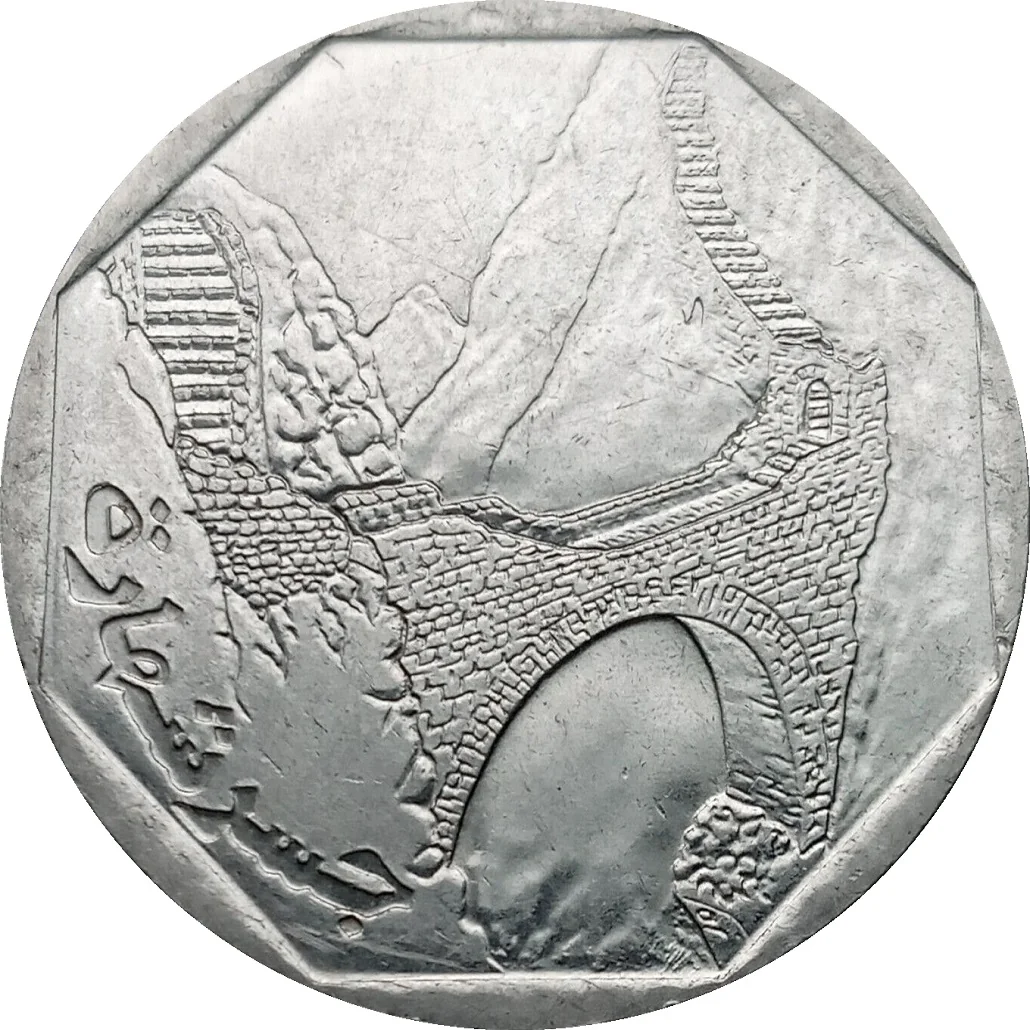
10 rials – Yemen
Add to wishlist
Yemen
Context
Years: 1995–2009
Issuer: Yemen
Issuing organization: Central Bank of Yemen
Period:
(since 1990)
Currency:
(since 1990)
Material
Diameter: 26 mm
Weight: 6.05 g
Thickness: 1.75 mm
Shape: Round
Composition: Stainless steel
Technique: Milled
Alignment: Medal alignment
flip
References
KM: #
Numista: #7045
Value
Exchange value: 10 YER
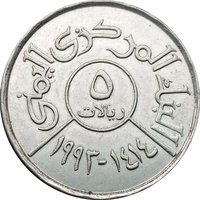
Obverse
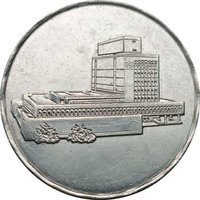
Reverse
Edge
Flatly reeded
Mints
| Name | Mark |
|---|---|
| Monnaie de Paris | — |
Mintings
| Year | Mint Mark | Mintage | Quality | Collection |
|---|---|---|---|---|
| 1995 | — | — | ||
| 2003 | — | — | ||
| 2009 | — | — |
Historical background
In 1995, Yemen's currency situation was defined by the complex and challenging aftermath of the 1990 unification between the Yemen Arab Republic (North) and the People's Democratic Republic of Yemen (South). The unification had created a single state with two distinct monetary systems: the North's Yemeni rial (YER) and the South's Yemeni dinar (YED). While the rial was declared the sole official currency, the dinar remained in widespread circulation in the former South, creating a de facto dual-currency economy. This arrangement was inherently unstable, as the two currencies traded at different values, with the dinar generally stronger due to its historical link to hard currencies and the North's rial suffering from higher inflation.
The government, led by President Ali Abdullah Saleh, faced immense pressure to complete monetary unification to strengthen economic sovereignty and control. The primary challenge was the massive overhang of liquidity in the North, where rapid money supply growth to finance budget deficits was fueling inflation and eroding the rial's value. Efforts to absorb the dinar were hampered by political tensions and a lack of public confidence, particularly in the South where the dinar was seen as a symbol of economic stability. Consequently, the Central Bank of Yemen struggled to implement effective monetary policy across the fractured financial landscape.
Ultimately, 1995 was a pivotal year that set the stage for a forced resolution. The economic strains of maintaining two currencies, combined with the political fallout from the 1994 civil war which the North won, gave the Sana'a-based government the impetus to act decisively. By the end of the year, the stage was set for the government to announce the demonetization of the dinar, which was executed in 1996. This move, while unifying the currency, was deeply controversial in the South and contributed to long-lasting grievances, as it was perceived as an economically disruptive annexation rather than a consensual merger.
The government, led by President Ali Abdullah Saleh, faced immense pressure to complete monetary unification to strengthen economic sovereignty and control. The primary challenge was the massive overhang of liquidity in the North, where rapid money supply growth to finance budget deficits was fueling inflation and eroding the rial's value. Efforts to absorb the dinar were hampered by political tensions and a lack of public confidence, particularly in the South where the dinar was seen as a symbol of economic stability. Consequently, the Central Bank of Yemen struggled to implement effective monetary policy across the fractured financial landscape.
Ultimately, 1995 was a pivotal year that set the stage for a forced resolution. The economic strains of maintaining two currencies, combined with the political fallout from the 1994 civil war which the North won, gave the Sana'a-based government the impetus to act decisively. By the end of the year, the stage was set for the government to announce the demonetization of the dinar, which was executed in 1996. This move, while unifying the currency, was deeply controversial in the South and contributed to long-lasting grievances, as it was perceived as an economically disruptive annexation rather than a consensual merger.
🌱 Very Common