

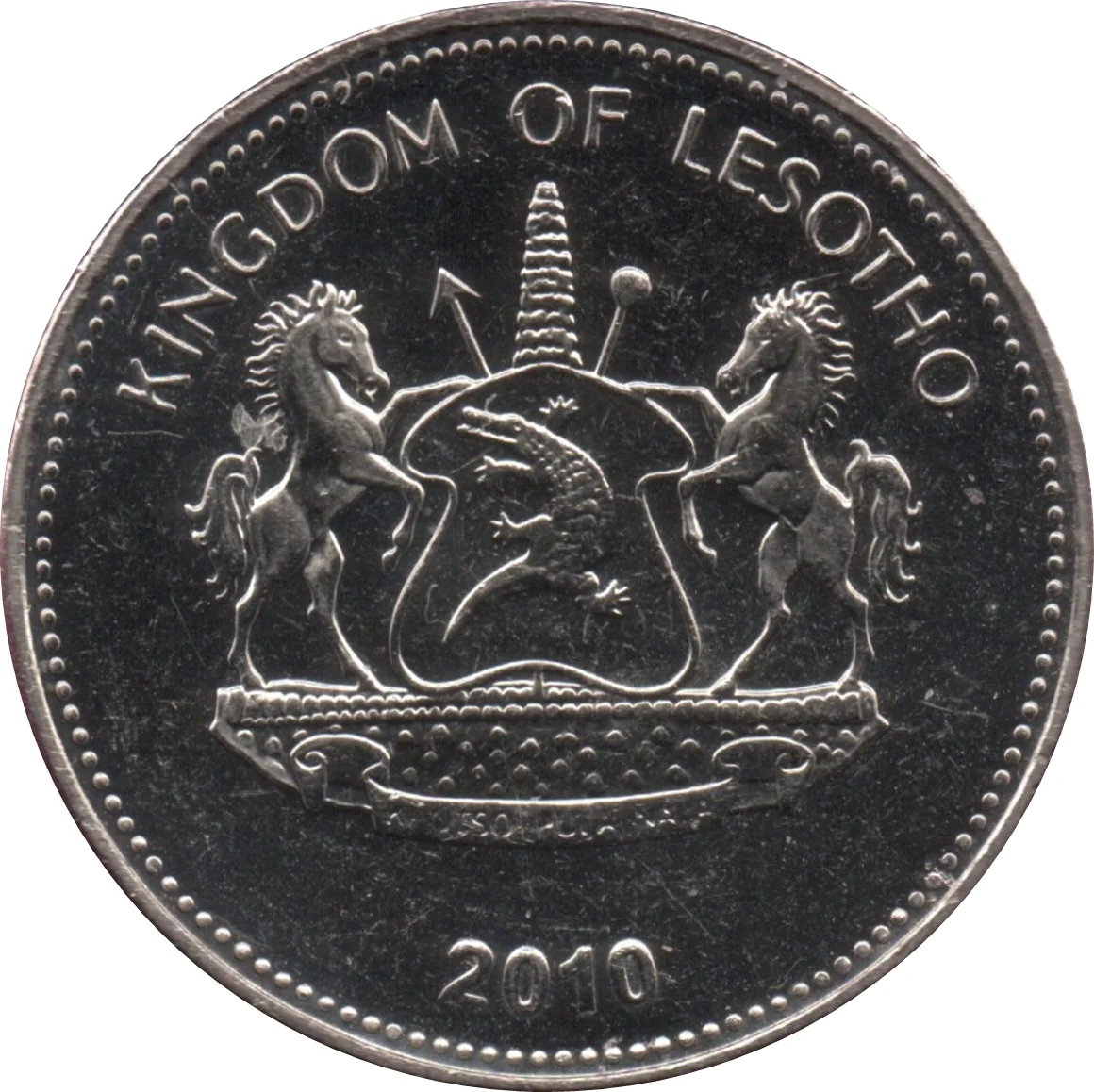
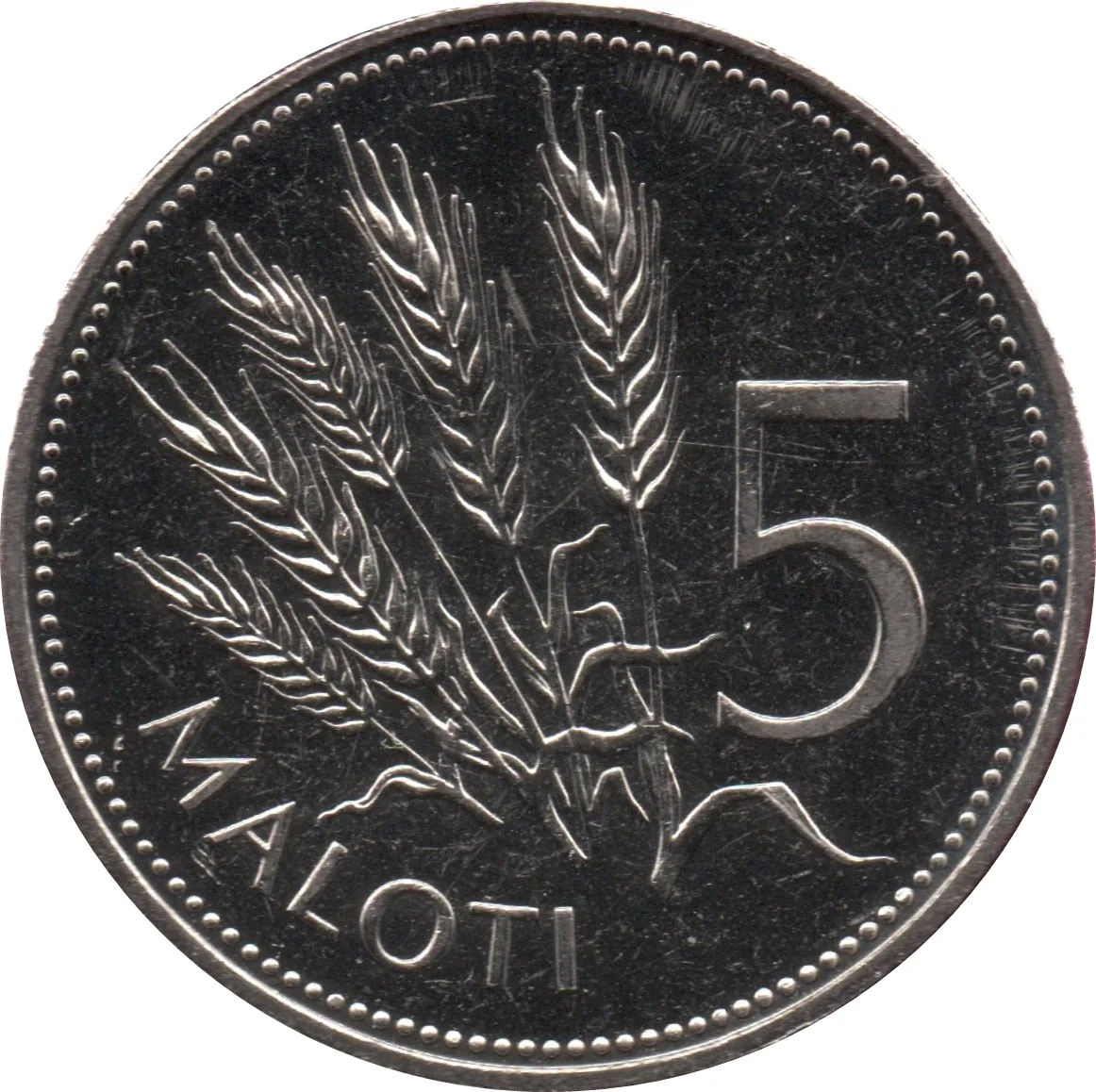
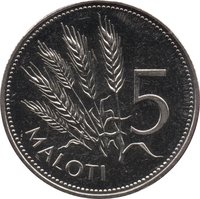
Obverse
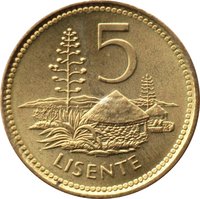
Reverse
Edge
Smooth and grooved
Categories
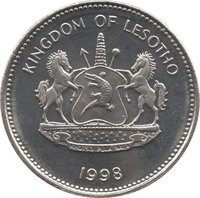
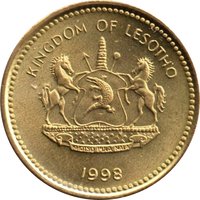
| Symbols> Coat of Arms |
Mintings
| Year | Mint Mark | Mintage | Quality | Collection |
|---|---|---|---|---|
| 1996 | — | — | ||
| 1998 | — | — | ||
| 2010 | — | — |
Historical background
In 1996, Lesotho's currency situation was fundamentally defined by its membership in the Common Monetary Area (CMA), an arrangement that pegged the Lesotho loti (LSL) at par to the South African rand (ZAR). This meant the loti was not an independent, floating currency but was fully backed by and interchangeable with the rand, which circulated freely within the country. This linkage provided critical stability by tethering Lesotho's monetary policy and inflation control to the larger and more developed South African economy, thereby reducing transaction costs for the significant trade and labor flows between the two nations.
However, this arrangement also meant Lesotho ceded control over its domestic monetary policy to the South African Reserve Bank. The country could not independently adjust interest rates or manipulate its currency to respond to local economic shocks. This was a point of ongoing policy debate, as the benefits of stability were weighed against the loss of economic sovereignty. Furthermore, while the loti was the official currency, the rand's widespread use highlighted the economy's deep dependency on its neighbor, a reliance underscored by the repatriation of mineworkers' wages and substantial customs revenue from the Southern African Customs Union (SACU).
The year 1996 itself did not feature a currency crisis, but it existed within a context of managing this dependent system. The government's focus was on utilizing the stability provided by the rand peg to foster economic development through other fiscal and structural means. Discussions about potential future monetary integration within the broader Southern African Development Community (SADC) were nascent, but the immediate reality was one of a fixed, stable, and externally managed currency regime that both underpinned and constrained Lesotho's economic policy options.
However, this arrangement also meant Lesotho ceded control over its domestic monetary policy to the South African Reserve Bank. The country could not independently adjust interest rates or manipulate its currency to respond to local economic shocks. This was a point of ongoing policy debate, as the benefits of stability were weighed against the loss of economic sovereignty. Furthermore, while the loti was the official currency, the rand's widespread use highlighted the economy's deep dependency on its neighbor, a reliance underscored by the repatriation of mineworkers' wages and substantial customs revenue from the Southern African Customs Union (SACU).
The year 1996 itself did not feature a currency crisis, but it existed within a context of managing this dependent system. The government's focus was on utilizing the stability provided by the rand peg to foster economic development through other fiscal and structural means. Discussions about potential future monetary integration within the broader Southern African Development Community (SADC) were nascent, but the immediate reality was one of a fixed, stable, and externally managed currency regime that both underpinned and constrained Lesotho's economic policy options.
🌱 Common