

50 dinars (7 Nov 1987 Coup d'état) – Tunisia
Add to wishlist
Non-circulating coins
Commemoration: The 9th Anniversary of the 7 Nov 1987 Coup d'état
Tunisia
Context
Material
References
KM: #
Numista: #112310
Value
Exchange value: 50 TND
Bullion value: $2897.33
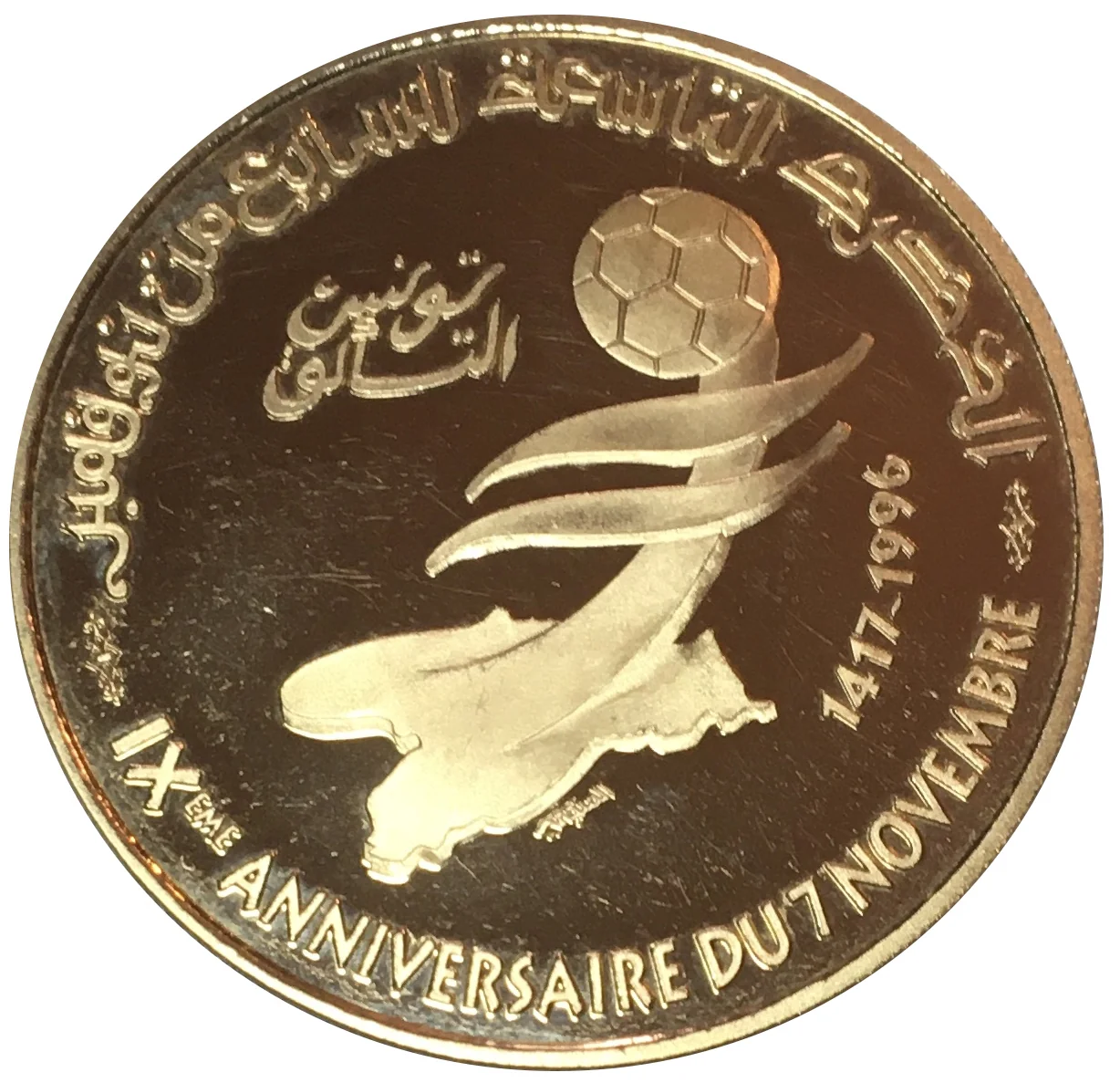
Obverse
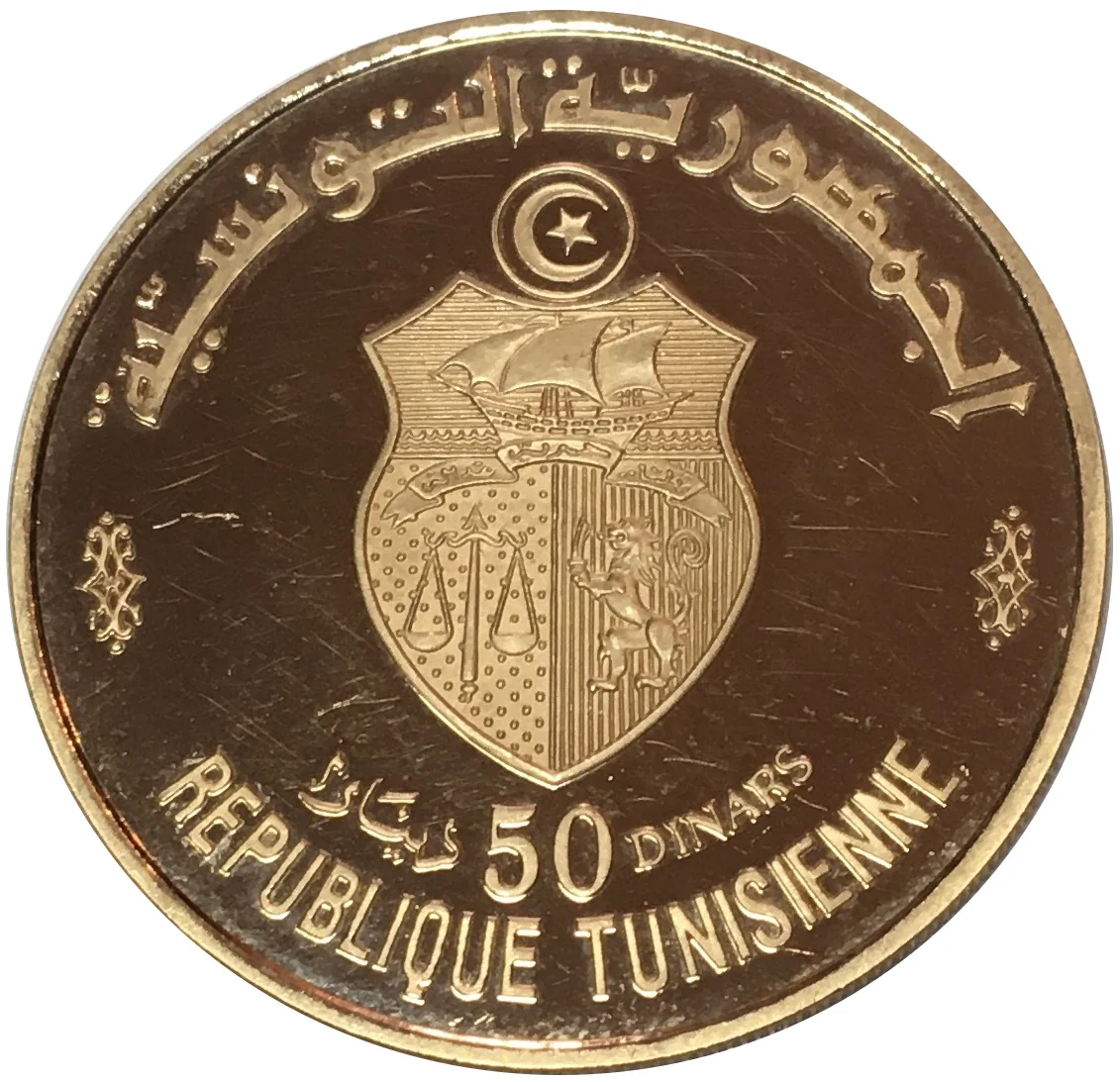
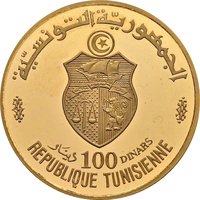
Reverse
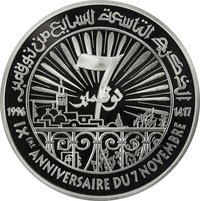
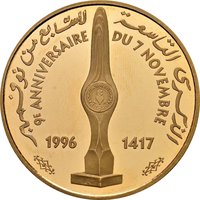
Description:
Monumental.
Inscription:
الذكرى التاسعة للسابع من نوفمبر
9E ANNIVERSAIRE DU 7 NOVEMBRE
حقوق الإنسان
لكل ذي حق حقه
1996-1417
9E ANNIVERSAIRE DU 7 NOVEMBRE
حقوق الإنسان
لكل ذي حق حقه
1996-1417
Translation:
Ninth Anniversary of November 7
9th Anniversary of November 7
Human Rights
To each his right.
1996-1417
9th Anniversary of November 7
Human Rights
To each his right.
1996-1417
Edge
Reeded
Mintings
| Year | Mint Mark | Mintage | Quality | Collection |
|---|---|---|---|---|
| 1996 | — | — | Proof |
Historical background
In 1996, Tunisia's currency situation was characterized by a period of managed stability and gradual liberalization under the long-term economic restructuring program agreed with the International Monetary Fund (IMF) and the World Bank. The Tunisian dinar (TND) operated under a heavily managed float, with its value primarily pegged to a basket of currencies weighted toward the French franc and the US dollar. This exchange rate policy, maintained by the Central Bank of Tunisia (BCT), was a cornerstone of the government's strategy to control inflation, which had been successfully reduced from double-digit figures in the late 1980s to around 4.7% in 1996, thereby preserving purchasing power and macroeconomic stability.
This stability, however, came with strict capital controls and a complex system of multiple exchange rates for different types of transactions. While the dinar was convertible for current account transactions (like trade), convertibility for the capital account remained severely restricted to prevent destabilizing outflows. The government was in the process of cautiously dismantling this system, having unified several official rates in the preceding years as part of its commitment to trade liberalization. The primary economic challenge in the mid-1990s was a persistent and growing current account deficit, fueled by a surge in imports of capital goods for modernization and a trade deficit that put occasional downward pressure on the dinar.
Overall, 1996 represented a transitional phase where the benefits of stability were weighed against the need for greater openness. The managed dinar provided a predictable environment for the export-oriented manufacturing sector and foreign investment, which were vital for growth. Yet, the existing controls also highlighted the inherent tension between maintaining a stable exchange rate and moving toward full integration into the global financial system—a central theme of Tunisia's economic policy for the ensuing decades.
This stability, however, came with strict capital controls and a complex system of multiple exchange rates for different types of transactions. While the dinar was convertible for current account transactions (like trade), convertibility for the capital account remained severely restricted to prevent destabilizing outflows. The government was in the process of cautiously dismantling this system, having unified several official rates in the preceding years as part of its commitment to trade liberalization. The primary economic challenge in the mid-1990s was a persistent and growing current account deficit, fueled by a surge in imports of capital goods for modernization and a trade deficit that put occasional downward pressure on the dinar.
Overall, 1996 represented a transitional phase where the benefits of stability were weighed against the need for greater openness. The managed dinar provided a predictable environment for the export-oriented manufacturing sector and foreign investment, which were vital for growth. Yet, the existing controls also highlighted the inherent tension between maintaining a stable exchange rate and moving toward full integration into the global financial system—a central theme of Tunisia's economic policy for the ensuing decades.

✨ Legendary