

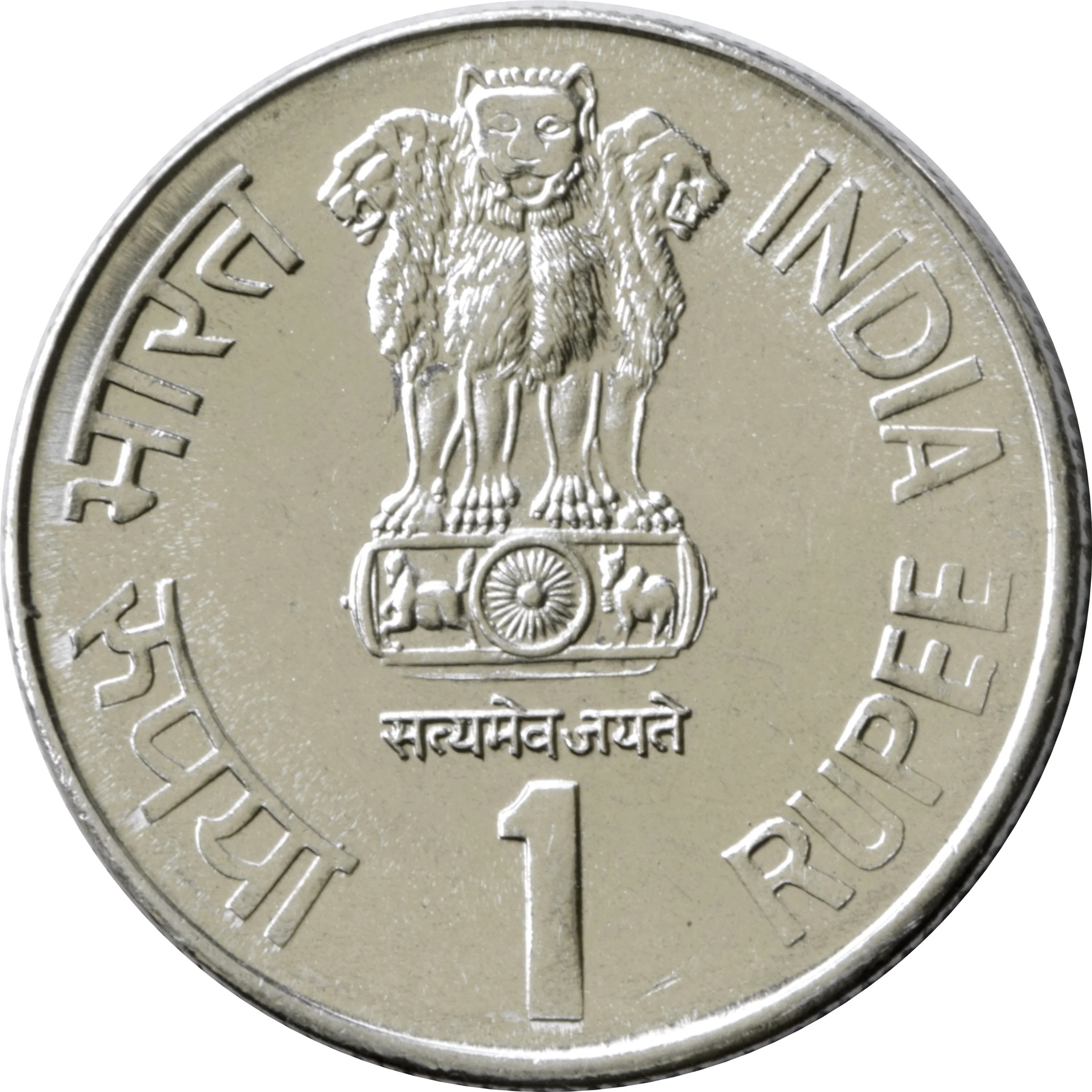
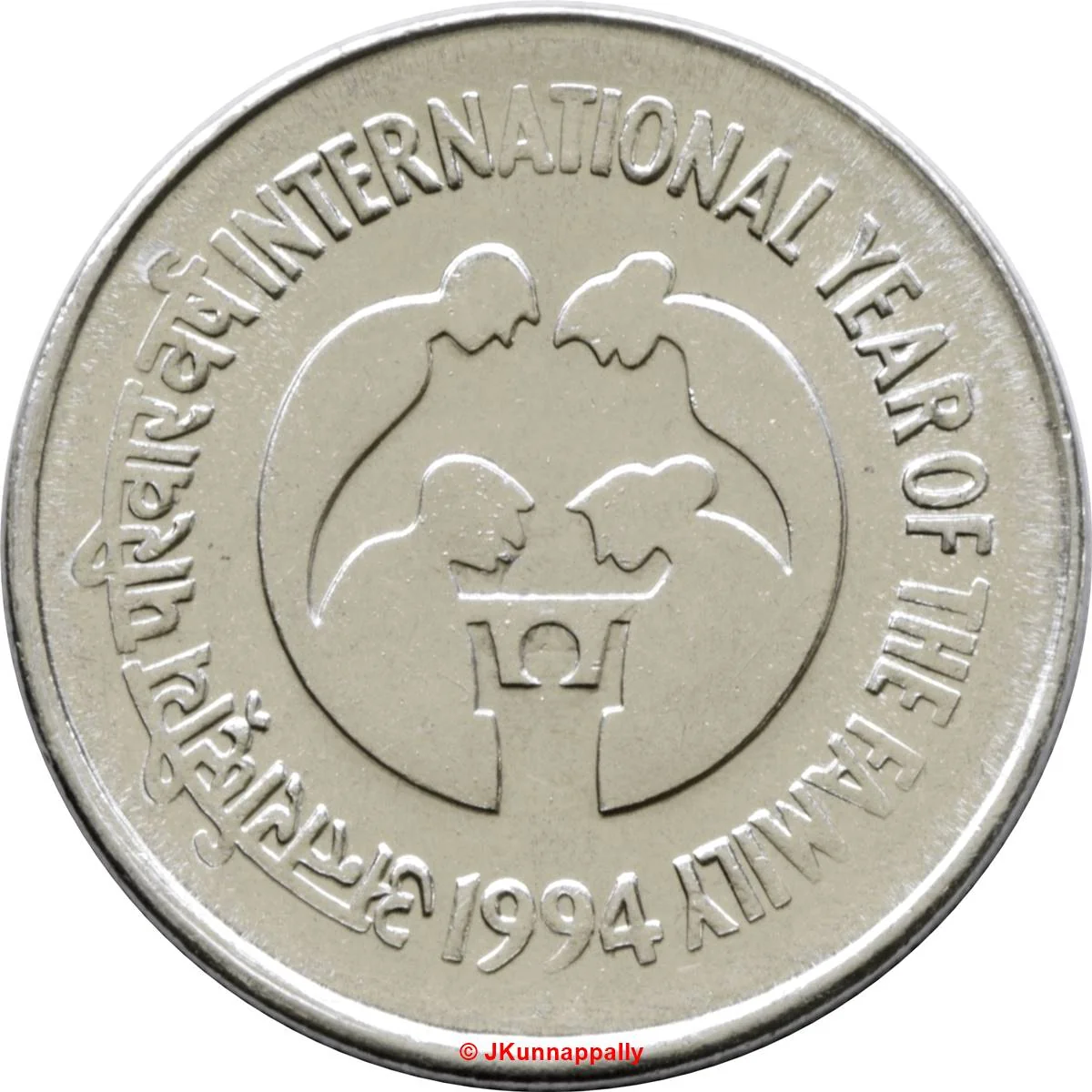
1 rupee – India
Add to wishlist
Circulating commemorative coins
Commemoration: International Year of the Family
India
Material
Diameter: 25 mm
Weight: 4.85 g
Thickness: 1.4 mm
Shape: Round
Composition: Stainless steel
Technique: Milled
Alignment: Medal alignment
flip
References
KM: #
Numista: #7008
Value
Exchange value: 1 INR
Inflation-adjusted value: 7.66 INR
Obverse
Reverse
Edge
Plain or reeded
Mints
| Name | Mark |
|---|---|
| Noida | ● |
| Mumbai / Bombay | ♦ |
Historical background
In 1994, India's currency situation was defined by the transformative aftermath of the 1991 balance of payments crisis and the subsequent economic reforms. The cornerstone of this period was the move towards partial convertibility of the rupee on the current account, initiated in 1992 under the Liberalised Exchange Rate Management System (LERMS). By 1994, India was preparing to take the final step, and on August 20, 1994, the government announced full current account convertibility, fulfilling its obligations to the International Monetary Fund. This meant that rupees could be freely converted for foreign exchange to facilitate trade in goods and services, a significant departure from decades of stringent controls.
The environment was one of cautious optimism, with the rupee finding a new equilibrium through a dual-exchange rate system that was gradually unified. The Reserve Bank of India (RBI) managed a "managed float," intervening to curb excessive volatility rather than targeting a fixed rate. Inflation, which had spiked in the early 1990s, was being brought under control, aiding currency stability. Furthermore, the reforms had boosted foreign investor confidence, leading to increased inflows of foreign direct investment (FDI) and portfolio investment, which bolstered foreign exchange reserves from a critical low of $1 billion in 1991 to a more comfortable $20 billion by 1994.
However, challenges persisted. Capital account convertibility—the freedom to convert currency for investment flows—remained tightly restricted, a prudent decision following the Mexican Peso crisis that very year, which served as a warning about the risks of rapid financial liberalization. The rupee still faced pressures from a persistent trade deficit and the burden of external debt. Thus, 1994 represented a pivotal year of consolidation, where India firmly integrated into the global trading system while consciously choosing a gradualist path toward fuller financial integration to maintain macroeconomic stability.
The environment was one of cautious optimism, with the rupee finding a new equilibrium through a dual-exchange rate system that was gradually unified. The Reserve Bank of India (RBI) managed a "managed float," intervening to curb excessive volatility rather than targeting a fixed rate. Inflation, which had spiked in the early 1990s, was being brought under control, aiding currency stability. Furthermore, the reforms had boosted foreign investor confidence, leading to increased inflows of foreign direct investment (FDI) and portfolio investment, which bolstered foreign exchange reserves from a critical low of $1 billion in 1991 to a more comfortable $20 billion by 1994.
However, challenges persisted. Capital account convertibility—the freedom to convert currency for investment flows—remained tightly restricted, a prudent decision following the Mexican Peso crisis that very year, which served as a warning about the risks of rapid financial liberalization. The rupee still faced pressures from a persistent trade deficit and the burden of external debt. Thus, 1994 represented a pivotal year of consolidation, where India firmly integrated into the global trading system while consciously choosing a gradualist path toward fuller financial integration to maintain macroeconomic stability.

🌱 Common