

1 dirham – United Arab Emirates
Add to wishlist
Circulating commemorative coins
Commemoration: Accession Day of His Highness Sheikh Hamdan bin Mohamed bin Rashid bin Saeed Al Maktoum, Crown Prince of Dubai
United Arab Emirates
Context
Material
References
Numista: #69405
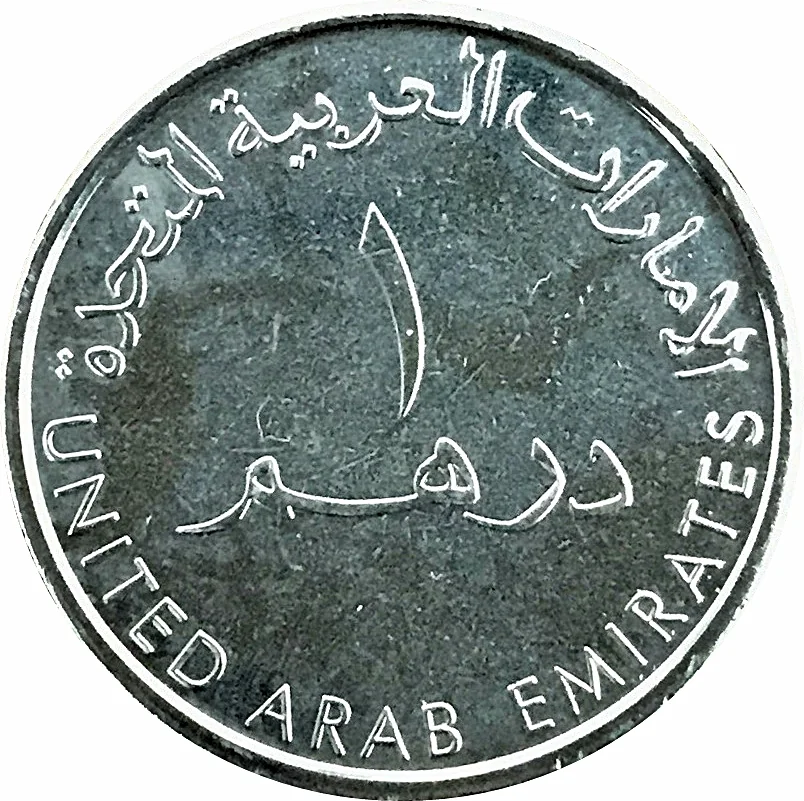
Value
Exchange value: 1 AED
Obverse
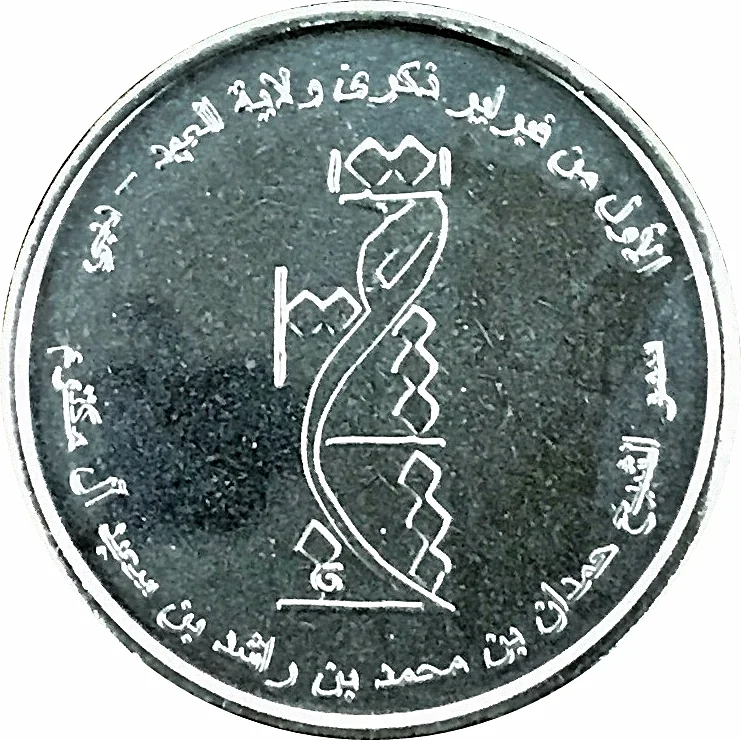
Reverse
Description:
Event logo
Inscription:
الأول من فبراير ذكرى ولاية العهد - دبي
سمو الشيخ حمدان بن محمد بن راشد بن سعيد آل مكتوم
سمو الشيخ حمدان بن محمد بن راشد بن سعيد آل مكتوم
Translation:
The First of February, the Anniversary of the Assumption of the Role of Crown Prince - Dubai
His Highness Sheikh Hamdan bin Mohammed bin Rashid bin Saeed Al Maktoum
His Highness Sheikh Hamdan bin Mohammed bin Rashid bin Saeed Al Maktoum
Script: Arabic
Language: Arabic
Edge
Reeded
Mintings
| Year | Mint Mark | Mintage | Quality | Collection |
|---|---|---|---|---|
| 2015 | — | — |
Historical background
In 2015, the United Arab Emirates' currency situation was defined by its long-standing and stable peg to the US dollar, a policy maintained since 1997. The UAE dirham (AED) was fixed at a rate of approximately 3.6725 per dollar, a cornerstone of the country's economic policy. This peg provided critical stability for trade, investment, and the vast expatriate population, anchoring the economy against oil price volatility and regional uncertainty. It also aligned the UAE's monetary policy with that of the US Federal Reserve, meaning interest rate movements were largely dictated by American economic conditions rather than domestic ones.
The primary challenge in 2015 stemmed from the dramatic collapse in global oil prices, which began in mid-2014 and saw crude fall by over 50%. As a hydrocarbon-dependent economy, this placed significant pressure on the UAE's fiscal balances and government revenues. However, unlike some regional peers, the UAE's more diversified economy and substantial sovereign wealth buffers provided a strong defense for the peg. Market speculation about a potential devaluation was minimal, as confidence in the central bank's commitment and capacity to maintain the fixed exchange rate remained high, reinforced by decades of proven stability.
Consequently, the key monetary policy discussion in 2015 was not about abandoning the dollar peg, but about managing its implications. With the US Federal Reserve beginning its tightening cycle after years of near-zero rates, the UAE faced the prospect of rising borrowing costs amidst an economic slowdown from low oil prices. This tension highlighted the peg's double-edged nature: it imported stability but also limited independent monetary tools to stimulate the non-oil economy. Therefore, the policy response focused on fiscal measures—including careful budget adjustments and strategic infrastructure spending—to support growth while maintaining unwavering commitment to the currency anchor.
The primary challenge in 2015 stemmed from the dramatic collapse in global oil prices, which began in mid-2014 and saw crude fall by over 50%. As a hydrocarbon-dependent economy, this placed significant pressure on the UAE's fiscal balances and government revenues. However, unlike some regional peers, the UAE's more diversified economy and substantial sovereign wealth buffers provided a strong defense for the peg. Market speculation about a potential devaluation was minimal, as confidence in the central bank's commitment and capacity to maintain the fixed exchange rate remained high, reinforced by decades of proven stability.
Consequently, the key monetary policy discussion in 2015 was not about abandoning the dollar peg, but about managing its implications. With the US Federal Reserve beginning its tightening cycle after years of near-zero rates, the UAE faced the prospect of rising borrowing costs amidst an economic slowdown from low oil prices. This tension highlighted the peg's double-edged nature: it imported stability but also limited independent monetary tools to stimulate the non-oil economy. Therefore, the policy response focused on fiscal measures—including careful budget adjustments and strategic infrastructure spending—to support growth while maintaining unwavering commitment to the currency anchor.
🌱 Fairly Common