

25 colones – Costa Rica
Add to wishlist
Costa Rica
Context
Years: 2010–2021
Issuer: Costa Rica
Issuing organization: Central Bank of Costa Rica
Period:
(since 1948)
Currency:
(since 1896)
Total mintage: 140,000,000
Material


References
KM: #
Numista: #69045
Value
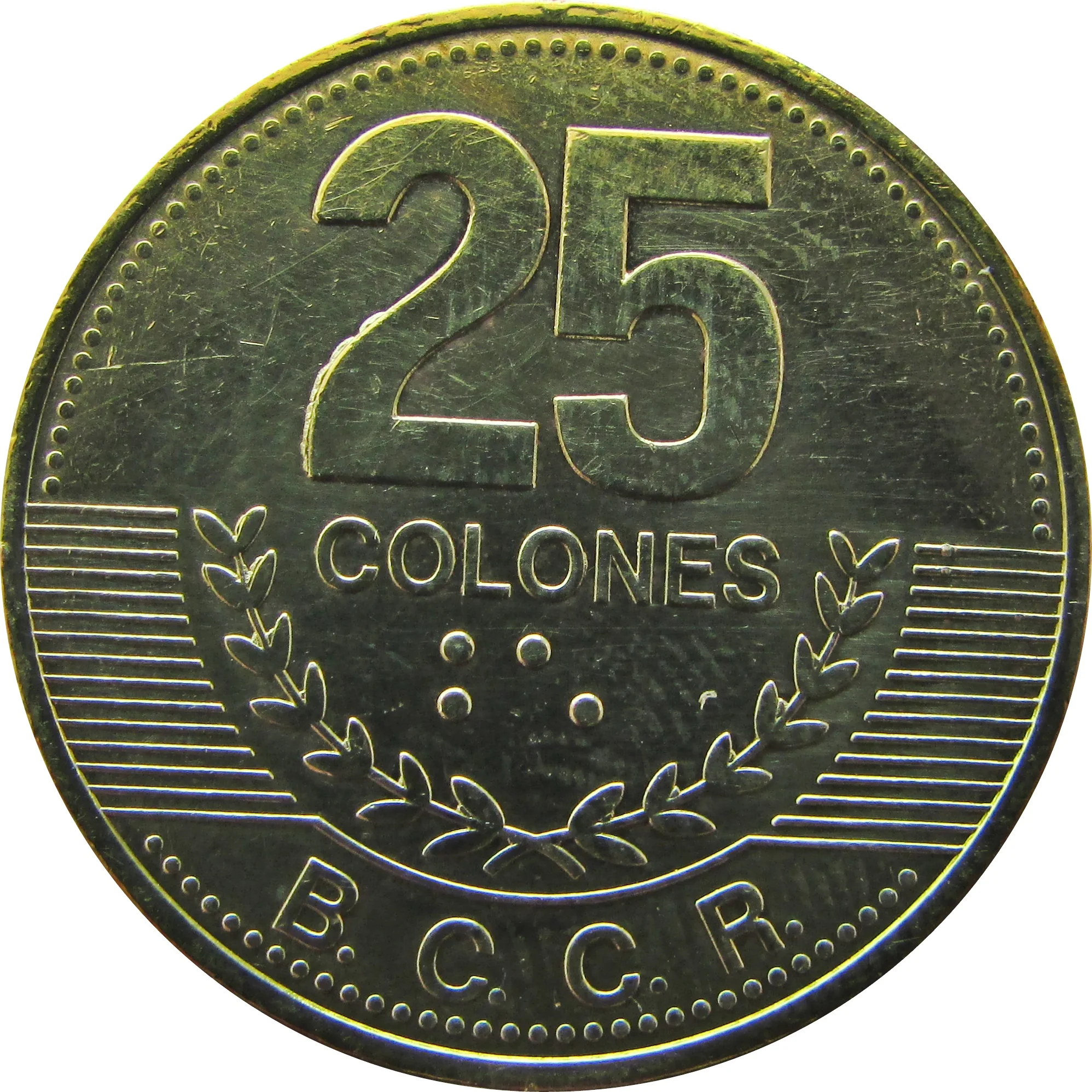
Exchange value: 25 CRC
Obverse
Description:
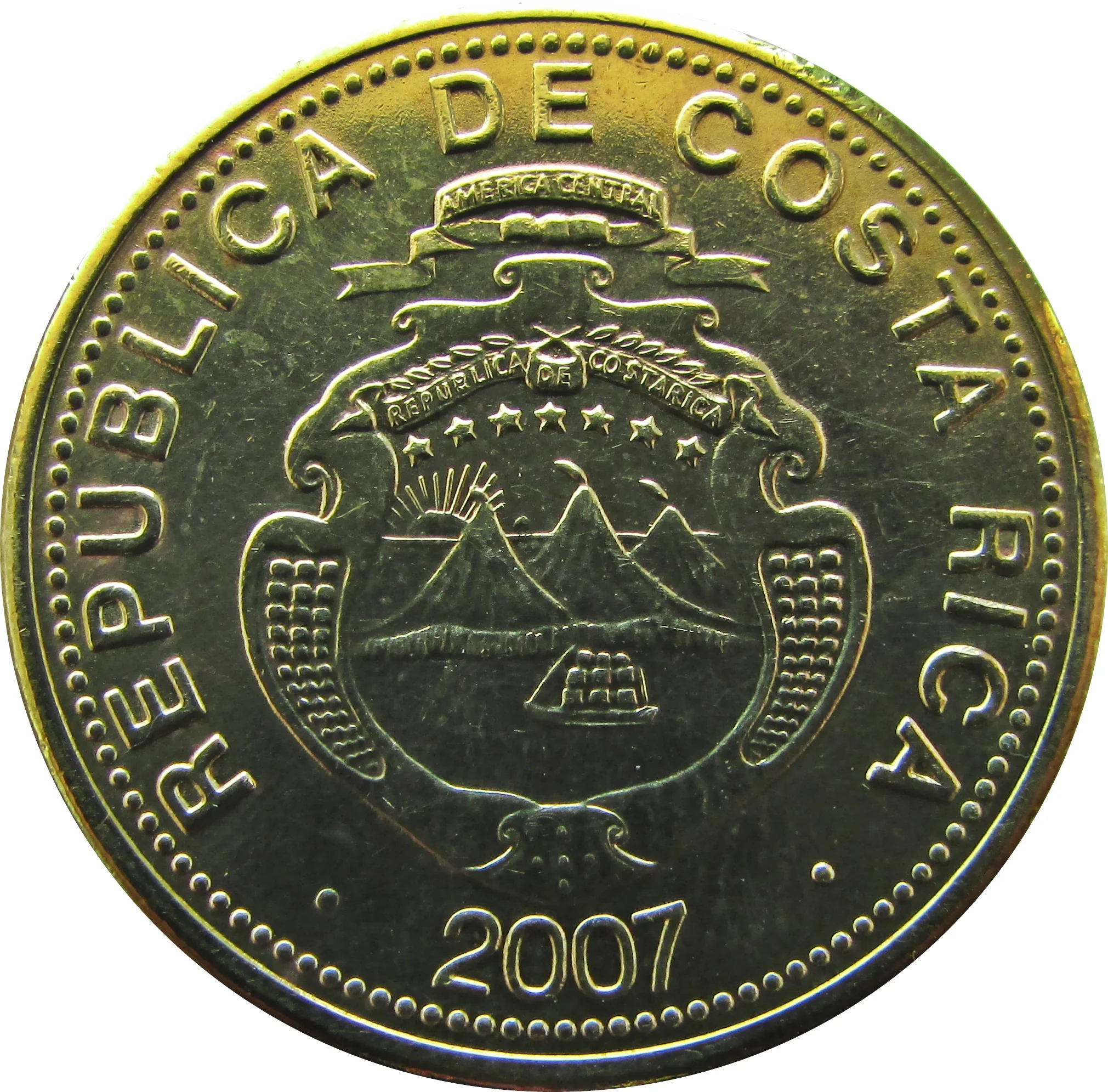
Costa Rica's coat of arms features seven stars for its provinces, three volcanoes for its mountain ranges, two ships for its position between two oceans, and a rising sun.
Inscription:
REPUBLICA DE COSTA RICA
AMERICA CENTRAL
REPUBLICA DE COSTA RICA
2007
AMERICA CENTRAL
REPUBLICA DE COSTA RICA
2007
Translation:
REPUBLIC OF COSTA RICA
CENTRAL AMERICA
REPUBLIC OF COSTA RICA
2007
CENTRAL AMERICA
REPUBLIC OF COSTA RICA
2007
Script: Latin
Language: Spanish
Reverse
Edge
Plain
Categories
| Symbols> Coat of Arms |
| Symbol> Wreath |
Mints
| Name | Mark |
|---|---|
| Mint of Costa Rica | — |
| Royal Mint | — |
Mintings
| Year | Mint Mark | Mintage | Quality | Collection |
|---|---|---|---|---|
| 2010 | — | 90,000,000 | ||
| 2014 | — | 30,000,000 | ||
| 2017 | — | 20,000,000 | ||
| 2021 | — | — |
Historical background
In 2010, Costa Rica's currency situation was characterized by a managed float of the colón (CRC) against the US dollar, a system maintained by the Central Bank of Costa Rica (BCCR). The primary objective was to curb excessive volatility and prevent sharp, disruptive appreciations or depreciations. However, the year was marked by significant upward pressure on the colón, which appreciated approximately 9% against the dollar. This appreciation was driven by strong inflows of foreign direct investment (notably in sectors like electronics and medical devices), steady tourism revenue, and substantial speculative capital entering the country in anticipation of further gains.
This appreciation created a complex economic dilemma. While it helped to keep inflation low (around 5-6%) by making imports cheaper, it posed a serious threat to the crucial export and tourism sectors, making Costa Rican goods and services more expensive on the international market. Exporters, particularly in agriculture and manufacturing, voiced strong concerns about eroding competitiveness. The Central Bank intervened actively in the foreign exchange market throughout the year, purchasing dollars to build international reserves and temper the colón's rise, with reserves growing to over $4 billion.
The currency dynamics of 2010 were also politically charged, occurring against the backdrop of broader debates about dollarization and central bank autonomy. Some business sectors and policymakers advocated for a move towards full dollarization to eliminate exchange rate risk, while others defended the managed float as a necessary tool for economic adjustment. Ultimately, the BCCR maintained its interventionist approach, seeking a difficult balance between controlling inflation, preserving export competitiveness, and maintaining monetary policy independence, setting the stage for continued exchange rate management challenges in the following years.
This appreciation created a complex economic dilemma. While it helped to keep inflation low (around 5-6%) by making imports cheaper, it posed a serious threat to the crucial export and tourism sectors, making Costa Rican goods and services more expensive on the international market. Exporters, particularly in agriculture and manufacturing, voiced strong concerns about eroding competitiveness. The Central Bank intervened actively in the foreign exchange market throughout the year, purchasing dollars to build international reserves and temper the colón's rise, with reserves growing to over $4 billion.
The currency dynamics of 2010 were also politically charged, occurring against the backdrop of broader debates about dollarization and central bank autonomy. Some business sectors and policymakers advocated for a move towards full dollarization to eliminate exchange rate risk, while others defended the managed float as a necessary tool for economic adjustment. Ultimately, the BCCR maintained its interventionist approach, seeking a difficult balance between controlling inflation, preserving export competitiveness, and maintaining monetary policy independence, setting the stage for continued exchange rate management challenges in the following years.


🌱 Very Common