

1 crown – United Kingdom
Add to wishlist
Circulating commemorative coins
Commemoration: Death of Sir Winston Churchill, 1965
United Kingdom
Context
Year: 1965
Issuer: United Kingdom
Ruler: Elizabeth II
Currency:
(1158—1970)
Total mintage: 19,640,000
Material
Diameter: 38.61 mm
Weight: 28.28 g
Thickness: 3 mm
Shape: Round
Composition: Copper-nickel
Technique: Milled
Alignment: Medal alignment
flip
References
KM: #
Numista: #6898
Obverse
Description:
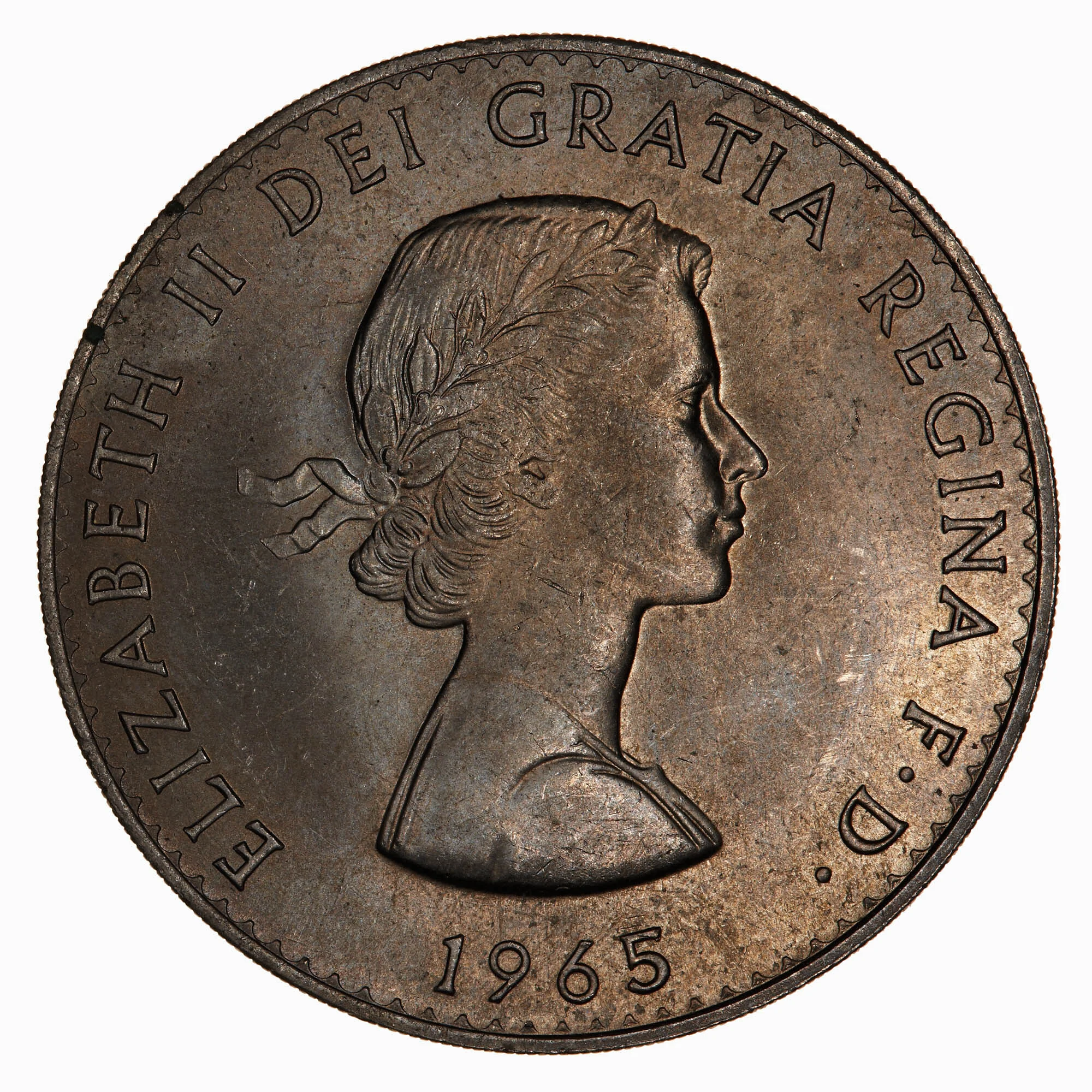
Young laureate Elizabeth II right, legend around, date below.
Inscription:
ELIZABETH II DEI GRATIA REGINA F·D· 1965
Translation:
Elizabeth II by the Grace of God Queen Defender of the Faith 1965
Script: Latin
Language: Latin
Engraver: Mary Gillick
Reverse
Description:
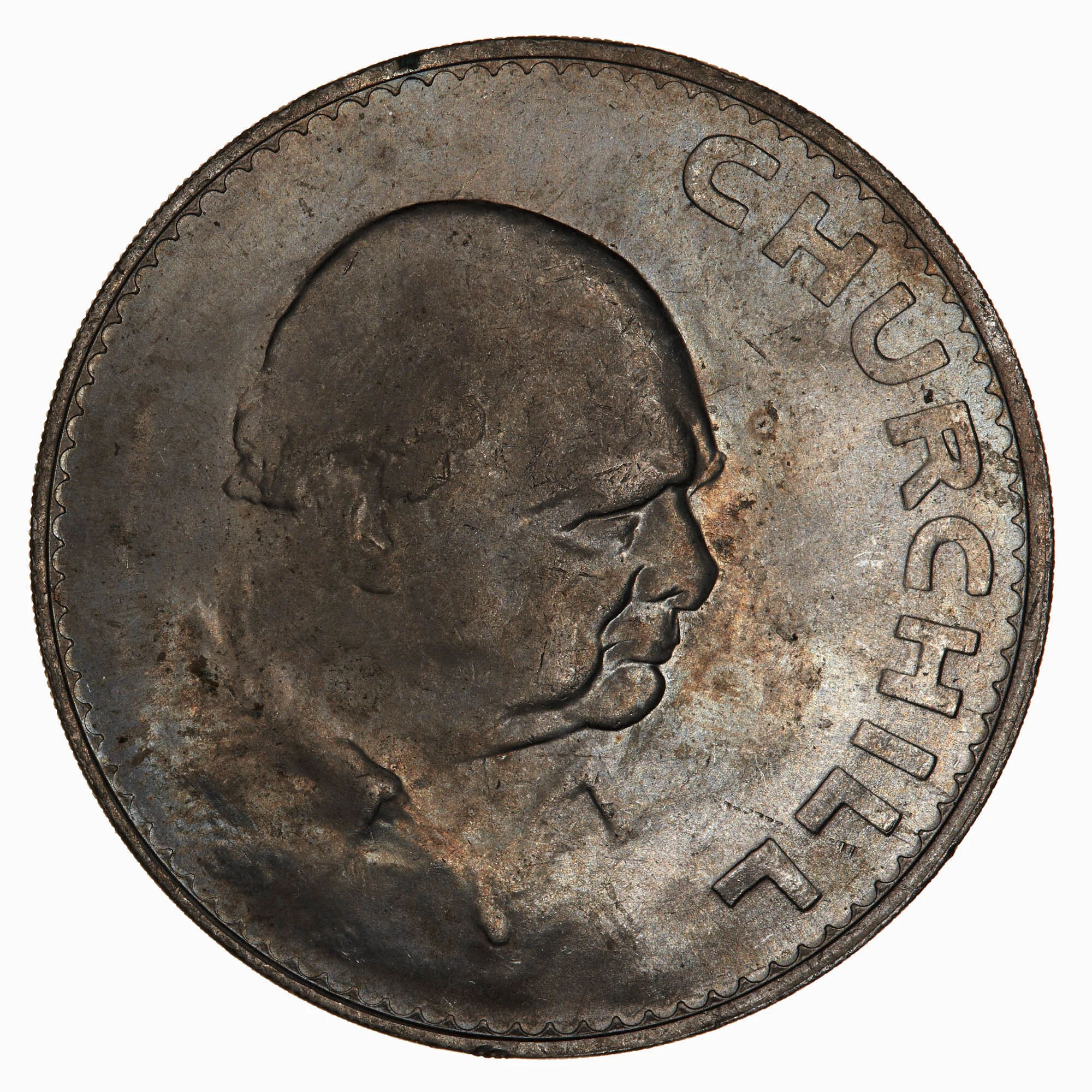
A somber portrait of Winston Churchill in a siren suit, facing right.
Inscription:
CHURCHILL
Script: Latin
Engraver: Oscar Nemon
Edge
Reeded
Categories
| Event> Death anniversary |
| Person> Politician |
Mints
| Name | Mark |
|---|---|
| Royal Mint (Tower Hill) | — |
Mintings
| Year | Mint Mark | Mintage | Quality | Collection |
|---|---|---|---|---|
| 1965 | — | 19,640,000 |
Historical background
In 1965, the United Kingdom's currency situation was defined by the enduring strength of the Sterling Area and the persistent pressure on the pound sterling. The post-war Bretton Woods system, to which the UK was committed, pegged sterling at $2.80, a rate seen as crucial for London's role as a global financial centre. However, maintaining this parity was a constant struggle. The UK faced a recurring cycle of balance of payments deficits, driven by a lack of industrial competitiveness and high levels of overseas spending, including military commitments. This led to a reliance on short-term "hot money" inflows and central bank swap lines to defend the pound, creating a fragile equilibrium vulnerable to market sentiment.
Domestically, the newly elected Labour government under Harold Wilson, which had come to power in late 1964, was grappling with these external constraints. Wilson had famously rejected devaluation as a policy option, declaring it would "betray" ordinary savers and the Commonwealth. Instead, his government pursued a dual strategy of austerity and controls to protect the currency. This included the controversial "sterling crisis" package of July 1965, which featured an import surcharge, tightened credit, and cuts to public investment. The goal was to reduce the trade deficit and reassure international investors without resorting to a formal devaluation of the pound.
The year was therefore one of managed strain. While a full-blown crisis was temporarily averted, the underlying weaknesses remained unaddressed. The defensive measures stifled domestic growth and highlighted the tension between the UK's global financial ambitions and its economic realities. This precarious position would ultimately prove unsustainable, culminating in the devaluation of sterling from $2.80 to $2.40 in November 1967, a move that marked the end of an era for the pound's status as a premier reserve currency.
Domestically, the newly elected Labour government under Harold Wilson, which had come to power in late 1964, was grappling with these external constraints. Wilson had famously rejected devaluation as a policy option, declaring it would "betray" ordinary savers and the Commonwealth. Instead, his government pursued a dual strategy of austerity and controls to protect the currency. This included the controversial "sterling crisis" package of July 1965, which featured an import surcharge, tightened credit, and cuts to public investment. The goal was to reduce the trade deficit and reassure international investors without resorting to a formal devaluation of the pound.
The year was therefore one of managed strain. While a full-blown crisis was temporarily averted, the underlying weaknesses remained unaddressed. The defensive measures stifled domestic growth and highlighted the tension between the UK's global financial ambitions and its economic realities. This precarious position would ultimately prove unsustainable, culminating in the devaluation of sterling from $2.80 to $2.40 in November 1967, a move that marked the end of an era for the pound's status as a premier reserve currency.
🌱 Very Common