

250 Tögrög – Mongolia
Non-circulating coins
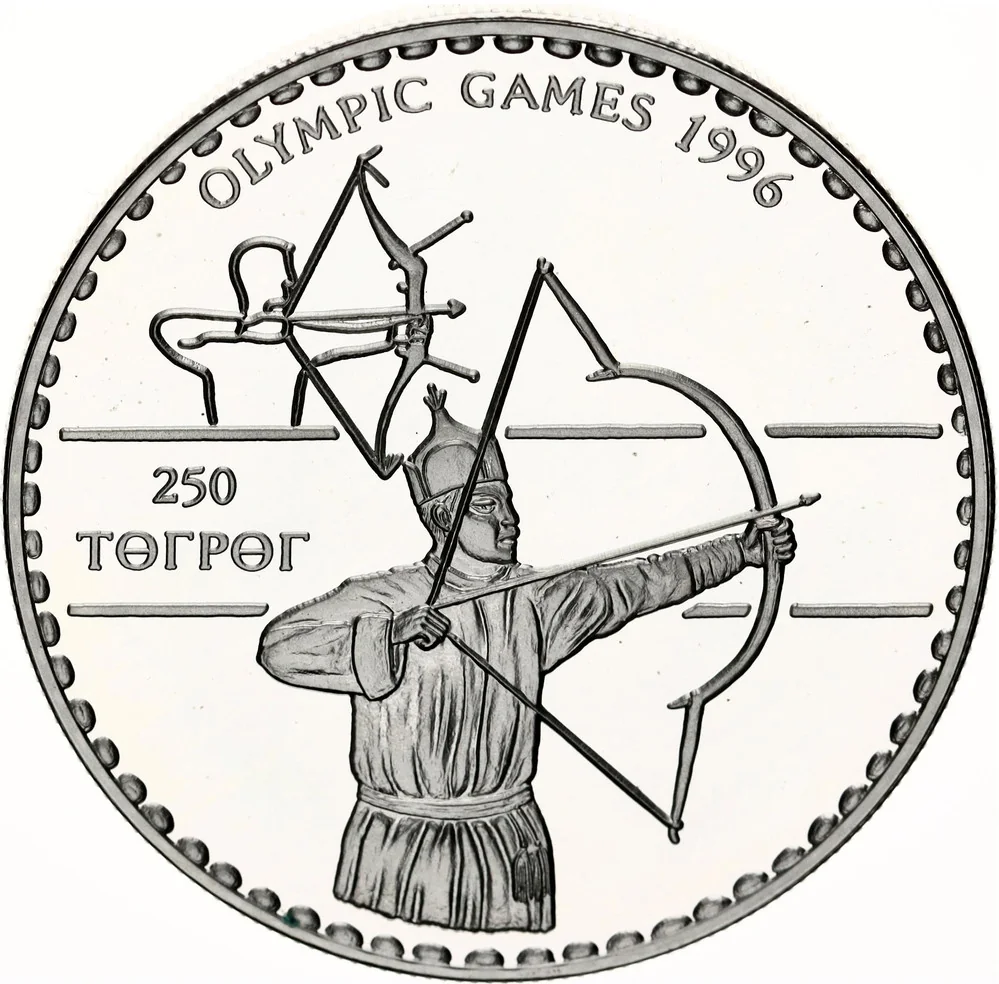
Commemoration: 1996 Olympics
Mongolia
Context

Material
Diameter: 38.6 mm
Weight: 31.47 g
Silver weight: 29.11 g
Shape: Round
Composition: 92.5% Silver
Standard: Silver ounce
Magnetic: No
Technique: Milled
Alignment: Medal alignment
flip
References
KM: #Click to copy to clipboard112
Numista: #68947
Value
Exchange value: 250 MNT
Bullion value: $84.36
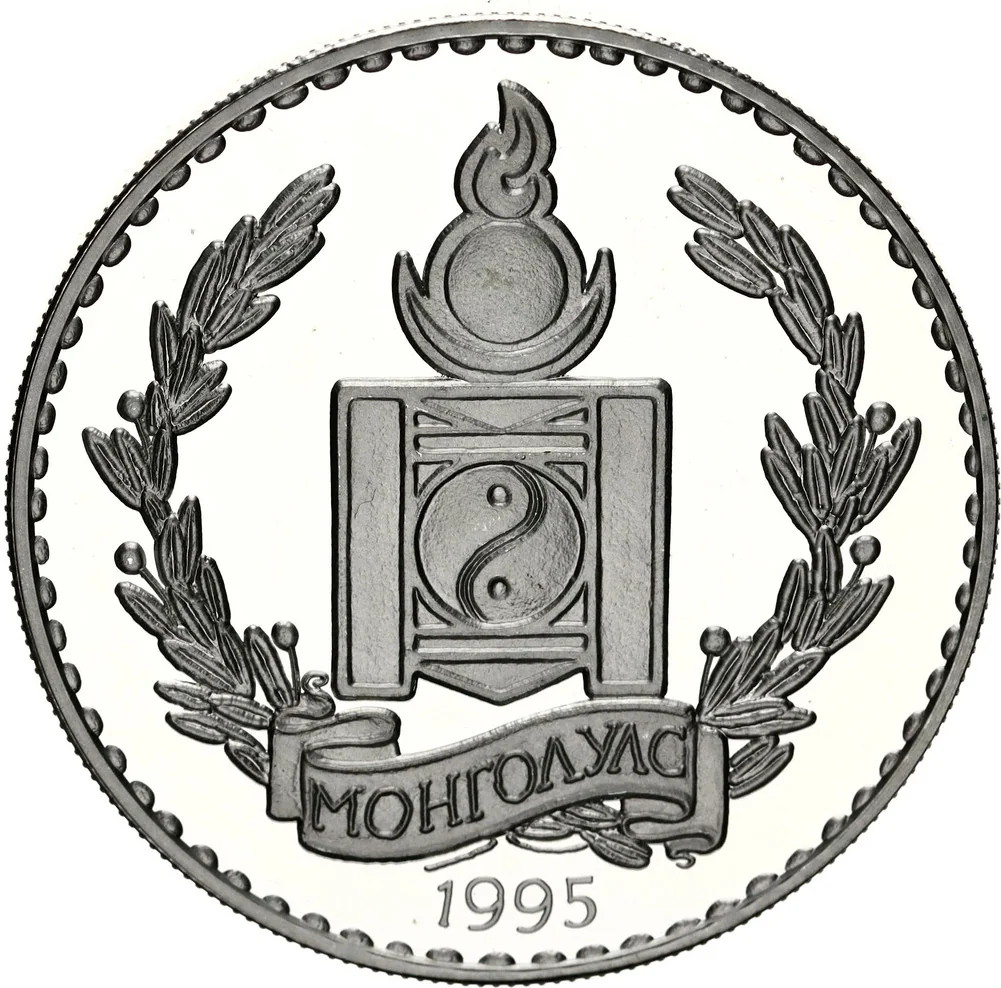
Obverse
Description:
Soyombo national symbol with date.
Inscription:
МОНГОΛУΛС
1995
1995
Translation:
MONGOLIA
1995
1995
Language: Mongolian
Reverse
Edge
Reeded
Mintings
| Year | Mint Mark | Mintage | Quality | Collection |
|---|---|---|---|---|
| 1994 | — | — | Proof | |
| 1995 | — | 40,000 | Proof |
Historical background
In 1994, Mongolia was in the throes of a painful and complex transition from a centrally-planned Soviet satellite state to a market economy, a process that began with the democratic revolution of 1990. The currency situation was a central pillar of this crisis. The national currency, the tögrög (MNT), was suffering from severe inflation and depreciation, following the abrupt cessation of Soviet aid and the collapse of the COMECON trading bloc. The government, under pressure from the International Monetary Fund (IMF) and the World Bank, had embarked on a rigorous stabilization program, but the immediate social cost was high, with price liberalization leading to annual inflation peaking at over 320% in 1992 and remaining dangerously elevated.
The core of the 1994 currency situation was the implementation of a unified, floating exchange rate system. Prior to this, Mongolia maintained a complex system of multiple official exchange rates alongside a burgeoning black market, which distorted the economy and discouraged foreign investment. In a critical move towards liberalization, the government unified these rates in late 1993 and early 1994, allowing the tögrög to float and find its market value. This was a decisive step recommended by the IMF to correct the balance of payments, but it initially led to a sharp devaluation, making imports—particularly of vital fuel and machinery from Russia—more expensive and exacerbating domestic economic hardship.
Consequently, the macroeconomic environment in 1994 remained fragile but showed nascent signs of stabilization from the hyperinflationary chaos of the previous two years. Inflation, while still high, was being brought down through tight monetary policy. The currency reform, though painful, was a foundational step in integrating Mongolia into the global financial system and establishing the basis for future growth. The year thus represents a pivotal moment of "shock therapy," where the short-term pain of currency devaluation and austerity was accepted by the government as the necessary price for long-term economic restructuring and stability.
The core of the 1994 currency situation was the implementation of a unified, floating exchange rate system. Prior to this, Mongolia maintained a complex system of multiple official exchange rates alongside a burgeoning black market, which distorted the economy and discouraged foreign investment. In a critical move towards liberalization, the government unified these rates in late 1993 and early 1994, allowing the tögrög to float and find its market value. This was a decisive step recommended by the IMF to correct the balance of payments, but it initially led to a sharp devaluation, making imports—particularly of vital fuel and machinery from Russia—more expensive and exacerbating domestic economic hardship.
Consequently, the macroeconomic environment in 1994 remained fragile but showed nascent signs of stabilization from the hyperinflationary chaos of the previous two years. Inflation, while still high, was being brought down through tight monetary policy. The currency reform, though painful, was a foundational step in integrating Mongolia into the global financial system and establishing the basis for future growth. The year thus represents a pivotal moment of "shock therapy," where the short-term pain of currency devaluation and austerity was accepted by the government as the necessary price for long-term economic restructuring and stability.



💎 Very Rare