

1 Centavo – Dominican Republic
Dominican Republic
Context
Years: 1984–1987
Issuer: Dominican Republic 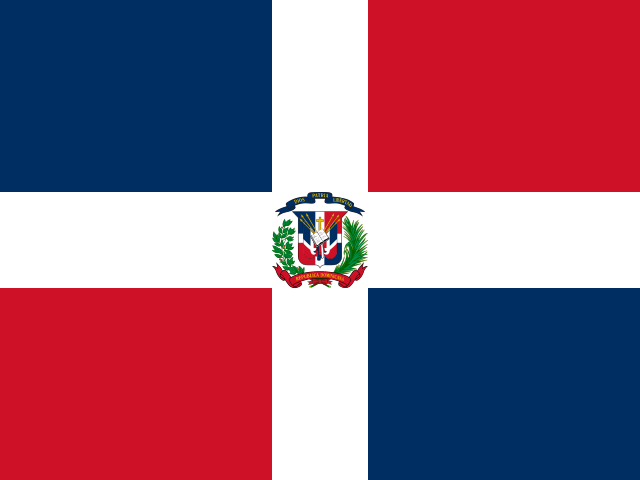
Period:
(since 1966)
Currency:
(since 1937)
Total mintage: 43,071,800
Material
References
KM: #Click to copy to clipboard64
Numista: #6875
Value
Exchange value: 0.01 DOP
Obverse
Description:
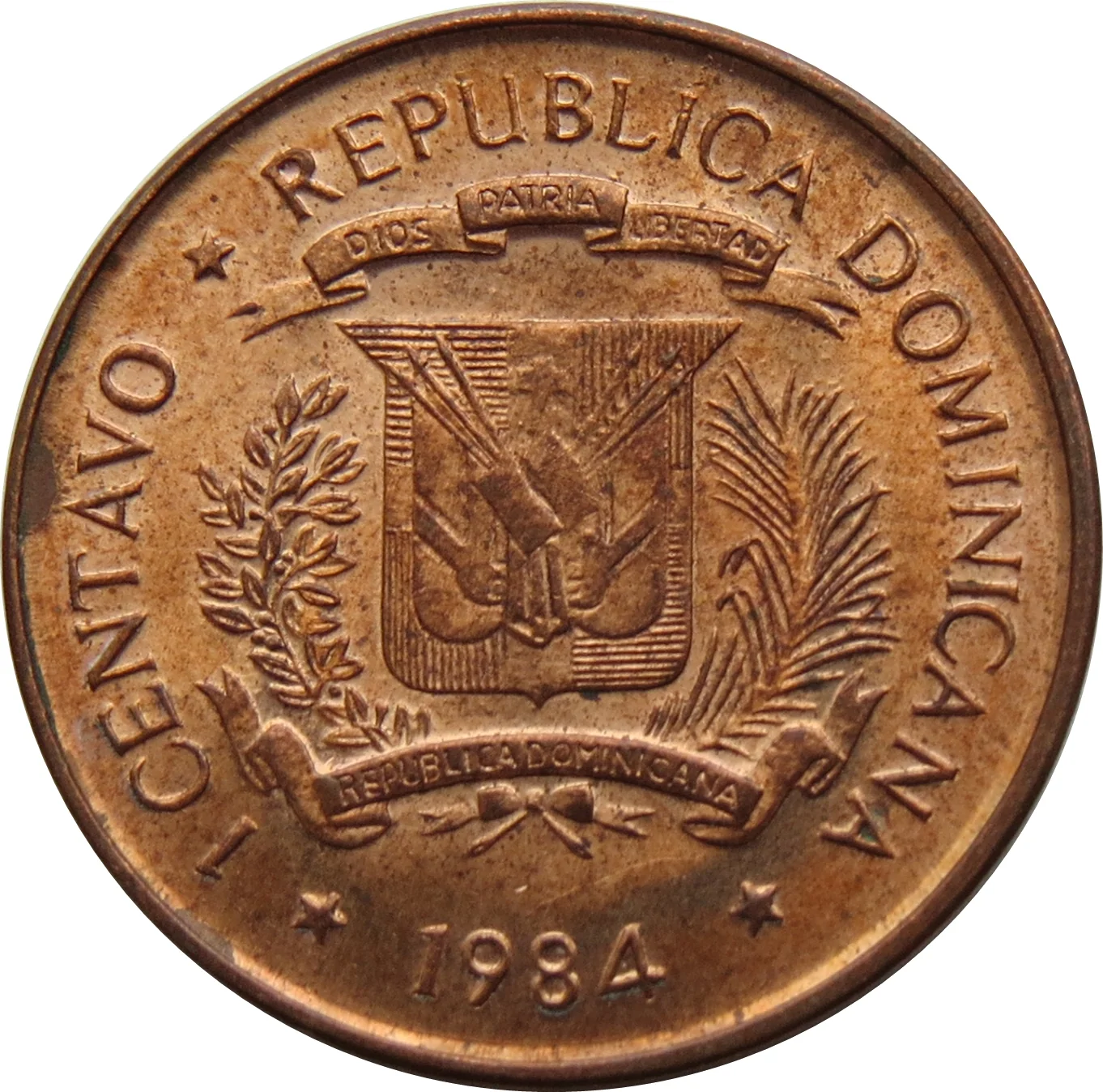
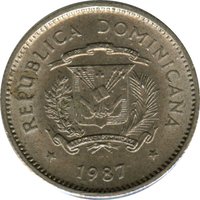
Country, denomination, coat of arms, year.
Inscription:
1 CENTAVO
REPUBLICA DOMINICANA
1984
DIOS PATRIA LIBERTAD
REPUBLICA DOMINICANA
REPUBLICA DOMINICANA
1984
DIOS PATRIA LIBERTAD
REPUBLICA DOMINICANA
Translation:
1 CENTAVO
DOMINICAN REPUBLIC
1984
GOD FATHERLAND LIBERTY
DOMINICAN REPUBLIC
DOMINICAN REPUBLIC
1984
GOD FATHERLAND LIBERTY
DOMINICAN REPUBLIC
Script: Latin
Language: Spanish
Engraver: Casimiro Nemesio de Moya
Reverse
Description:
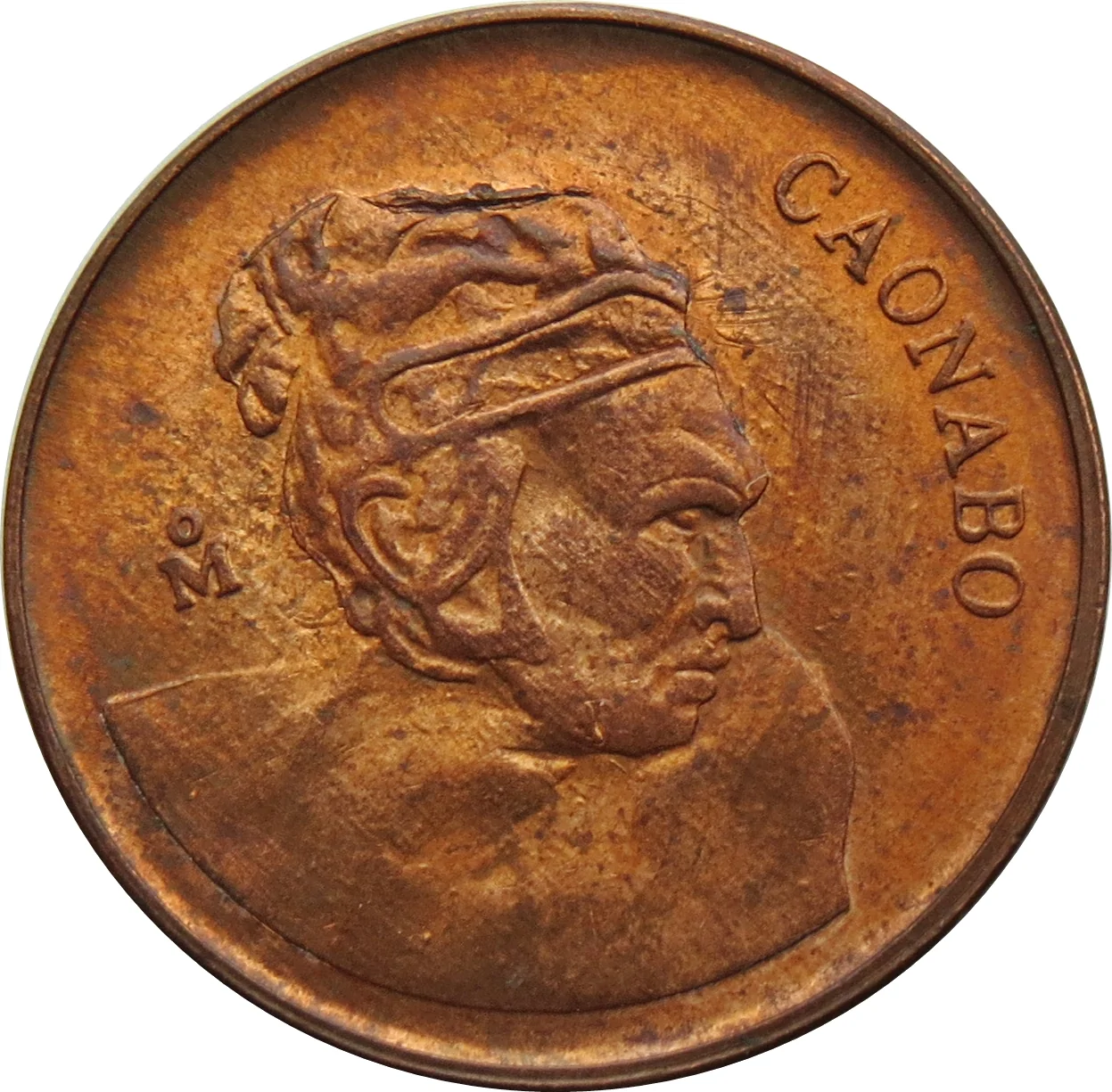
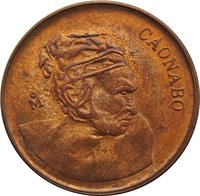
Portrait of Caonabo, facing right—a local leader at the time of Columbus's arrival.
Inscription:
CAONABO
Script: Latin
Edge
Plain
Categories
| Symbols> Coat of Arms |
Mints
| Name | Mark |
|---|---|
| Royal Canadian Mint of Winnipeg | — |
| Royal Mint | — |
| Mexican Mint | Mo |
Mintings
Historical background
In 1984, the Dominican Republic was navigating a precarious economic landscape dominated by a severe foreign exchange crisis and a deeply unstable currency regime. The country operated under a complex system of multiple exchange rates, a common tool in Latin America at the time to manage balance of payments pressures. The Central Bank maintained an overvalued official rate for priority imports and debt servicing, while a parallel "free market" rate, where the Dominican peso (DOP) was significantly weaker, reflected the true market scarcity of US dollars. This disparity fueled a thriving black market, creating distortions, encouraging capital flight, and breeding corruption as access to cheap official dollars became a privilege.
The root causes of this crisis were multifaceted, stemming from the oil price shocks of the 1970s, high global interest rates, and a legacy of expansive public spending that led to substantial external debt. By the early 1980s, the government of President Salvador Jorge Blanco was under intense pressure from international creditors, particularly the International Monetary Fund (IMF), to implement austerity measures and structural reforms. A key demand was the unification and devaluation of the peso to restore competitiveness and unlock crucial financing. However, any move to formally devalue the currency was politically and socially explosive, threatening to trigger immediate inflation and public unrest.
Consequently, 1984 was a year of mounting tension and economic stagnation, caught between the unsustainable past and a painful impending adjustment. The currency situation symbolized the broader economic dysfunction, with businesses struggling to obtain dollars for imports and widespread uncertainty paralyzing investment. The pressures culminated in April 1984 with the signing of a standby agreement with the IMF, which set the stage for a major, and ultimately controversial, currency devaluation the following year. Thus, the currency regime of 1984 represented the final, strained chapter of an exhausted policy model, immediately preceding a wrenching neoliberal transition.
The root causes of this crisis were multifaceted, stemming from the oil price shocks of the 1970s, high global interest rates, and a legacy of expansive public spending that led to substantial external debt. By the early 1980s, the government of President Salvador Jorge Blanco was under intense pressure from international creditors, particularly the International Monetary Fund (IMF), to implement austerity measures and structural reforms. A key demand was the unification and devaluation of the peso to restore competitiveness and unlock crucial financing. However, any move to formally devalue the currency was politically and socially explosive, threatening to trigger immediate inflation and public unrest.
Consequently, 1984 was a year of mounting tension and economic stagnation, caught between the unsustainable past and a painful impending adjustment. The currency situation symbolized the broader economic dysfunction, with businesses struggling to obtain dollars for imports and widespread uncertainty paralyzing investment. The pressures culminated in April 1984 with the signing of a standby agreement with the IMF, which set the stage for a major, and ultimately controversial, currency devaluation the following year. Thus, the currency regime of 1984 represented the final, strained chapter of an exhausted policy model, immediately preceding a wrenching neoliberal transition.
🌱 Common