

2 Euro (Andorra's membership in the Council of Europe) – Andorra
Non-circulating coins
Commemoration: 20th anniversary of Andorra's membership in the Council of Europe
Andorra
Context
Year: 2014
Issuer: Andorra 
Ruler: Joan Enric Vives i Sicília
Currency:
(since 2014)
Total mintage: 105,000
Material
References
KM: #Click to copy to clipboard528
Numista: #68396
Value
Exchange value: 2 EUR = $2.36
Obverse
Description:
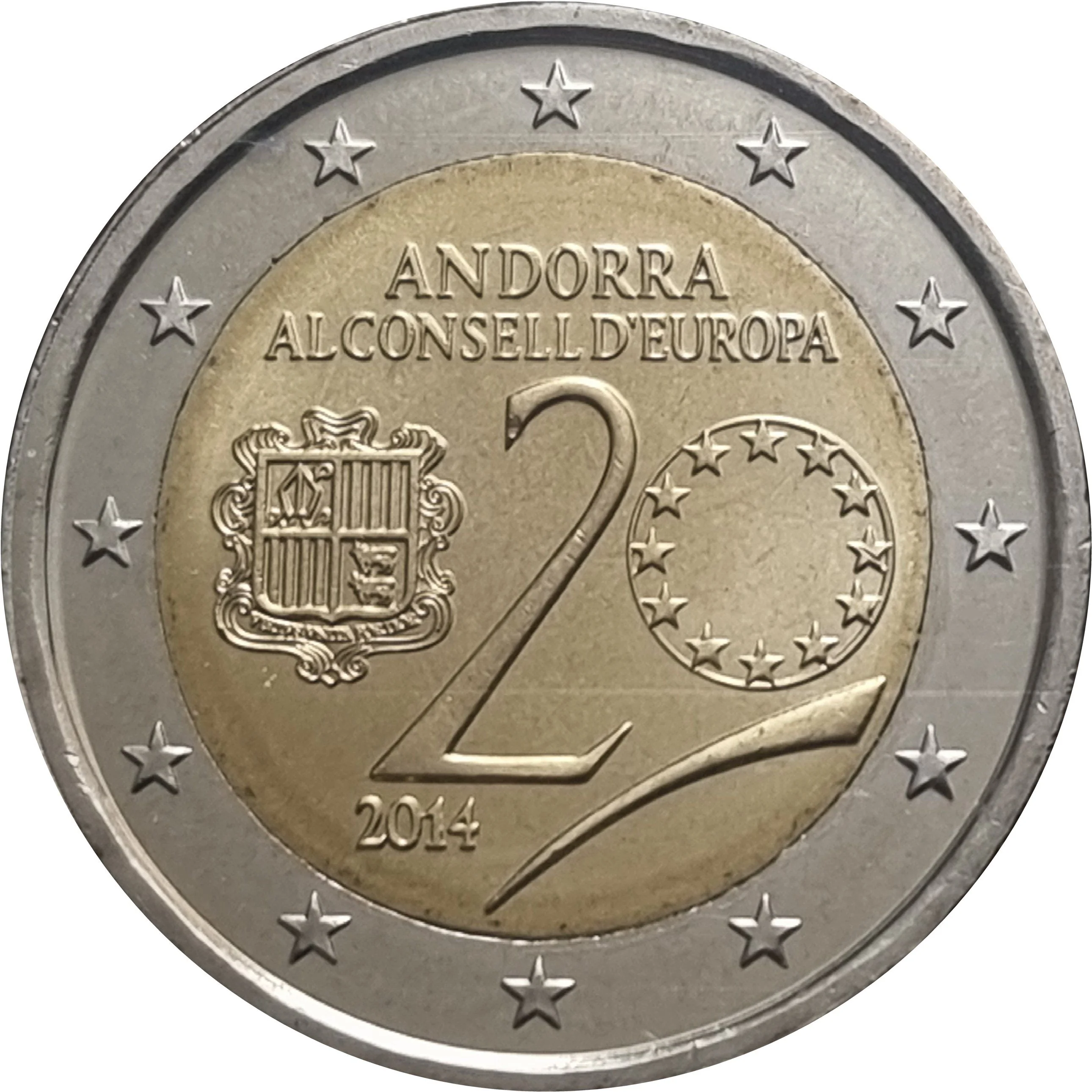
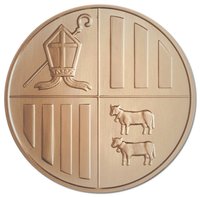
Andorra's coat of arms left of centre, with a "20" where the zero incorporates the Council of Europe flag design, surrounded by the EU's twelve-star ring.
Inscription:
ANDORRA
AL CONSELL D'EUROPA
VIRTVS VNITA FORTIOR
20
2014
AL CONSELL D'EUROPA
VIRTVS VNITA FORTIOR
20
2014
Translation:
ANDORRA
TO THE COUNCIL OF EUROPE
VIRTUE UNITED IS STRONGER
20
2014
TO THE COUNCIL OF EUROPE
VIRTUE UNITED IS STRONGER
20
2014
Script: Latin
Engraver: Orietta Rossi
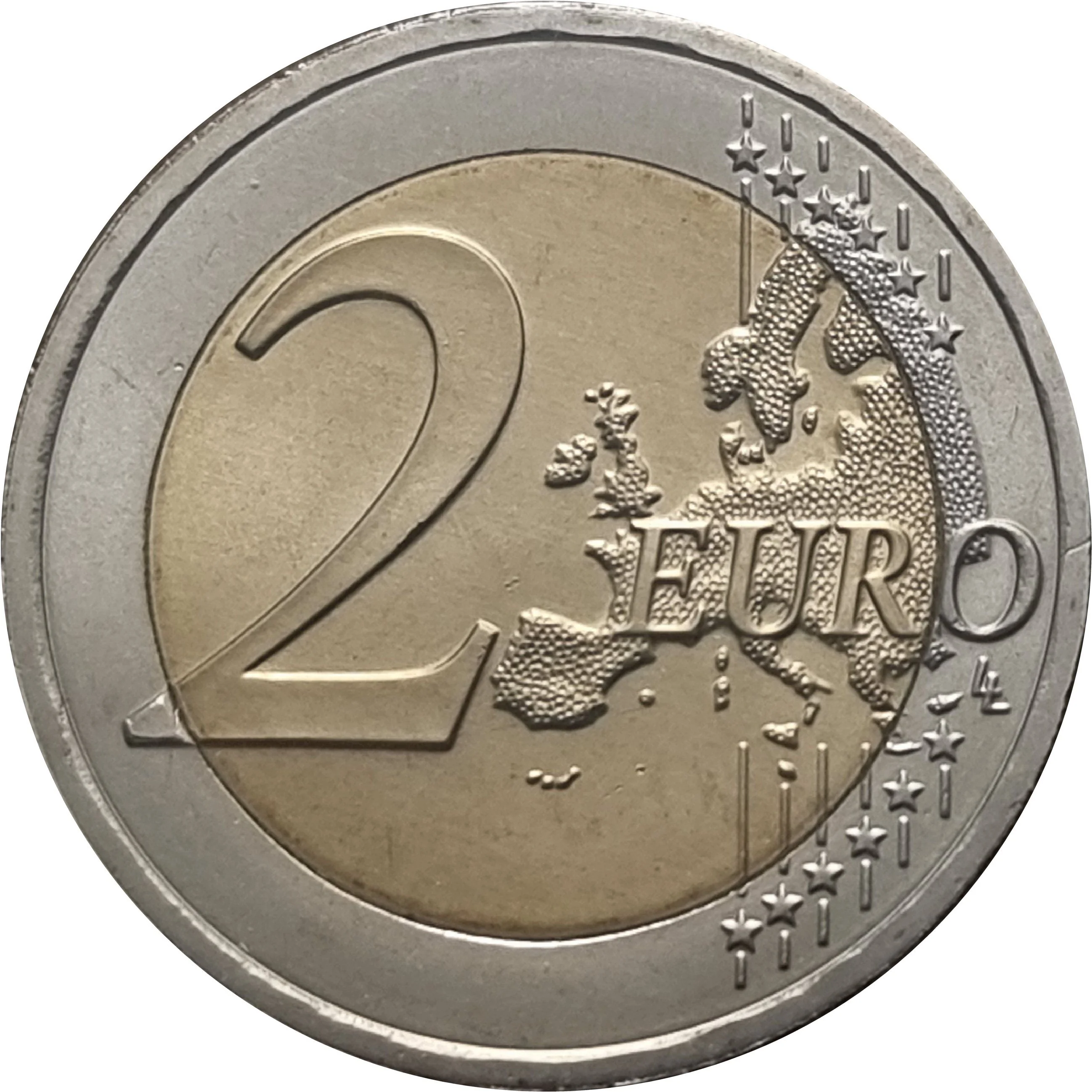
Reverse
Edge
Legend:
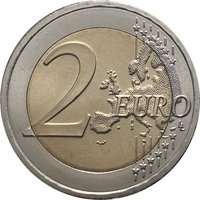
2 ★ ★ 2 ★ ★ 2 ★ ★ 2 ★ ★ 2 ★ ★ 2 ★ ★
Categories
| Map |
| Symbols> Coat of Arms |
Mints
| Name | Mark |
|---|---|
| Royal Mint of Madrid | — |
Mintings
| Year | Mint Mark | Mintage | Quality | Collection |
|---|---|---|---|---|
| 2014 | — | 100,000 | BU | |
| 2014 | — | 5,000 | Proof |
Historical background
In 2014, Andorra found itself at a significant monetary crossroads, operating without a formal national currency but with its economy deeply integrated with the euro. Since 2002, the principality had used the euro as its de facto currency under a series of informal monetary agreements with the European Union, which provided for its unilateral adoption. However, this arrangement lacked the legal foundation and institutional benefits enjoyed by Eurozone members, such as representation at the European Central Bank. This informal status became increasingly precarious following the European debt crisis, as EU authorities pushed for greater fiscal and regulatory oversight of non-EU jurisdictions using the euro.
The year was dominated by intense negotiations for a Monetary Agreement with the European Union, a critical step to formalize Andorra's use of the euro. The core impetus for this was not merely monetary stability but also urgent banking reform. Andorra's traditional banking secrecy model had come under severe international pressure, notably from the OECD and the EU, which demanded greater tax transparency and the end of anonymous accounts. A monetary agreement was seen as essential for the country's financial future, promising to secure its euro usage while requiring a comprehensive overhaul of its financial sector to comply with EU standards on taxation, anti-money laundering, and banking supervision.
Consequently, 2014 was a pivotal year of transition, setting the stage for profound change. The negotiations culminated in the signing of the Monetary Agreement in June 2014, which would come into force in April 2016. This agreement legally authorized Andorra to use the euro as its official currency and obligated it to implement the EU's stringent financial regulations. Therefore, the currency situation in 2014 was defined by the tension between Andorra's historic economic model and the demands of the modern global financial system, with the principality committing to a path of integration and reform to secure its monetary and economic stability for the future.
The year was dominated by intense negotiations for a Monetary Agreement with the European Union, a critical step to formalize Andorra's use of the euro. The core impetus for this was not merely monetary stability but also urgent banking reform. Andorra's traditional banking secrecy model had come under severe international pressure, notably from the OECD and the EU, which demanded greater tax transparency and the end of anonymous accounts. A monetary agreement was seen as essential for the country's financial future, promising to secure its euro usage while requiring a comprehensive overhaul of its financial sector to comply with EU standards on taxation, anti-money laundering, and banking supervision.
Consequently, 2014 was a pivotal year of transition, setting the stage for profound change. The negotiations culminated in the signing of the Monetary Agreement in June 2014, which would come into force in April 2016. This agreement legally authorized Andorra to use the euro as its official currency and obligated it to implement the EU's stringent financial regulations. Therefore, the currency situation in 2014 was defined by the tension between Andorra's historic economic model and the demands of the modern global financial system, with the principality committing to a path of integration and reform to secure its monetary and economic stability for the future.
🌱 Common