

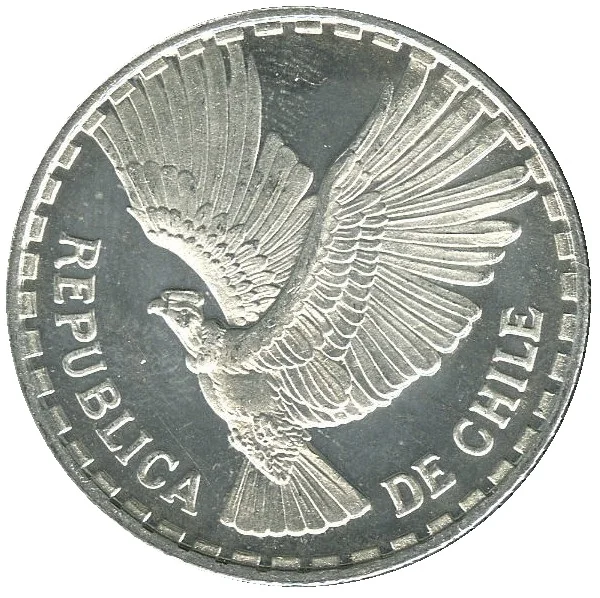
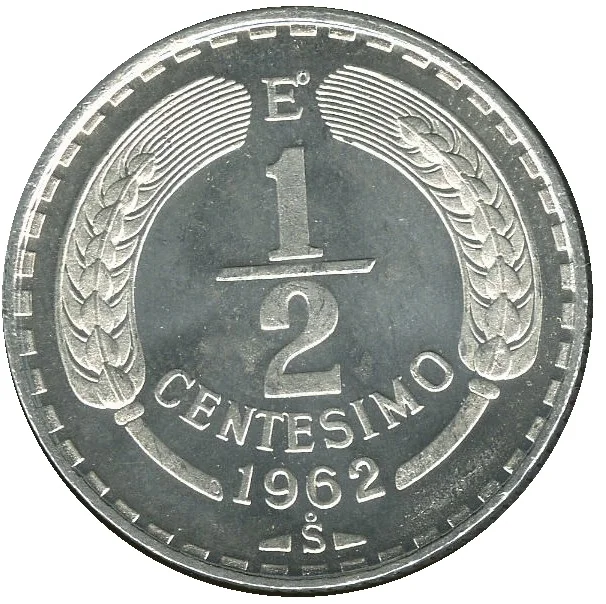
Chile

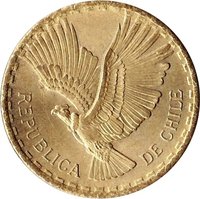
Obverse
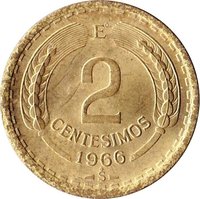
Reverse
Edge
Reeded
Mints
| Name | Mark |
|---|---|
| Casa de Moneda de Chile | (So) |
Mintings
| Year | Mint Mark | Mintage | Quality | Collection |
|---|---|---|---|---|
| 1962 | So | 3,750,000 | ||
| 1962 | So | — | Proof | |
| 1963 | So | 8,100,000 |
Historical background
In 1962, Chile's currency situation was characterized by a complex and restrictive system of multiple exchange rates, a legacy of efforts to control inflation and manage the balance of payments. The Chilean peso was not freely convertible, and its value was administratively set by the Central Bank through a series of distinct rates for different types of transactions. This included preferential rates for essential imports like machinery and medicine, a less favorable rate for non-essential imports, and separate rates for exports and financial transactions. This intricate structure aimed to protect domestic industry, conserve scarce foreign reserves, and direct economic activity, but it also created significant distortions and opportunities for arbitrage.
The underlying pressure on the peso stemmed from persistent inflation, which averaged around 12% annually in the early 1960s, and recurring fiscal deficits. These conditions eroded the currency's real value and led to frequent speculative attacks against the fixed parity. The government of President Jorge Alessandri, adhering to a stabilization program advised by the International Monetary Fund (IMF) and the Alliance for Progress, pursued orthodox fiscal austerity to combat these issues. However, the structural dependence on copper exports (which provided over half of Chile's foreign exchange) made the economy and the currency vulnerable to volatile international copper prices.
Consequently, 1962 fell within a period of relative but fragile stability for the peso, following a major devaluation in 1959 and preceding further severe economic challenges later in the decade. The multiple exchange rate system, while a tool of control, was widely criticized for being inefficient and burdensome for businesses. It symbolized the broader struggle of the Chilean economy to achieve monetary stability and sustainable growth, caught between the goals of development, price control, and integration into the global market.
The underlying pressure on the peso stemmed from persistent inflation, which averaged around 12% annually in the early 1960s, and recurring fiscal deficits. These conditions eroded the currency's real value and led to frequent speculative attacks against the fixed parity. The government of President Jorge Alessandri, adhering to a stabilization program advised by the International Monetary Fund (IMF) and the Alliance for Progress, pursued orthodox fiscal austerity to combat these issues. However, the structural dependence on copper exports (which provided over half of Chile's foreign exchange) made the economy and the currency vulnerable to volatile international copper prices.
Consequently, 1962 fell within a period of relative but fragile stability for the peso, following a major devaluation in 1959 and preceding further severe economic challenges later in the decade. The multiple exchange rate system, while a tool of control, was widely criticized for being inefficient and burdensome for businesses. It symbolized the broader struggle of the Chilean economy to achieve monetary stability and sustainable growth, caught between the goals of development, price control, and integration into the global market.
🌱 Common