

500 zlotys – Poland
Add to wishlist
Non-circulating coins
Commemoration: Environmental Protection
Poland
Obverse
Description:
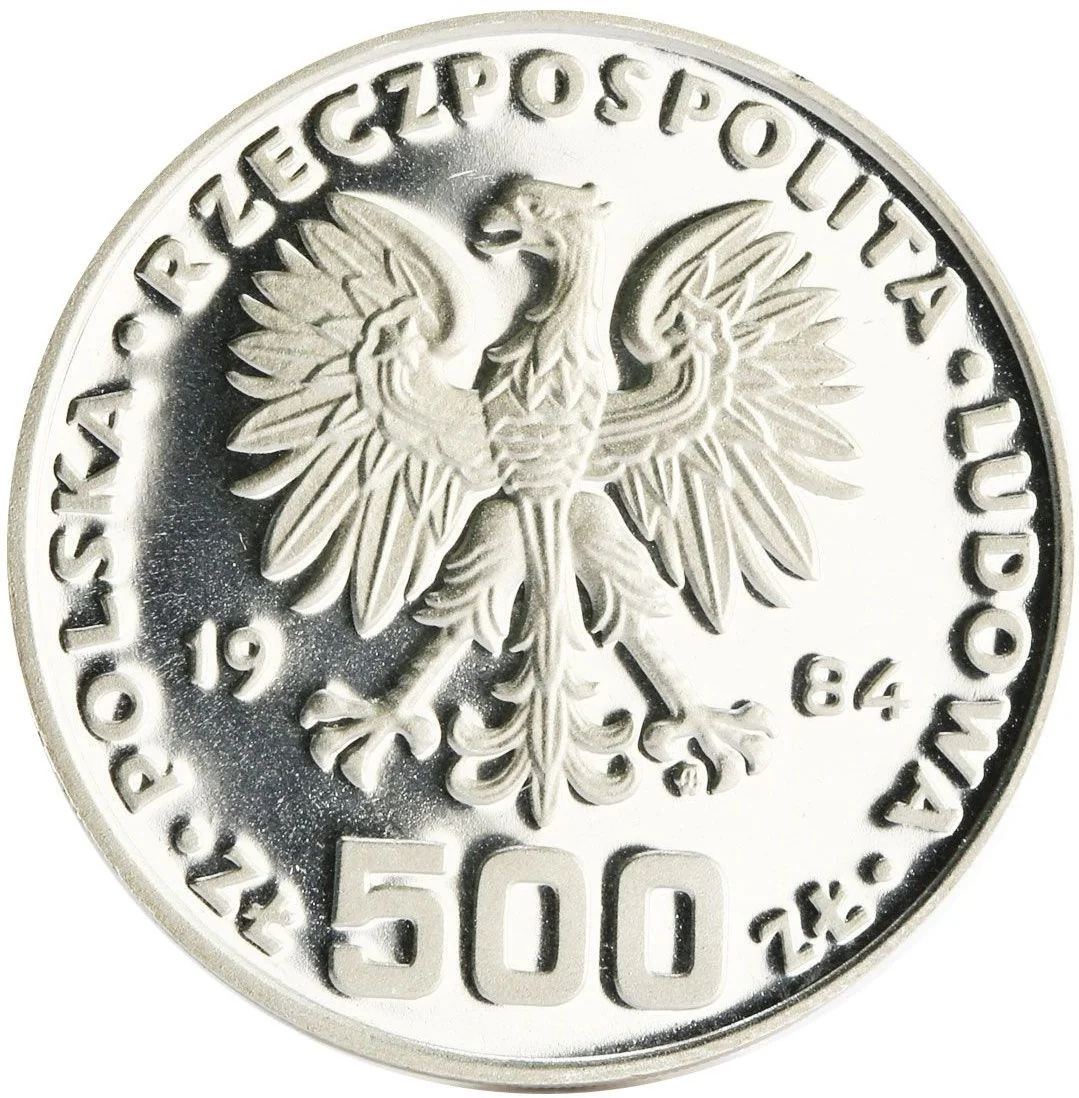
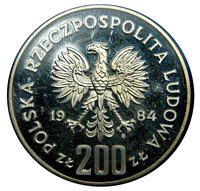
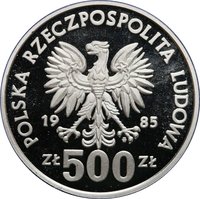
Imperial eagle atop value.
Inscription:
• POLSKA • RZECZPOSPOLITA • LUDOWA •
19 84
mw
ZŁ 500 ZŁ
19 84
mw
ZŁ 500 ZŁ
Translation:
PEOPLE'S REPUBLIC OF POLAND
1984
mw
500 ZŁOTYCH
1984
mw
500 ZŁOTYCH
Script: Latin
Language: Polish
Engraver: Stanisława Wątróbska-Frindt
Reverse
Description:
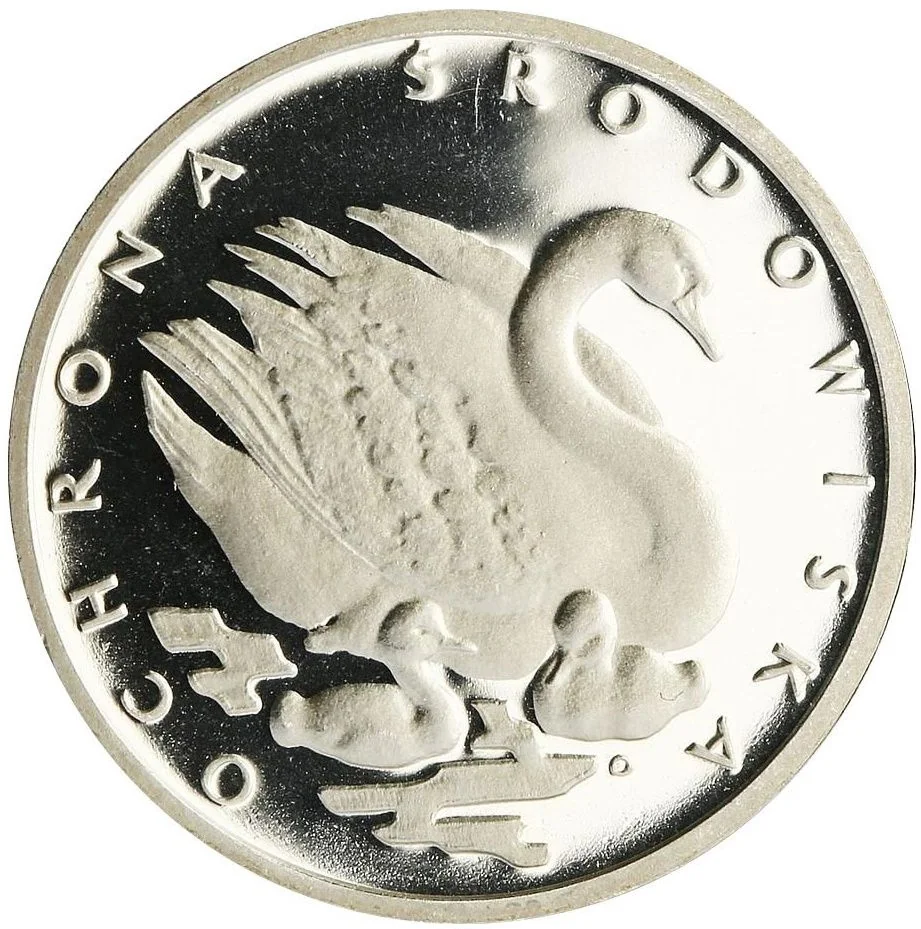
Mute swan with two cygnets.
Inscription:
OCHRONA ŚRODOWISKA
Translation:
ENVIRONMENTAL PROTECTION
Script: Latin
Language: Polish
Engraver: Ewa Olszewska-Borys
Edge
Plain
Mints
| Name | Mark |
|---|---|
| Mint of Poland | (MW) |
Mintings
| Year | Mint Mark | Mintage | Quality | Collection |
|---|---|---|---|---|
| 1984 | MW | 10,000 | Proof |
Historical background
In 1984, Poland's currency situation was a direct reflection of the deep economic and political crisis of the early 1980s. The country operated under a communist command economy with a fixed, non-convertible currency, the złoty. Its official exchange rate, set by the state, bore no relation to its real value, creating a vast disparity with the thriving black market where dollars commanded a price several times higher. This dual system was symptomatic of severe shortages, hyperinflation (which had peaked at over 100% annually in 1982), and a crushing foreign debt burden that paralyzed the state's finances.
The economic reality was defined by the aftermath of the Solidarity movement's suppression and the martial law period (1981-1983). While the government had attempted to stabilize prices through drastic reforms and rationing, the fundamental imbalances remained. The złoty was essentially worthless outside Poland for ordinary transactions, and the state relied on special "hard currency" shops (Pewex and Baltona) where coveted Western goods were available only for US dollars or other foreign currencies. This created a two-tier society: those with access to hard currency from abroad or the black market, and those reliant solely on the depreciating złoty.
Internationally, Poland was isolated, with Western credit and aid frozen due to the martial law crackdown. The government's attempts to manage the currency were thus focused on internal control and extracting hard currency from its citizens, rather than meaningful integration into the global economy. The 1984 currency landscape was one of artificial stability on the surface, masking widespread scarcity, a crippled purchasing power for the złoty, and a deep dependence on the US dollar for any economic vitality, setting the stage for the hyperinflation and radical reforms that would follow later in the decade.
The economic reality was defined by the aftermath of the Solidarity movement's suppression and the martial law period (1981-1983). While the government had attempted to stabilize prices through drastic reforms and rationing, the fundamental imbalances remained. The złoty was essentially worthless outside Poland for ordinary transactions, and the state relied on special "hard currency" shops (Pewex and Baltona) where coveted Western goods were available only for US dollars or other foreign currencies. This created a two-tier society: those with access to hard currency from abroad or the black market, and those reliant solely on the depreciating złoty.
Internationally, Poland was isolated, with Western credit and aid frozen due to the martial law crackdown. The government's attempts to manage the currency were thus focused on internal control and extracting hard currency from its citizens, rather than meaningful integration into the global economy. The 1984 currency landscape was one of artificial stability on the surface, masking widespread scarcity, a crippled purchasing power for the złoty, and a deep dependence on the US dollar for any economic vitality, setting the stage for the hyperinflation and radical reforms that would follow later in the decade.
✨ Legendary