

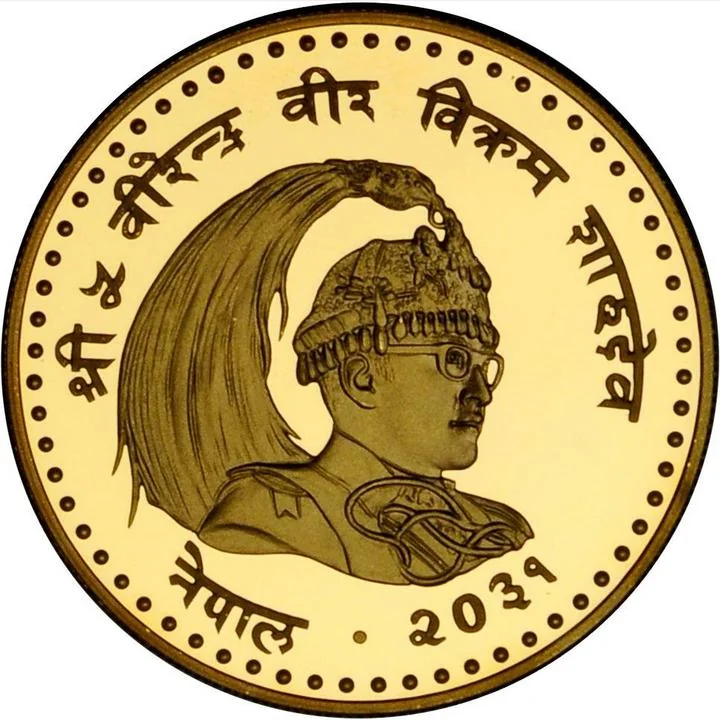
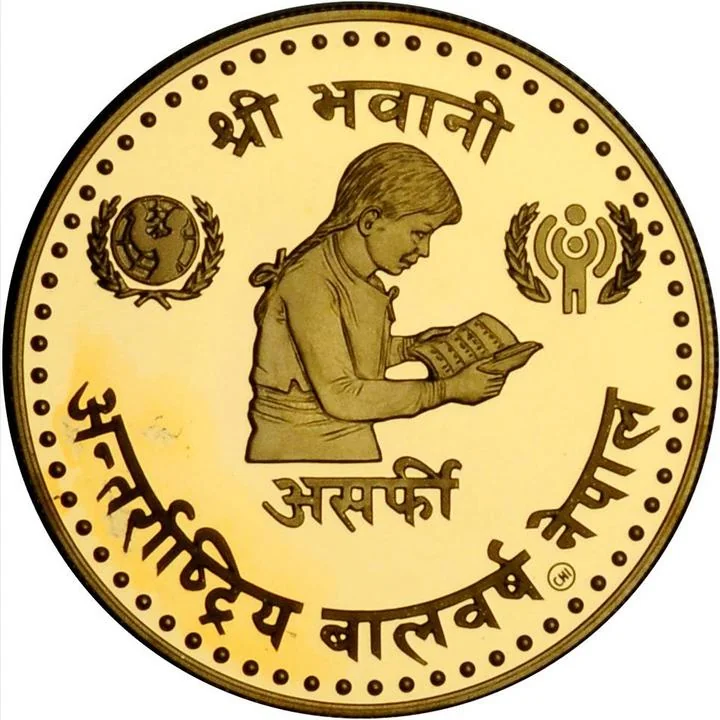
1 Tola – Nepal
Non-circulating coins
Commemoration: International Year of the Child
Nepal
Context
Year: 1981
Vikram Samvat Year: 2038
Issuer: Nepal 
Ruler: Birendra Bir Bikram Shah
Currency:
Total mintage: 4,055
Material
References
KM: #Click to copy to clipboard852
Numista: #66842
Value
Bullion value: $1750.38
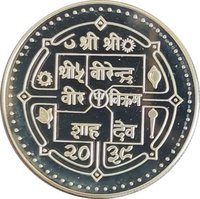
Obverse
Inscription:
(nepalese)
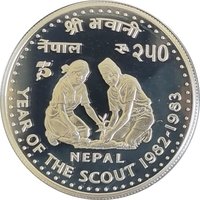
Reverse
Inscription:
(nepalese)
2039
2039
Edge
Categories
| Organization> UNICEF |
Mints
| Name | Mark |
|---|---|
| Valcambi | — |
Mintings
| Year | Mint Mark | Mintage | Quality | Collection |
|---|---|---|---|---|
| 1981 | — | 4,055 | Proof |
Historical background
In 1981, Nepal's currency situation was characterized by a tightly controlled and fixed exchange rate regime, firmly pegged to the Indian rupee (INR). This peg, established under the 1960 Nepal-India Trade and Transit Treaty, was foundational to the economy, as India was Nepal's dominant trading partner. The official exchange rate was set at NPR 1.60 = INR 1, a parity that had been maintained for decades. This arrangement facilitated stable cross-border trade but also effectively subordinated Nepal's monetary policy to that of India, limiting the Nepal Rastra Bank's independent policy tools to manage domestic money supply and inflation.
The system was supported by a strict set of foreign exchange controls. Access to convertible foreign currencies (like US dollars) was limited and routed through the central bank, with the Nepalese rupee being non-convertible on the international market. This control aimed to conserve scarce foreign reserves and manage the balance of payments. However, it also created a thriving black market for foreign currency, particularly for dollars, where rates diverged significantly from the official peg to the Indian rupee. This disparity highlighted the pressures on the currency from limited exports, a growing trade deficit, and the influence of the burgeoning tourism sector, which brought in much-needed hard currency.
Economically, 1981 fell within Nepal's period of planned development under the Panchayat system, with the Sixth Five-Year Plan (1980-1985) emphasizing infrastructure and agriculture. The fixed peg provided stability for planning but also masked underlying economic vulnerabilities. The rigidity of the system meant that Nepal imported inflation from India and had little flexibility to respond to external shocks. Consequently, while the currency situation appeared stable on the surface, it was defined by its dependency, administrative controls, and the growing disconnect between official policy and the practical demands of a slowly modernizing economy.
The system was supported by a strict set of foreign exchange controls. Access to convertible foreign currencies (like US dollars) was limited and routed through the central bank, with the Nepalese rupee being non-convertible on the international market. This control aimed to conserve scarce foreign reserves and manage the balance of payments. However, it also created a thriving black market for foreign currency, particularly for dollars, where rates diverged significantly from the official peg to the Indian rupee. This disparity highlighted the pressures on the currency from limited exports, a growing trade deficit, and the influence of the burgeoning tourism sector, which brought in much-needed hard currency.
Economically, 1981 fell within Nepal's period of planned development under the Panchayat system, with the Sixth Five-Year Plan (1980-1985) emphasizing infrastructure and agriculture. The fixed peg provided stability for planning but also masked underlying economic vulnerabilities. The rigidity of the system meant that Nepal imported inflation from India and had little flexibility to respond to external shocks. Consequently, while the currency situation appeared stable on the surface, it was defined by its dependency, administrative controls, and the growing disconnect between official policy and the practical demands of a slowly modernizing economy.
✨ Legendary