

50 centavos – Brazil
Add to wishlist
Brazil
Context
Years: 2002–2024
Issuer: Brazil
Period:
(since 1967)
Currency:
(since 1994)
Total mintage: 3,184,241,000
Material
Diameter: 23 mm
Weight: 7.81 g
Thickness: 2.85 mm
Shape: Round
Composition: Stainless steel
Standard: Silver quarter ounce
Technique: Milled
Alignment: Coin alignment
flip
References
KM: #
Numista: #666
Value
Exchange value: 0.50 BRL
Inflation-adjusted value: 1.99 BRL
Obverse
Description:
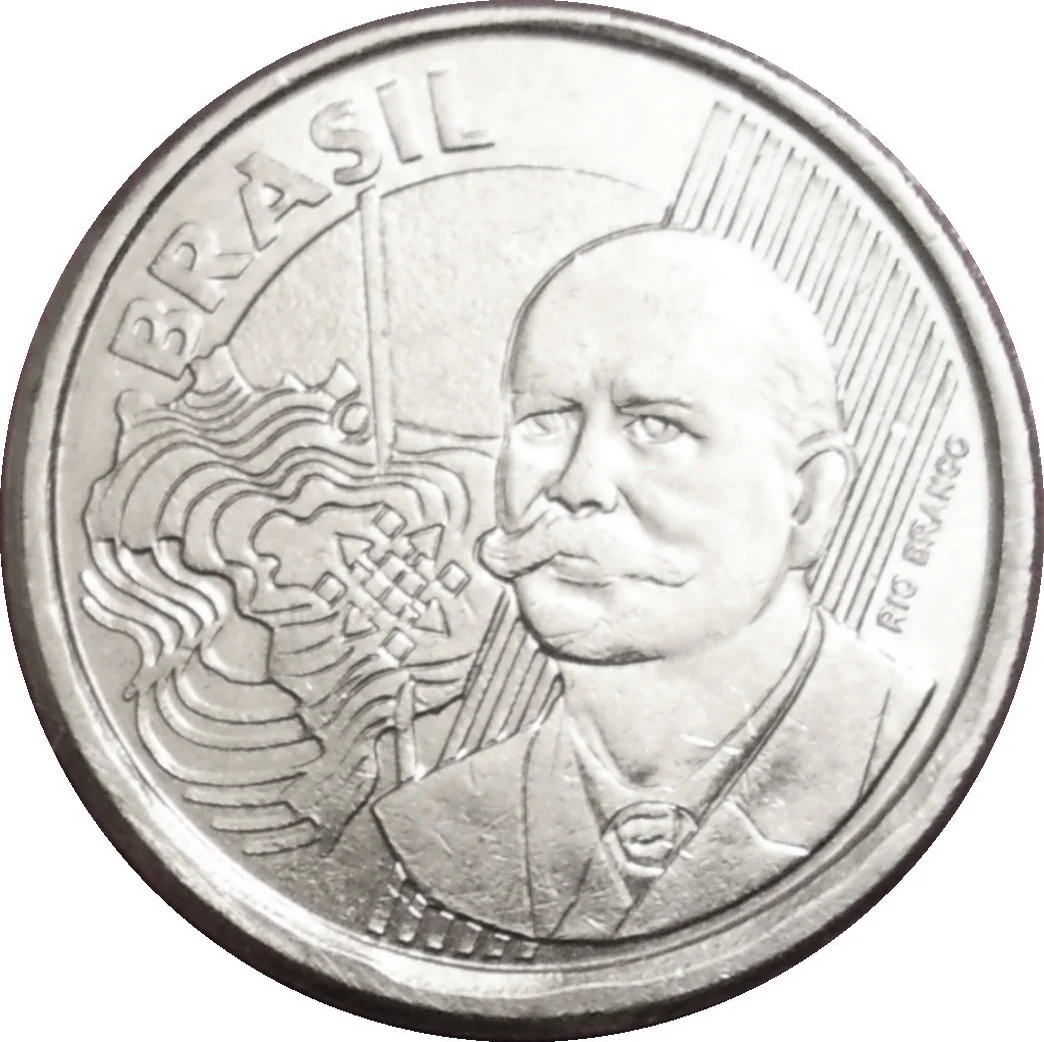
Portrait of José Maria da Silva Paranhos Júnior with a map of Brazil.
Inscription:
BRASIL
RIO BRANCO
RIO BRANCO
Translation:
Brazil
Rio Branco
Rio Branco
Script: Latin
Language: Portuguese
Engraver: Luciano Dias Araújo
Reverse
Description:
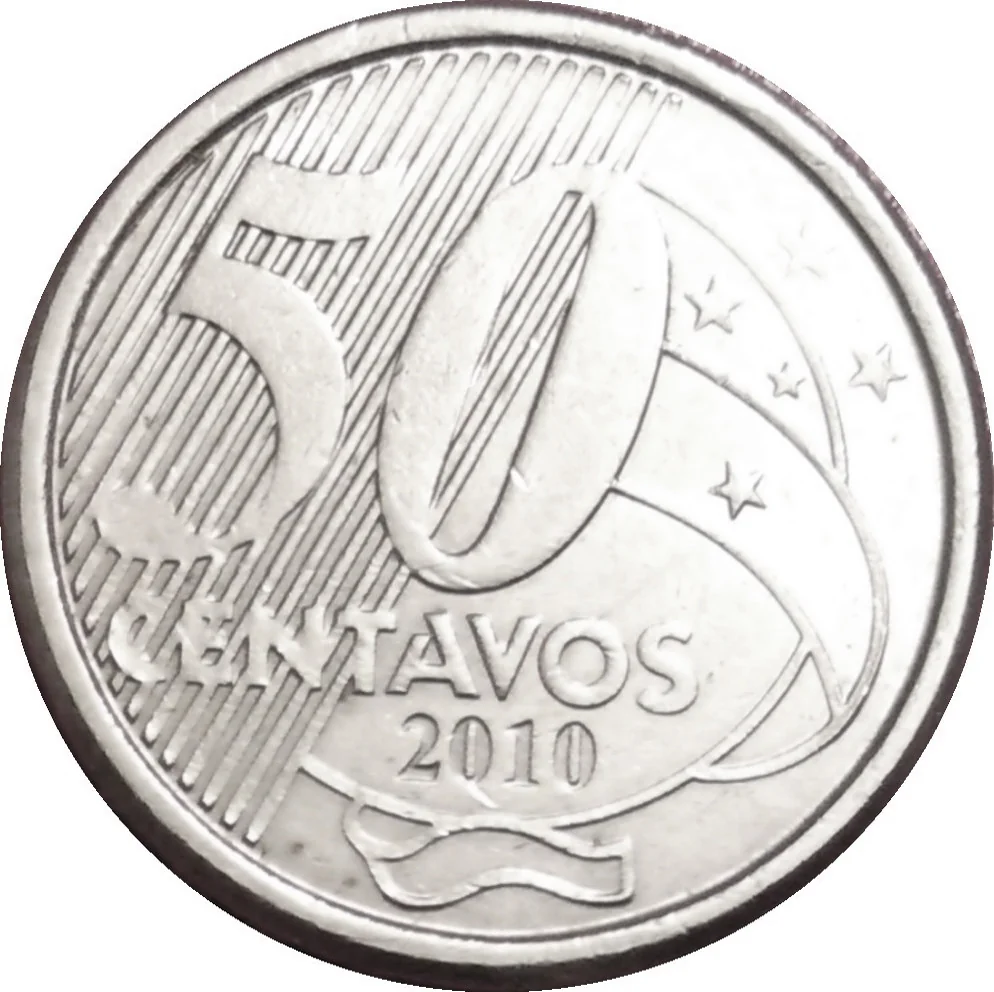
Denomination before date, slashes, Southern Cross.
Inscription:
50
CENTAVOS
2010
CENTAVOS
2010
Script: Latin
Edge
Smooth and inscripted
Legend:
* ORDEM E PROGRESSO * BRASIL
Translation:
Order and Progress * Brazil
Language: Portuguese
Categories
| Person> Politician |
| Map |
Mints
| Name | Mark |
|---|---|
| Casa da Moeda do Brasil | — |
| Royal Dutch Mint | A |
Mintings
| Year | Mint Mark | Mintage | Quality | Collection |
|---|---|---|---|---|
| 2002 | — | 189,952,000 | ||
| 2003 | — | 143,696,000 | ||
| 2005 | — | 122,416,000 | ||
| 2006 | — | 39,984,000 | ||
| 2007 | — | 130,032,000 | ||
| 2008 | — | 290,080,000 | ||
| 2009 | — | 300,048,000 | ||
| 2010 | — | 170,016,000 | ||
| 2011 | — | 116,928,000 | ||
| 2012 | — | 100,016,000 | ||
| 2013 | — | 350,000,000 | ||
| 2014 | — | 56,112,000 | ||
| 2015 | — | 69,167,000 | ||
| 2016 | — | 180,096,000 | ||
| 2017 | — | 84,896,000 | ||
| 2018 | — | 54,544,000 | ||
| 2019 | A | 47,264,000 | ||
| 2019 | — | 66,976,000 | ||
| 2020 | — | 134,512,000 | ||
| 2021 | — | 115,742,000 | ||
| 2022 | — | 157,780,000 | ||
| 2023 | — | 116,144,000 | ||
| 2024 | — | 147,840,000 |
Historical background
In 2002, Brazil faced a severe currency crisis driven by profound political and financial uncertainty. The core trigger was the looming presidential election, with left-wing candidate Luiz Inácio Lula da Silva leading in the polls. International markets, recalling past Latin American debt defaults and Lula's earlier radical rhetoric, feared his victory would lead to a sovereign debt default, abandonment of the IMF-backed economic reforms, and rampant inflation. This "Lula risk" triggered a massive capital flight, with investors pulling billions of dollars out of the country.
The situation placed immense pressure on the Brazilian real (BRL), which had already been devalued significantly in 1999 after the collapse of its peg to the US dollar. In 2002, the currency went into free fall, losing over 40% of its value against the US dollar between January and October. This collapse dramatically increased the cost of servicing Brazil's substantial public debt, much of which was linked to the dollar or domestic interest rates, pushing the country toward a potential default. Foreign reserves dwindled as the central bank intervened in a futile attempt to defend the currency.
The crisis only began to abate after Lula published a "Letter to the Brazilian People" in June, pledging to maintain fiscal responsibility and honor the country's contracts. Following his decisive election victory in October, he unequivocally committed to the existing IMF agreement, which was subsequently bolstered by a record $30 billion loan package. This credible commitment to orthodox policy, orchestrated by his future finance minister Antonio Palocci, restored market confidence, stabilized the real, and allowed the new administration to take office in 2003 with the immediate crisis contained.
The situation placed immense pressure on the Brazilian real (BRL), which had already been devalued significantly in 1999 after the collapse of its peg to the US dollar. In 2002, the currency went into free fall, losing over 40% of its value against the US dollar between January and October. This collapse dramatically increased the cost of servicing Brazil's substantial public debt, much of which was linked to the dollar or domestic interest rates, pushing the country toward a potential default. Foreign reserves dwindled as the central bank intervened in a futile attempt to defend the currency.
The crisis only began to abate after Lula published a "Letter to the Brazilian People" in June, pledging to maintain fiscal responsibility and honor the country's contracts. Following his decisive election victory in October, he unequivocally committed to the existing IMF agreement, which was subsequently bolstered by a record $30 billion loan package. This credible commitment to orthodox policy, orchestrated by his future finance minister Antonio Palocci, restored market confidence, stabilized the real, and allowed the new administration to take office in 2003 with the immediate crisis contained.
🌱 Very Common