

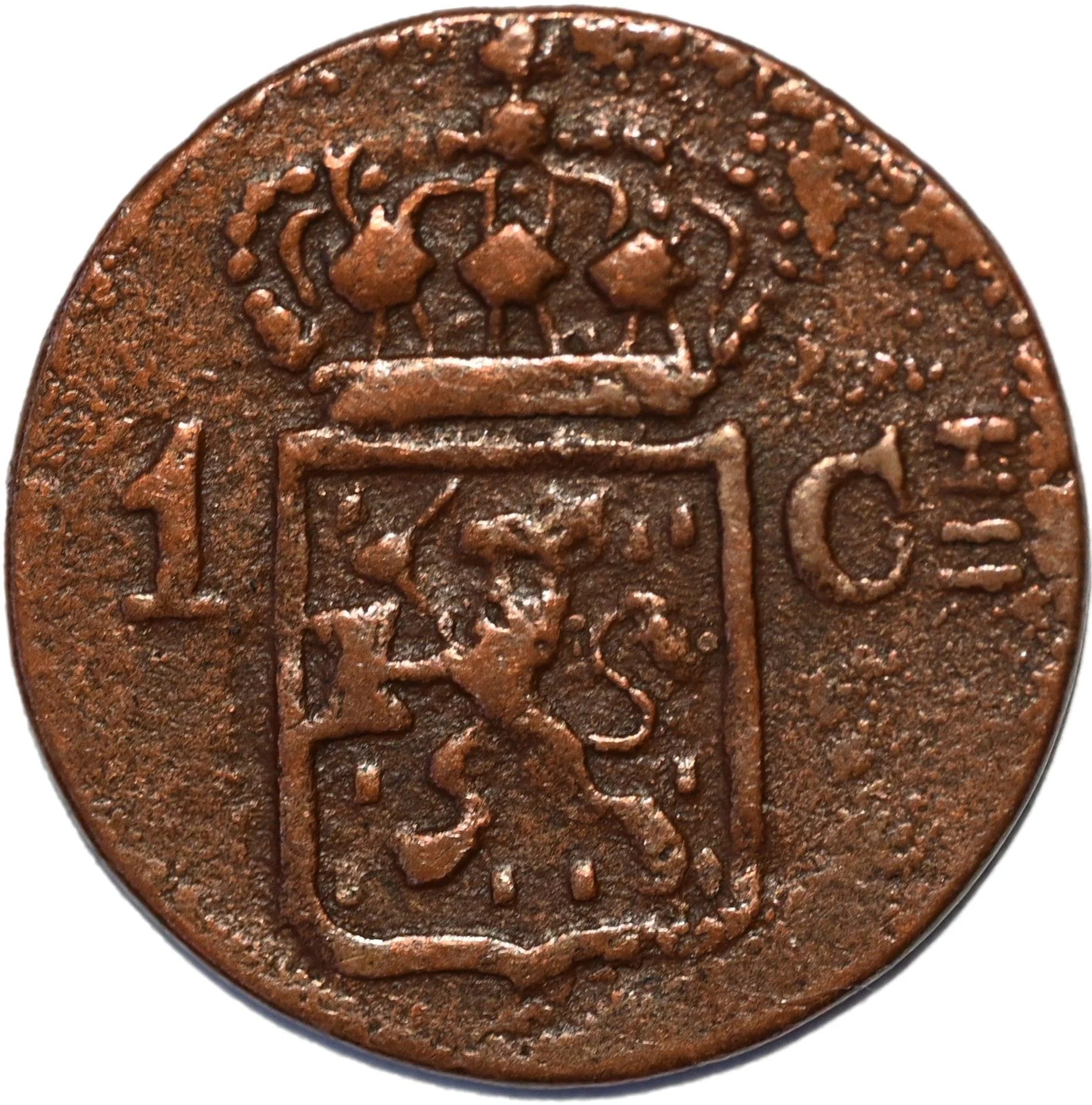
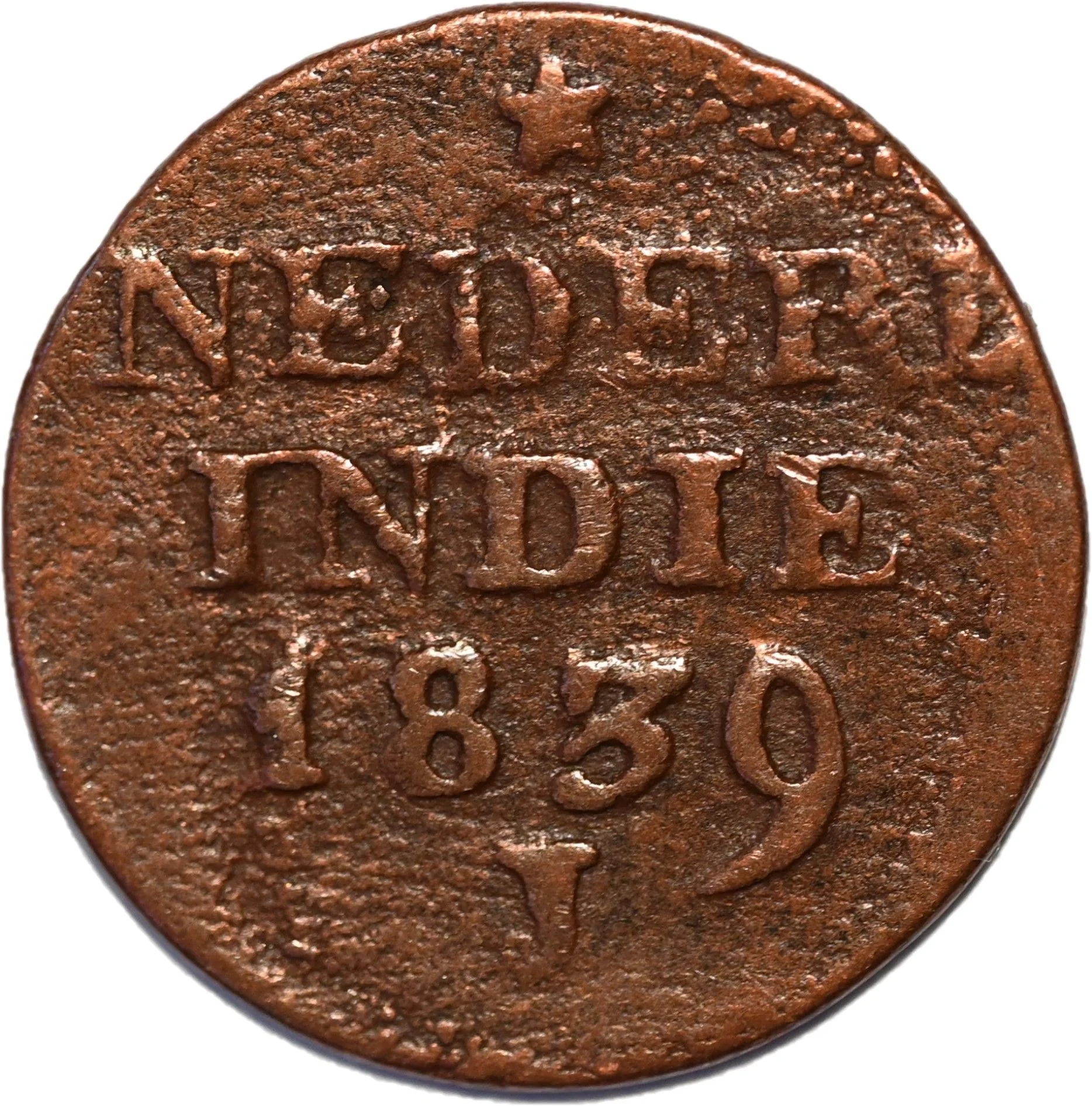
1 Duit – Netherlands East Indies
Indonesia
Context
Years: 1833–1840
Country: Indonesia 
Issuer: Netherlands East Indies
Ruler: William I
Currency:
(1726—1854)
Demonetized: Yes
Total mintage: 1,426,605,000
Material
References
KM: #Click to copy to clipboard290
Numista: #6607
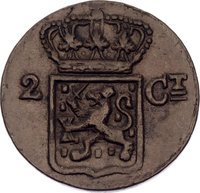
Obverse
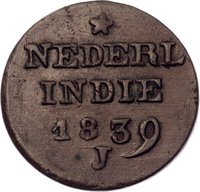
Reverse
Edge
Plain
Mints
| Name | Mark |
|---|---|
| Surabaya | — |
Mintings
| Year | Mint Mark | Mintage | Quality | Collection |
|---|---|---|---|---|
| 1833 | D | 21,778,000 | ||
| 1833 | V | — | ||
| 1834 | V | 66,237,000 | ||
| 1835 | V | 48,674,000 | ||
| 1836 | V | 94,825,000 | ||
| 1837 | J | — | ||
| 1837 | V | 182,888,000 | ||
| 1837 | C | — | ||
| 1838 | J | 235,524,000 | ||
| 1839 | J | 314,953,000 | ||
| 1839 | W | — | ||
| 1840 | W | 461,726,000 |
Historical background
In 1833, the currency system of the Netherlands East Indies (NEI) was in a state of complex transition, dominated by the official Dutch silver guilder but undermined by a chronic shortage of small change. The colonial government, operating under the Culture System (Cultuurstelsel), mandated the use of its coinage for tax payments and official transactions. However, the limited minting and distribution of low-denomination coins created a severe practical problem for daily commerce, especially in rural areas where the vast majority of the population lived.
This scarcity led to the widespread and tolerated use of a multitude of foreign and substitute currencies. Spanish-American silver dollars (pieces of eight), Mexican reals, and various Indian and Chinese coins circulated freely alongside the official guilder. More locally, in smaller transactions, privately minted lead duit tokens, often issued by local authorities or even plantations, served as de facto small change. This created a chaotic monetary environment where exchange rates fluctuated, and the value of money was often determined by weight and metal content rather than face value.
The situation was further strained by the colony's deficit trade balance with the outer islands and the wider Asian region, which caused an outward drain of official silver coinage. Consequently, 1833 represents a period where the colonial state's monetary authority was nominal rather than actual. The government recognized the disorder but would not implement a comprehensive currency reform until later decades, beginning with the establishment of the Java Bank in 1828 and culminating in the Copper Coin Law of 1854, which finally addressed the small coin shortage. Thus, the currency landscape remained a fragmented and pragmatic patchwork of official and unofficial mediums of exchange.
This scarcity led to the widespread and tolerated use of a multitude of foreign and substitute currencies. Spanish-American silver dollars (pieces of eight), Mexican reals, and various Indian and Chinese coins circulated freely alongside the official guilder. More locally, in smaller transactions, privately minted lead duit tokens, often issued by local authorities or even plantations, served as de facto small change. This created a chaotic monetary environment where exchange rates fluctuated, and the value of money was often determined by weight and metal content rather than face value.
The situation was further strained by the colony's deficit trade balance with the outer islands and the wider Asian region, which caused an outward drain of official silver coinage. Consequently, 1833 represents a period where the colonial state's monetary authority was nominal rather than actual. The government recognized the disorder but would not implement a comprehensive currency reform until later decades, beginning with the establishment of the Java Bank in 1828 and culminating in the Copper Coin Law of 1854, which finally addressed the small coin shortage. Thus, the currency landscape remained a fragmented and pragmatic patchwork of official and unofficial mediums of exchange.

🌱 Common