

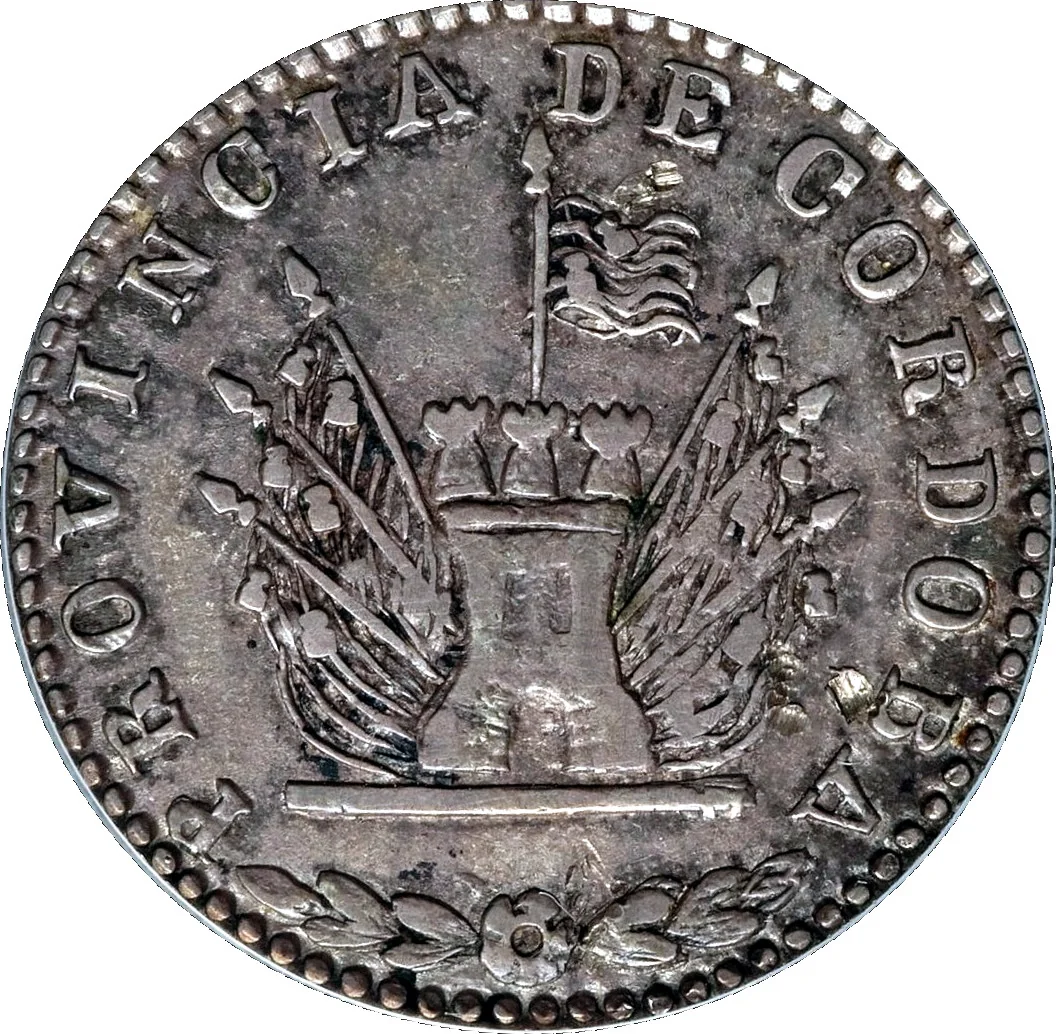
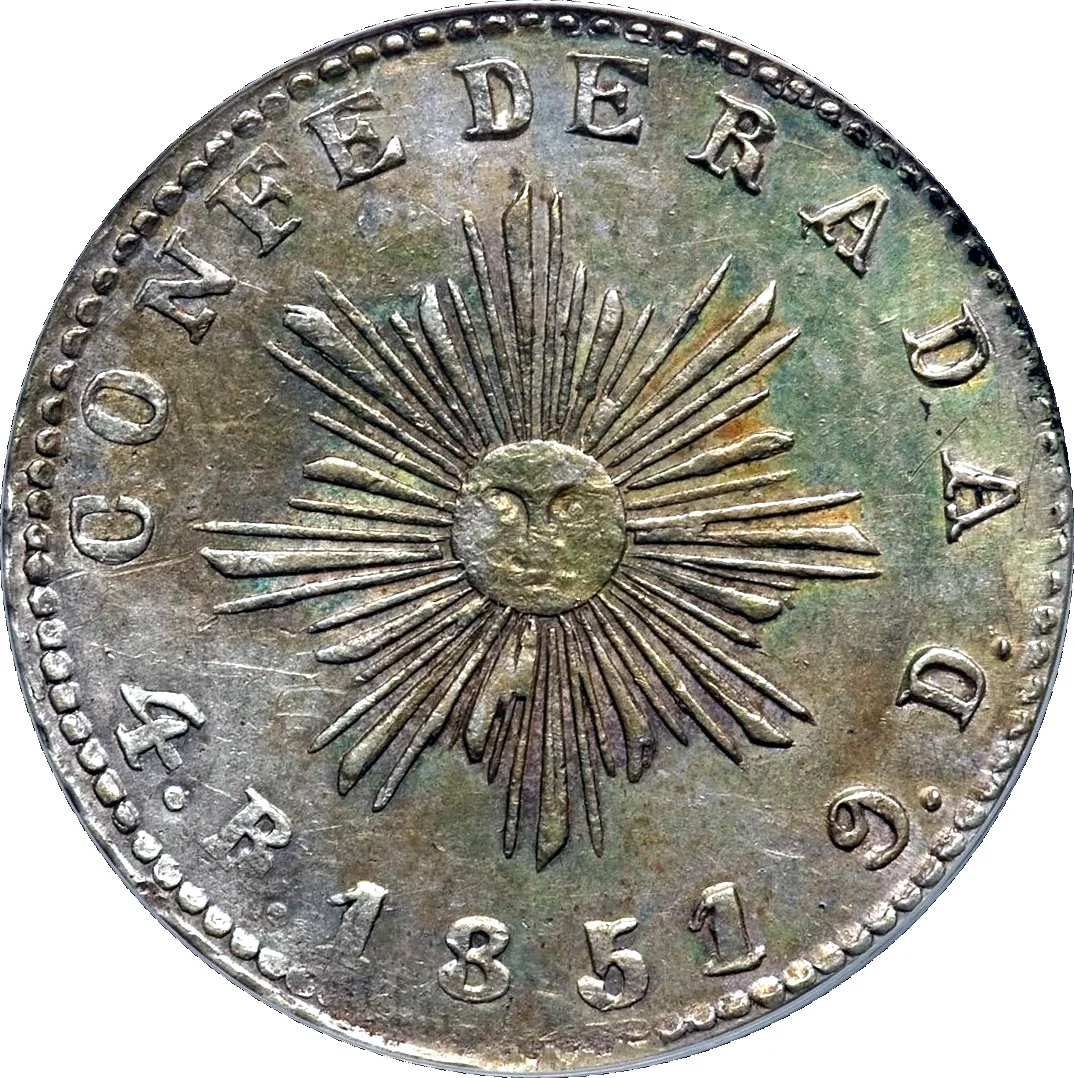

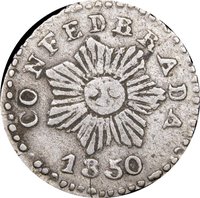
Obverse
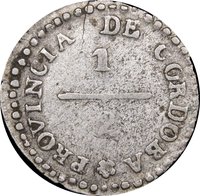
Reverse
Edge
Mints
| Name | Mark |
|---|---|
| Córdoba | — |
Mintings
| Year | Mint Mark | Mintage | Quality | Collection |
|---|---|---|---|---|
| 1851 | — | — |
Historical background
In 1851, the province of Córdoba, Argentina, was grappling with a severe and chaotic currency crisis, a direct consequence of the broader national turmoil following the fall of Juan Manuel de Rosas. The provincial government, led by Manuel López, faced empty coffers and immense debt from years of conflict. To finance its operations and pay its militias, the provincial treasury resorted to the rampant issuance of inconvertible paper money, known as billetes de caja (treasury notes). This currency was not backed by gold or silver and was declared legal tender for all transactions within the province, forcing its acceptance by law.
The result was a disastrous monetary fragmentation and hyperinflation. The value of Córdoba's paper currency plummeted rapidly against gold and silver pesos fuertes, and it was not accepted in other provinces, crippling inter-regional trade. Furthermore, the crisis was compounded by the simultaneous circulation of various forms of money: the devalued paper notes, older coins that were hoarded, and the currencies of neighboring provinces, creating a confusing and unstable economic environment. Prices soared, wages failed to keep pace, and public credit evaporated, causing widespread hardship and commercial stagnation.
This monetary anarchy was a microcosm of the larger political struggle to organize the Argentine Confederation. The crisis underscored the complete absence of a national monetary authority or unified fiscal policy. The situation in Córdoba in 1851, therefore, was not merely a local failure but a symptomatic episode of the profound economic disintegration that would ultimately compel the provincial elites to seek a national solution, paving the way for the constitutional and economic reforms of the 1850s.
The result was a disastrous monetary fragmentation and hyperinflation. The value of Córdoba's paper currency plummeted rapidly against gold and silver pesos fuertes, and it was not accepted in other provinces, crippling inter-regional trade. Furthermore, the crisis was compounded by the simultaneous circulation of various forms of money: the devalued paper notes, older coins that were hoarded, and the currencies of neighboring provinces, creating a confusing and unstable economic environment. Prices soared, wages failed to keep pace, and public credit evaporated, causing widespread hardship and commercial stagnation.
This monetary anarchy was a microcosm of the larger political struggle to organize the Argentine Confederation. The crisis underscored the complete absence of a national monetary authority or unified fiscal policy. The situation in Córdoba in 1851, therefore, was not merely a local failure but a symptomatic episode of the profound economic disintegration that would ultimately compel the provincial elites to seek a national solution, paving the way for the constitutional and economic reforms of the 1850s.
💎 Extremely Rare