

5 dinars (1987 Coup d'état) – Tunisia
Add to wishlist
Non-circulating coins
Commemoration: Anniversary of the 7 Nov 1987 Coup d'état
Tunisia
Context
Material
References
KM: #
Numista: #111984
Value
Exchange value: 5 TND
Bullion value: $1318.51
Obverse
Description:
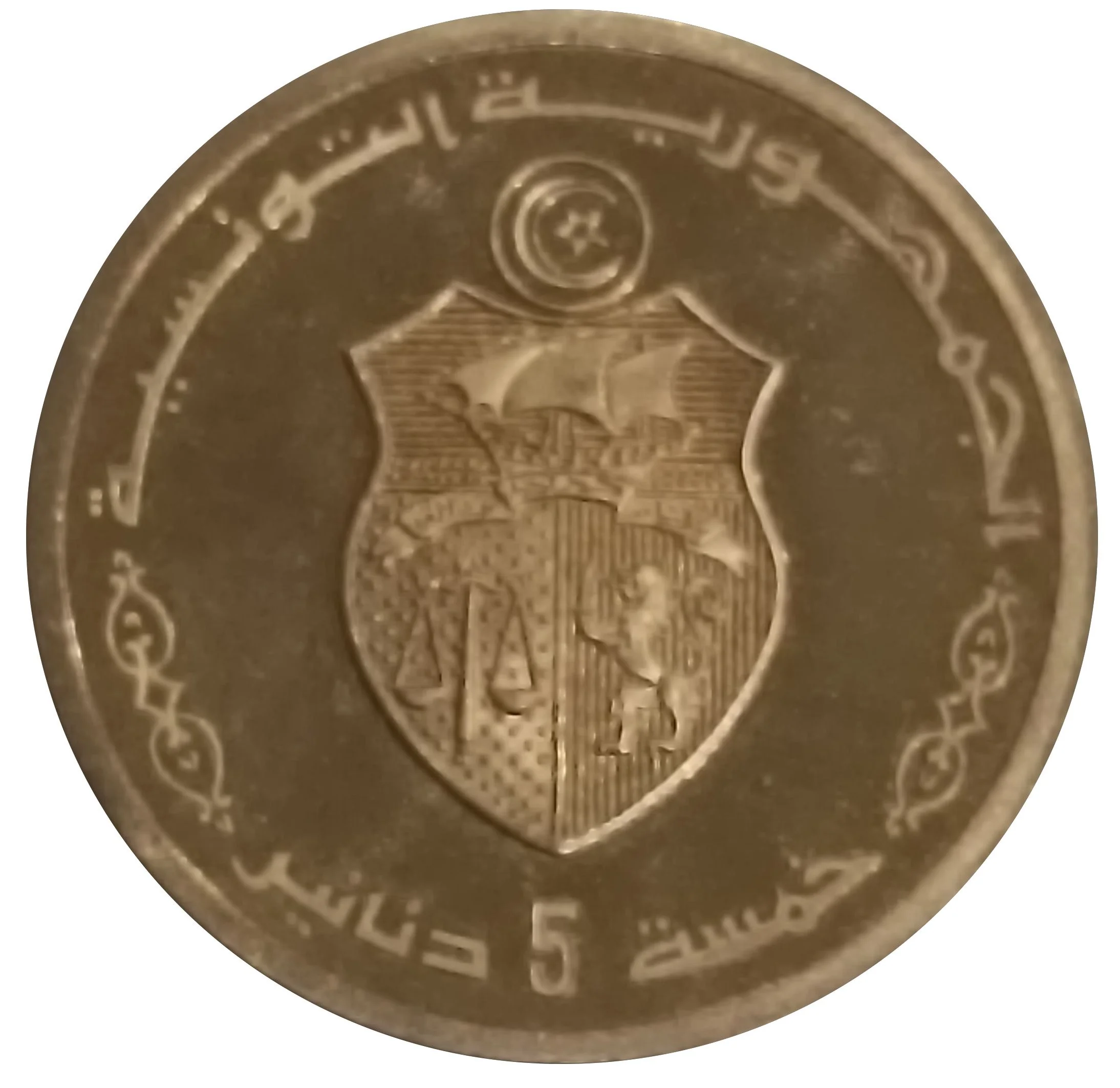
Coat of arms with Arabic inscription
Inscription:
الجمهورية التونسية
خمسة 5 دنانير
خمسة 5 دنانير
Translation:
Tunisian Republic
Five 5 Dinars
Five 5 Dinars
Language: Arabic
Reverse
Description:
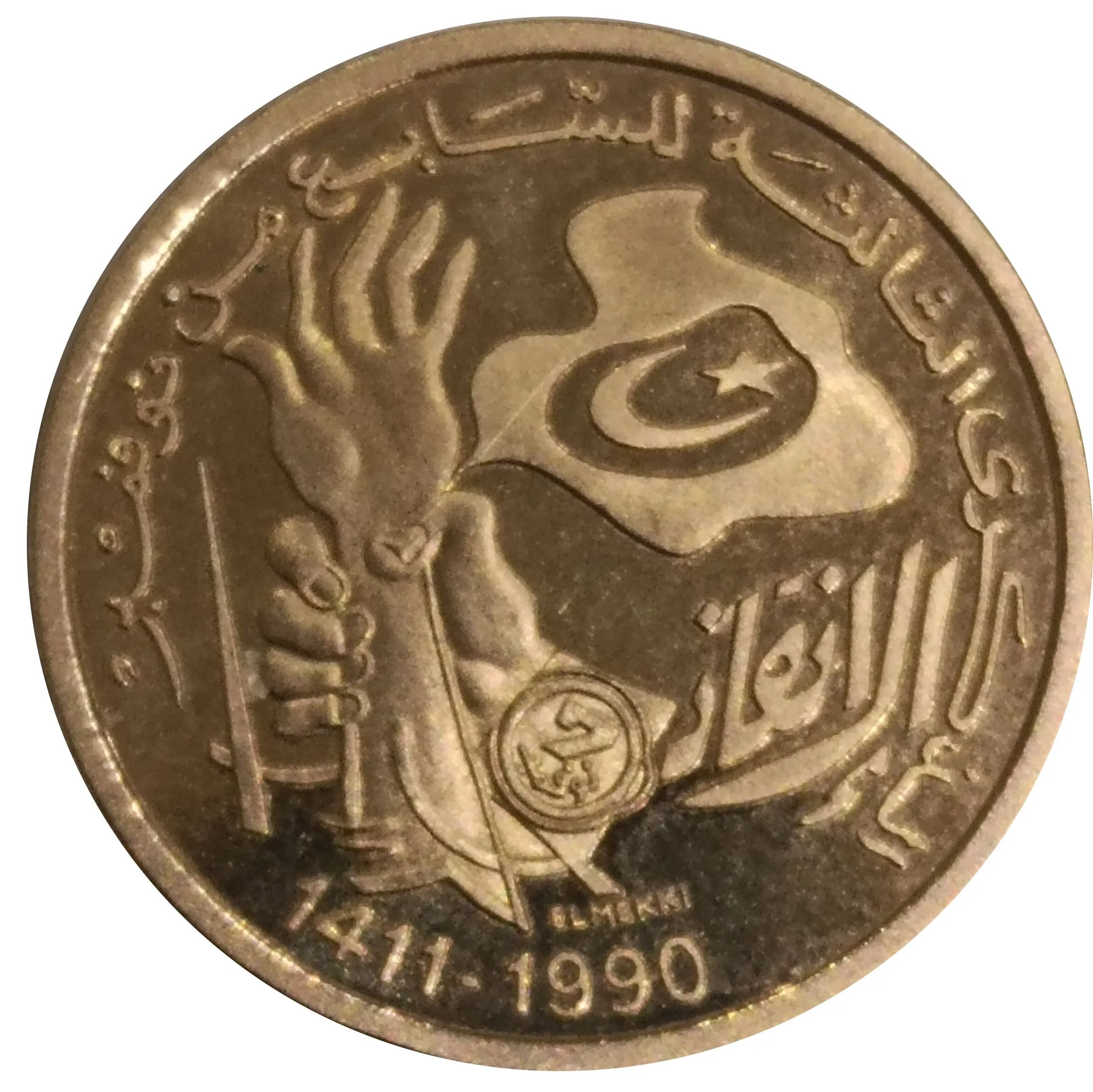
Upstretched hand with flag, Arabic text, and dual Gregorian/Islamic dates. (Legend varies annually.)
Inscription:
الذكرى الاولى للسابع من نوفمبر
الإنقاذ 7 نوفمبر
ELMEKKI
1408-1988
الإنقاذ 7 نوفمبر
ELMEKKI
1408-1988
Translation:
First Anniversary of November 7
The Salvation, November 7
ELMEKKI
1408-1988
The Salvation, November 7
ELMEKKI
1408-1988
Language: Arabic
Engraver: Hatem El Mekki
Edge
Mosaic
Mintings
| Year | Mint Mark | Mintage | Quality | Collection |
|---|---|---|---|---|
| 1988 | — | 250 | ||
| 1989 | — | 125 | ||
| 1990 | — | 125 | ||
| 1991 | — | 165 | ||
| 1992 | — | 40 | ||
| 1993 | — | 40 | ||
| 1994 | — | 40 | ||
| 1995 | — | 40 | ||
| 1996 | — | 40 | ||
| 1997 | — | 40 | ||
| 1998 | — | 40 | ||
| 1999 | — | 40 | ||
| 2000 | — | 40 | ||
| 2001 | — | 40 |
Historical background
In 1988, Tunisia's currency situation was characterized by a tightly controlled and overvalued dinar, managed under a fixed exchange rate regime pegged to a basket of currencies. This system, overseen by the Central Bank of Tunisia, was a legacy of the post-independence statist economic model and aimed to ensure monetary stability and control inflation. However, it created significant distortions. The official exchange rate did not reflect market realities, leading to a thriving black market for foreign currency where the dinar traded at a much weaker rate, highlighting a lack of confidence and a growing imbalance in supply and demand for hard currency.
The overvaluation masked deeper economic troubles, including a persistent and growing current account deficit, declining competitiveness of exports, and a heavy reliance on foreign borrowing. The economy was struggling under the weight of inefficient state-owned enterprises and falling prices for key exports like phosphates and oil. Consequently, foreign exchange reserves were under pressure, limiting the government's ability to finance imports and service its external debt. This precarious position was unsustainable and signaled the need for structural adjustment.
Recognizing these crises, the government of President Zine El Abidine Ben Ali, who had taken power the previous year, began to chart a new course. While major currency liberalization would come later in the 1990s, 1988 was a pivotal year of transition. It set the stage for negotiations with the International Monetary Fund (IMF), which would culminate in a 1989 agreement. This agreement laid the groundwork for a structural adjustment program that included a commitment to eventual dinar convertibility and a move toward a more flexible exchange rate, marking the beginning of Tunisia's shift away from a rigid, state-controlled financial system.
The overvaluation masked deeper economic troubles, including a persistent and growing current account deficit, declining competitiveness of exports, and a heavy reliance on foreign borrowing. The economy was struggling under the weight of inefficient state-owned enterprises and falling prices for key exports like phosphates and oil. Consequently, foreign exchange reserves were under pressure, limiting the government's ability to finance imports and service its external debt. This precarious position was unsustainable and signaled the need for structural adjustment.
Recognizing these crises, the government of President Zine El Abidine Ben Ali, who had taken power the previous year, began to chart a new course. While major currency liberalization would come later in the 1990s, 1988 was a pivotal year of transition. It set the stage for negotiations with the International Monetary Fund (IMF), which would culminate in a 1989 agreement. This agreement laid the groundwork for a structural adjustment program that included a commitment to eventual dinar convertibility and a move toward a more flexible exchange rate, marking the beginning of Tunisia's shift away from a rigid, state-controlled financial system.

✨ Legendary