

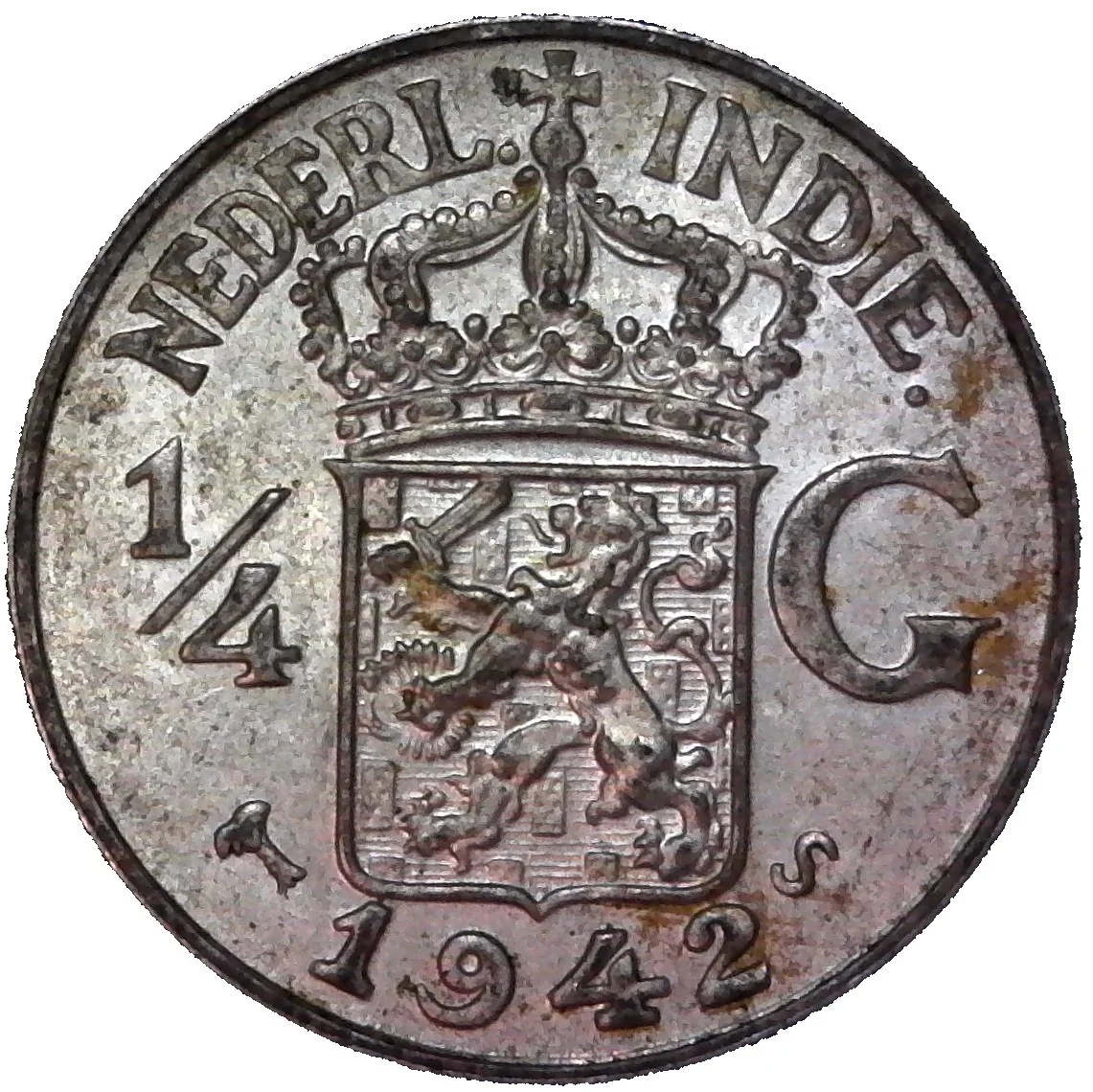
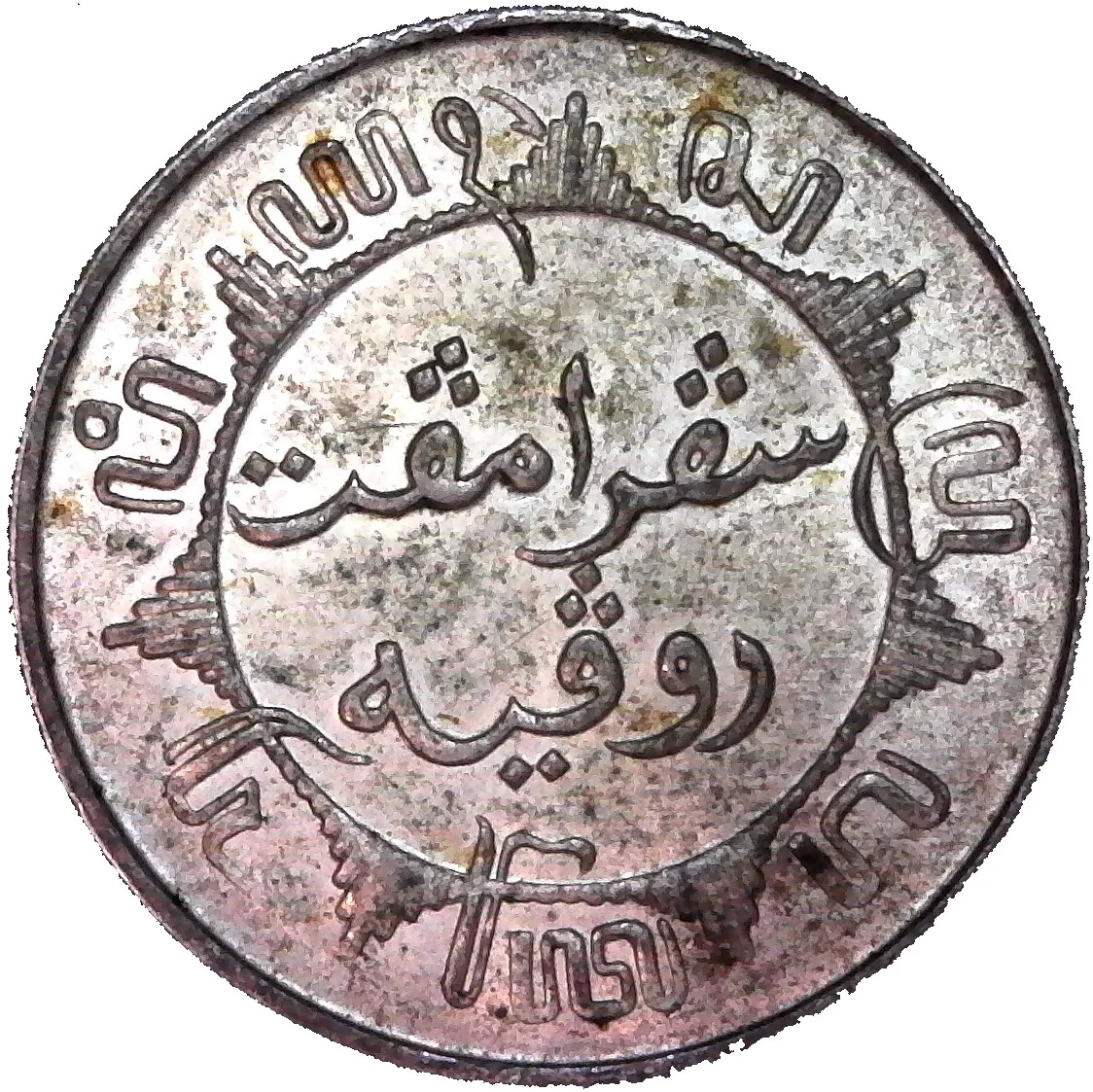
¼ gulden – Netherlands East Indies
Add to wishlist
Indonesia
Context
Years: 1937–1945
Country: Indonesia
Issuer: Netherlands East Indies
Ruler: Wilhelmina
Currency:
(1854—1948)
Demonetization: 1 January 1952
Total mintage: 158,400,000
Material
References
KM: #
Numista: #6565
Value
Bullion value: $5.75
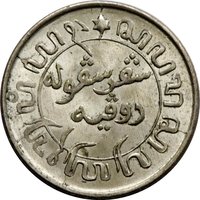
Obverse
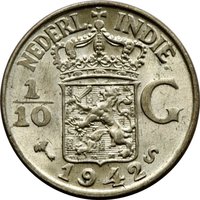
Reverse
Edge
Reeded
Categories
| Symbols> Coat of Arms |
Mints
| Name | Mark |
|---|---|
| Royal Dutch Mint | — |
| United States Mint of Philadelphia | P |
| United States Mint of San Francisco | S |
Mintings
Historical background
In 1937, the currency situation in the Netherlands East Indies (NEI) was characterized by stability and integration with the global economy, underpinned by the Java Bank (De Javasche Bank) as the central note-issuing authority. The colony operated on a gold exchange standard, with the official currency being the Netherlands Indies gulden (later the rupiah), which was pegged at a fixed rate to the Dutch guilder and, by extension, to gold. This peg provided monetary stability, facilitated international trade, and ensured confidence for foreign investors, crucial for an export-driven economy heavily reliant on commodities like rubber, tin, oil, and sugar.
The currency in circulation was a mix of banknotes issued by the Java Bank and silver and copper coinage. However, a distinctive feature was the significant role of silver rijksdaalders, which were legal tender and circulated widely alongside lower-value coinage. The system was effectively managed to maintain sufficient foreign exchange reserves, primarily in Dutch guilders and gold, to back the currency and meet the demands of the colony's substantial import and export activities. This orthodox financial management mirrored that of the Netherlands itself, reflecting the colonial administration's priority on fiscal conservatism and integration with the mother country's economic system.
Despite this surface stability, the currency system was not without underlying pressures. The economy was highly vulnerable to fluctuations in global commodity prices, and the fixed peg, while stabilizing, meant the NEI imported the Netherlands' deflationary policies from the early 1930s. Furthermore, the monetary landscape was complex due to the coexistence of various forms of money, including local credit instruments and currency in remote areas, which sometimes operated outside the formal banking system. Nevertheless, as of 1937, the system was considered robust, providing a solid financial foundation that would soon be severely tested by the impending Japanese invasion and occupation in World War II.
The currency in circulation was a mix of banknotes issued by the Java Bank and silver and copper coinage. However, a distinctive feature was the significant role of silver rijksdaalders, which were legal tender and circulated widely alongside lower-value coinage. The system was effectively managed to maintain sufficient foreign exchange reserves, primarily in Dutch guilders and gold, to back the currency and meet the demands of the colony's substantial import and export activities. This orthodox financial management mirrored that of the Netherlands itself, reflecting the colonial administration's priority on fiscal conservatism and integration with the mother country's economic system.
Despite this surface stability, the currency system was not without underlying pressures. The economy was highly vulnerable to fluctuations in global commodity prices, and the fixed peg, while stabilizing, meant the NEI imported the Netherlands' deflationary policies from the early 1930s. Furthermore, the monetary landscape was complex due to the coexistence of various forms of money, including local credit instruments and currency in remote areas, which sometimes operated outside the formal banking system. Nevertheless, as of 1937, the system was considered robust, providing a solid financial foundation that would soon be severely tested by the impending Japanese invasion and occupation in World War II.

🌱 Very Common