

50 Denars – North Macedonia
North Macedonia
Context
Material
Diameter: 26.5 mm
Weight: 7.7 g
Thickness: 1.8 mm
Shape: Round
Standard: Silver quarter ounce
Magnetic: No
Technique: Milled
Alignment: Medal alignment
flip
References
KM: #Click to copy to clipboard32
Numista: #6534
Value
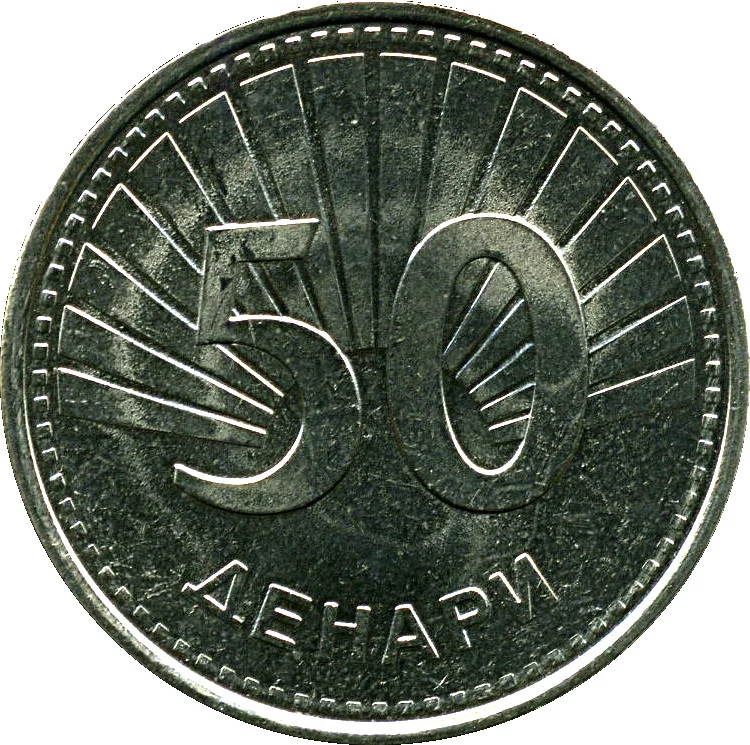
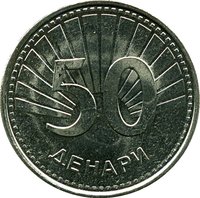
Exchange value: 50 MKD
Obverse
Description:
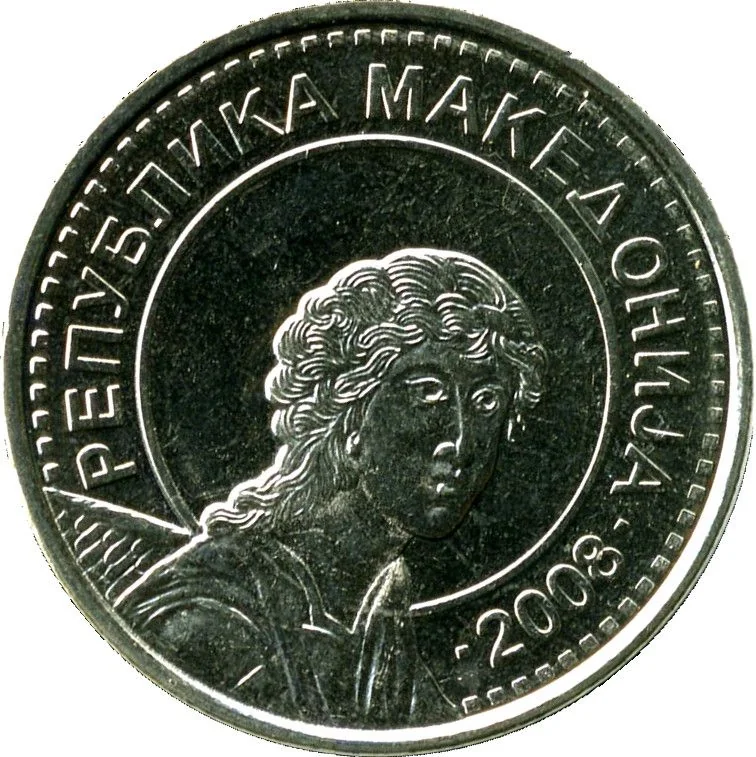
Archangel Gabriel, date beneath.
Inscription:
РЕПУБЛИКА МАКЕДОНИЈА
∙ 2008 ∙
∙ 2008 ∙
Translation:
REPUBLIC OF MACEDONIA
∙ 2008 ∙
∙ 2008 ∙
Script: Cyrillic
Language: Macedonian
Reverse
Edge
Plain
Categories
| Person> Religious figure |
Mintings
| Year | Mint Mark | Mintage | Quality | Collection |
|---|---|---|---|---|
| 2008 | — | — |
Historical background
In 2008, the currency situation in the Republic of Macedonia was defined by a long-standing and highly stable monetary framework centered on the denar (MKD). Since 1995, the country had operated under a de facto fixed exchange rate regime, where the National Bank of the Republic of Macedonia (NBRM) pegged the denar to the euro (and previously to the German mark). The primary goal of this policy was to import monetary credibility, anchor inflation expectations, and provide a predictable environment for trade and investment in a small, open economy still undergoing transition.
The year 2008 was a critical test of this framework due to the onset of the global financial crisis. While Macedonia was not directly exposed to toxic financial assets, it faced significant indirect threats through reduced external demand, a potential drop in foreign direct investment, and declining remittances. In response, the NBRM vigorously defended the peg, utilizing its foreign currency reserves to maintain exchange rate stability. This commitment was seen as a bulwark against imported inflation and financial panic, even as pressures mounted later in the year.
Overall, the 2008 currency background is one of successful stability amidst regional and global turmoil. The fixed exchange rate was maintained without devaluation, and inflation, though rising, remained under control compared to regional peers. This stability came at a cost, however, as it limited the central bank's ability to use interest rates for domestic stimulus, shifting the burden of economic adjustment to fiscal policy. The resilience of the denar's peg throughout the crisis reinforced its role as a key symbol of macroeconomic stability for the country.
The year 2008 was a critical test of this framework due to the onset of the global financial crisis. While Macedonia was not directly exposed to toxic financial assets, it faced significant indirect threats through reduced external demand, a potential drop in foreign direct investment, and declining remittances. In response, the NBRM vigorously defended the peg, utilizing its foreign currency reserves to maintain exchange rate stability. This commitment was seen as a bulwark against imported inflation and financial panic, even as pressures mounted later in the year.
Overall, the 2008 currency background is one of successful stability amidst regional and global turmoil. The fixed exchange rate was maintained without devaluation, and inflation, though rising, remained under control compared to regional peers. This stability came at a cost, however, as it limited the central bank's ability to use interest rates for domestic stimulus, shifting the burden of economic adjustment to fiscal policy. The resilience of the denar's peg throughout the crisis reinforced its role as a key symbol of macroeconomic stability for the country.

🌱 Very Common