

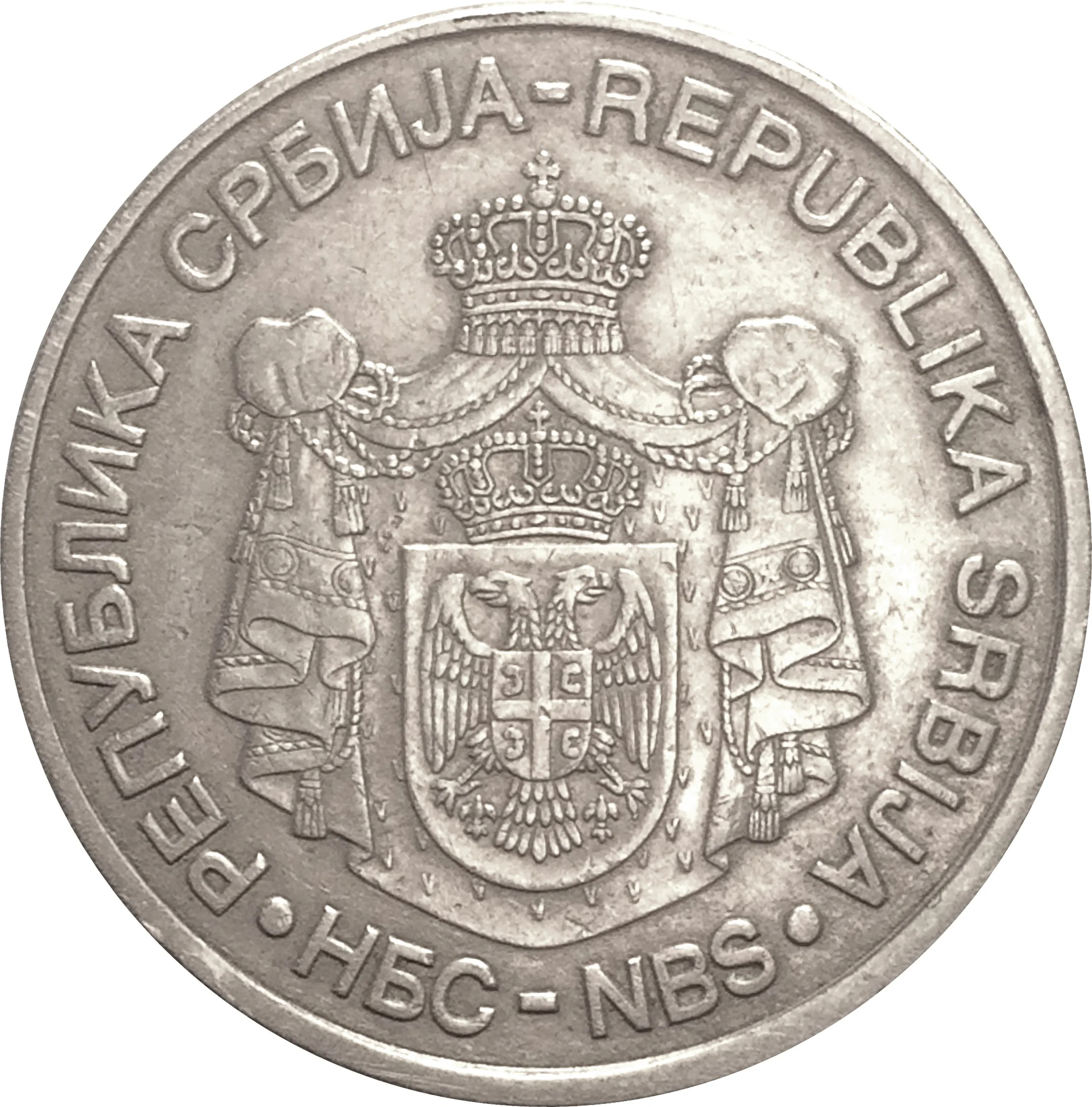
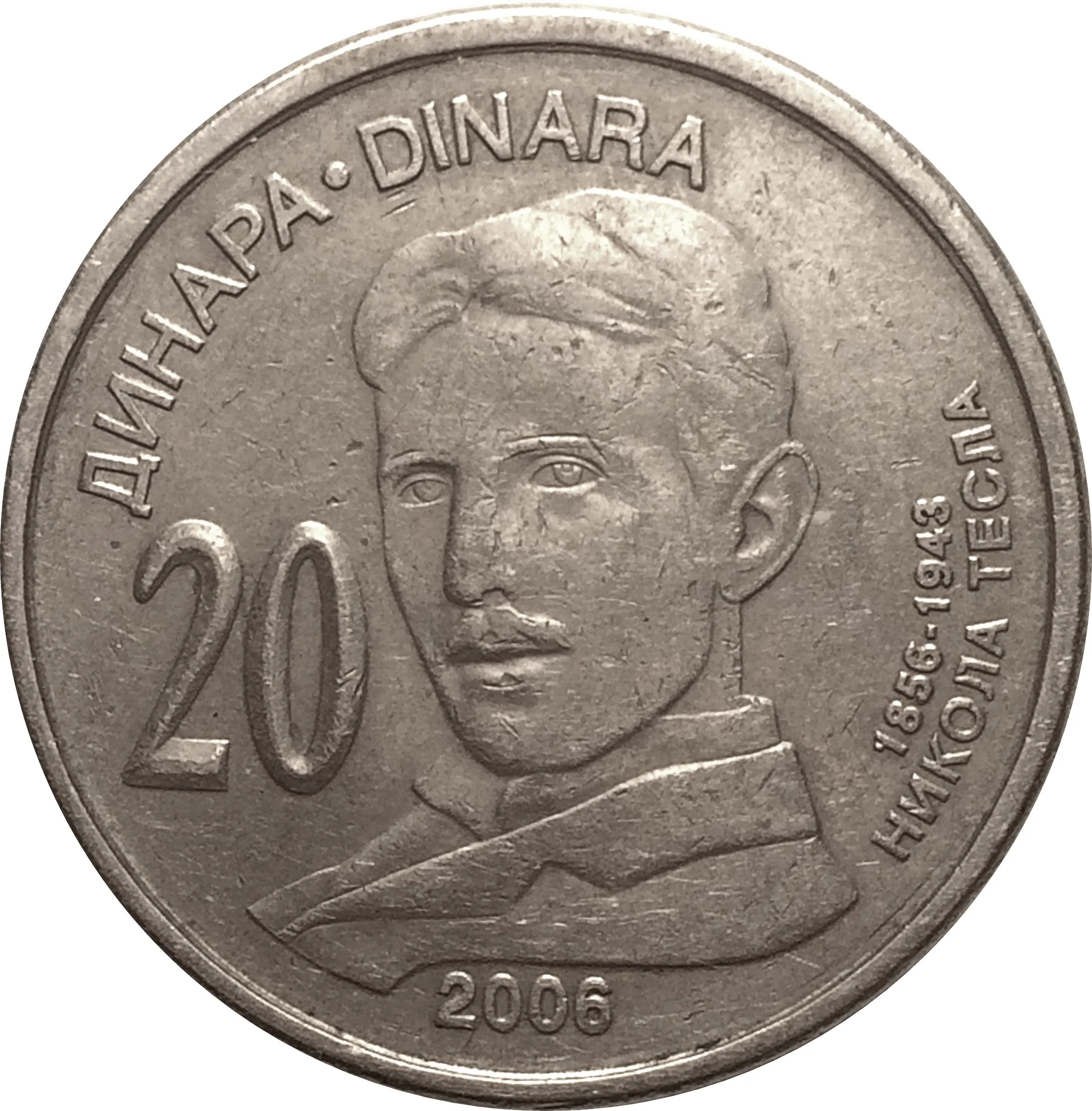
20 dinars (Nikola Tesla) – Serbia
Add to wishlist
Circulating commemorative coins
Commemoration: 150th Anniversary of Birth of Nikola Tesla
Serbia
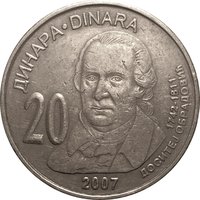
Obverse
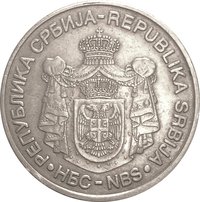
Reverse
Description:
Front: 20 Dinars with Nikola Tesla's bust.
Back: Nikola Tesla (Никола Тесла), Serbian-American inventor and electrical engineer.
Back: Nikola Tesla (Никола Тесла), Serbian-American inventor and electrical engineer.
Inscription:
ДИНАРА-DINARA
20
2006
1856-1943
НИКОЛА ТЕСЛА
20
2006
1856-1943
НИКОЛА ТЕСЛА
Translation:
DINARA-DINARA
20
2006
1856-1943
NIKOLA TESLA
20
2006
1856-1943
NIKOLA TESLA
Edge
5 reeded segments with 19 reeds each
Categories
| Person> Scientist |
| Mustache/Beard |
| Animal> Bird |
| Event> Birth anniversary |
| Symbol> Crown |
| Symbols> Coat of Arms |
| Symbol> Double-headed eagle |
Mints
| Name | Mark |
|---|---|
| Belgrade | — |
Mintings
| Year | Mint Mark | Mintage | Quality | Collection |
|---|---|---|---|---|
| 2006 | — | 992,000 | ||
| 2006 | — | — | In sets |
Historical background
In 2006, Serbia's currency situation was characterized by a period of relative stability and cautious optimism, underpinned by the use of the Serbian dinar (RSD). Following the economic turmoil of the 1990s and early 2000s, which included hyperinflation and the use of multiple currencies, the National Bank of Serbia had successfully established a managed float regime. The primary focus was on maintaining low and stable inflation, with the dinar's value influenced by market forces but actively moderated by central bank interventions to prevent excessive volatility. This stability was a hard-won achievement and a cornerstone of the broader macroeconomic stabilization program supported by the International Monetary Fund.
The broader economic context, however, presented significant challenges. Serbia was grappling with large twin deficits—a substantial fiscal deficit and a widening current account deficit—fueled by strong consumer demand for imports. This put persistent downward pressure on the dinar, as the demand for foreign currency (primarily euros) outpaced supply. Consequently, the National Bank of Serbia frequently utilized its foreign exchange reserves to support the dinar, aiming to curb inflationary pressures from imported goods. The euro served as the dominant reference currency and the preferred store of value for many citizens and businesses, reflecting lingering memories of past instability.
Politically, 2006 was a pivotal year following the dissolution of the State Union of Serbia and Montenegro in May. This transition created a degree of uncertainty but also allowed Serbia to pursue fully independent monetary and fiscal policies. The central bank continued its inflation-targeting framework, and the dinar's stability was seen as crucial for fostering investment and economic growth in the newly independent state. Overall, the currency situation in 2006 was one of fragile equilibrium, balancing achieved stability against underlying structural economic weaknesses and a evolving political landscape.
The broader economic context, however, presented significant challenges. Serbia was grappling with large twin deficits—a substantial fiscal deficit and a widening current account deficit—fueled by strong consumer demand for imports. This put persistent downward pressure on the dinar, as the demand for foreign currency (primarily euros) outpaced supply. Consequently, the National Bank of Serbia frequently utilized its foreign exchange reserves to support the dinar, aiming to curb inflationary pressures from imported goods. The euro served as the dominant reference currency and the preferred store of value for many citizens and businesses, reflecting lingering memories of past instability.
Politically, 2006 was a pivotal year following the dissolution of the State Union of Serbia and Montenegro in May. This transition created a degree of uncertainty but also allowed Serbia to pursue fully independent monetary and fiscal policies. The central bank continued its inflation-targeting framework, and the dinar's stability was seen as crucial for fostering investment and economic growth in the newly independent state. Overall, the currency situation in 2006 was one of fragile equilibrium, balancing achieved stability against underlying structural economic weaknesses and a evolving political landscape.
🌱 Common