

10 zlotys – Poland
Add to wishlist
Poland
Context
Years: 1959–1966
Issuer: Poland
Period:
(1952—1989)
Currency:
(1949—1994)
Demonetization: 1 January 1978
Total mintage: 44,815,153
Material
Diameter: 31 mm
Weight: 12.9 g
Thickness: 2.2 mm
Shape: Round
Composition: Copper-nickel
Technique: Milled
Alignment: Medal alignment
flip
References
Y: #
Numista: #6511
Value
Exchange value: 10 PLZ
Obverse
Description:
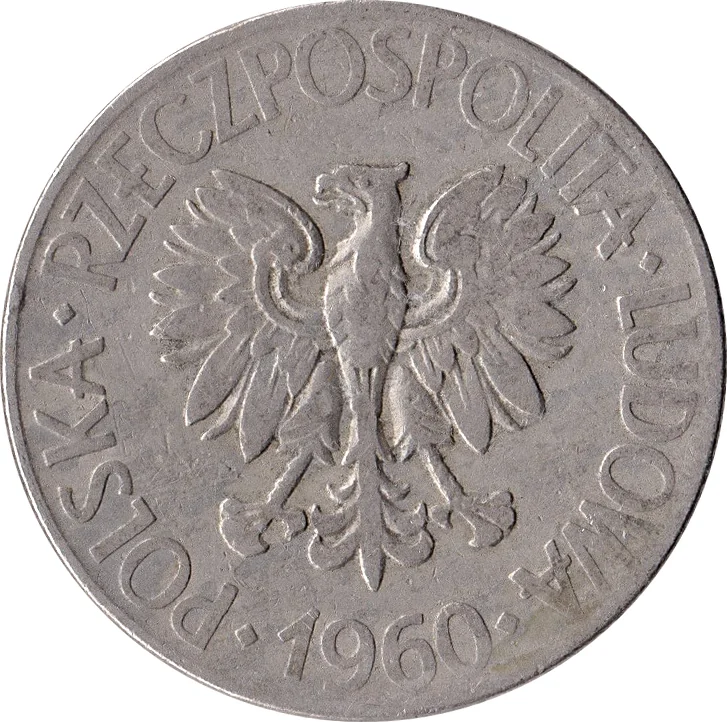
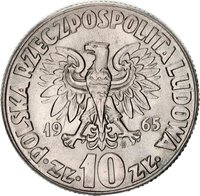
The Polish national coat of arms.
Inscription:
POLSKA·RZECZPOSPOLITA·LUDOWA
·1960·
·1960·
Translation:
Polish People's Republic
·1960·
·1960·
Script: Latin
Language: Polish
Engraver: Kazimierz Zieliński
Reverse
Description:
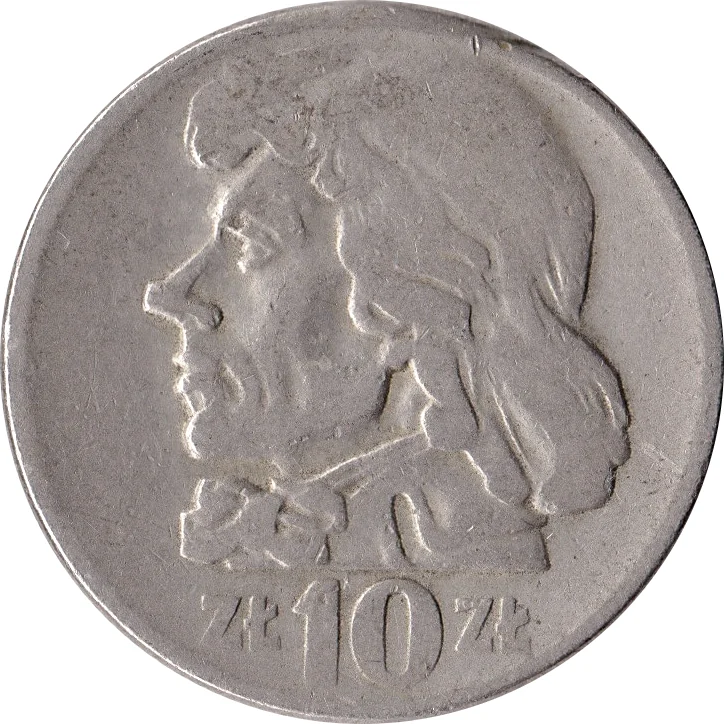
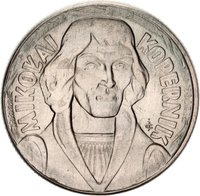
Kościuszko facing left, denomination below.
Inscription:
ZŁ 10 ZŁ
Translation:
TEN ZŁOTYCH
Script: Latin
Language: Polish
Engraver: Kazimierz Zieliński
Edge
Reeded
Mints
| Name | Mark |
|---|---|
| Mint of Poland | MW |
Mintings
| Year | Mint Mark | Mintage | Quality | Collection |
|---|---|---|---|---|
| 1959 | — | 13,107,000 | ||
| 1960 | — | 27,551,153 | ||
| 1966 | MW | 4,157,000 |
Historical background
In 1959, Poland's currency situation was defined by the rigid structures of a centrally planned economy under communist rule, operating within the Soviet Bloc's economic sphere. The official currency was the złoty (PLZ), which was non-convertible on international markets and whose exchange rate was set by government decree rather than market forces. A complex system of multiple, artificial exchange rates existed to serve different purposes: one for official state accounting, another for foreign tourists (often yielding a significant premium), and a thriving black market rate that more accurately reflected the currency's diminished purchasing power due to chronic shortages and suppressed inflation.
Domestically, the złoty's value was largely divorced from economic reality, functioning primarily as an accounting unit within the state plan. Price controls on basic goods created an illusion of stability, but this masked underlying imbalances, as subsidies led to budget deficits and the money supply grew without corresponding increases in available consumer goods. Savings in złoty had limited utility, as there was little to purchase in state shops, fostering a shadow economy where goods and hard currency were traded. The government, led by Władysław Gomułka, maintained a focus on heavy industry, which further strained resources for consumer production.
Internationally, Poland's trade was conducted primarily within the Council for Mutual Economic Assistance (Comecon), using transferable rubles for clearing, which insulated the złoty from global pressures but also from genuine trade benefits. For transactions with the West, Poland required hard currencies like US dollars, which were scarce and tightly controlled. The state amassed this foreign exchange through exporting raw materials and limited manufactured goods, while strictly rationing it for importing crucial technology. Thus, the 1959 currency landscape was one of strict control, internal contradiction, and isolation, reflecting the broader inefficiencies of the planned economy.
Domestically, the złoty's value was largely divorced from economic reality, functioning primarily as an accounting unit within the state plan. Price controls on basic goods created an illusion of stability, but this masked underlying imbalances, as subsidies led to budget deficits and the money supply grew without corresponding increases in available consumer goods. Savings in złoty had limited utility, as there was little to purchase in state shops, fostering a shadow economy where goods and hard currency were traded. The government, led by Władysław Gomułka, maintained a focus on heavy industry, which further strained resources for consumer production.
Internationally, Poland's trade was conducted primarily within the Council for Mutual Economic Assistance (Comecon), using transferable rubles for clearing, which insulated the złoty from global pressures but also from genuine trade benefits. For transactions with the West, Poland required hard currencies like US dollars, which were scarce and tightly controlled. The state amassed this foreign exchange through exporting raw materials and limited manufactured goods, while strictly rationing it for importing crucial technology. Thus, the 1959 currency landscape was one of strict control, internal contradiction, and isolation, reflecting the broader inefficiencies of the planned economy.
🌱 Very Common