

Obverse
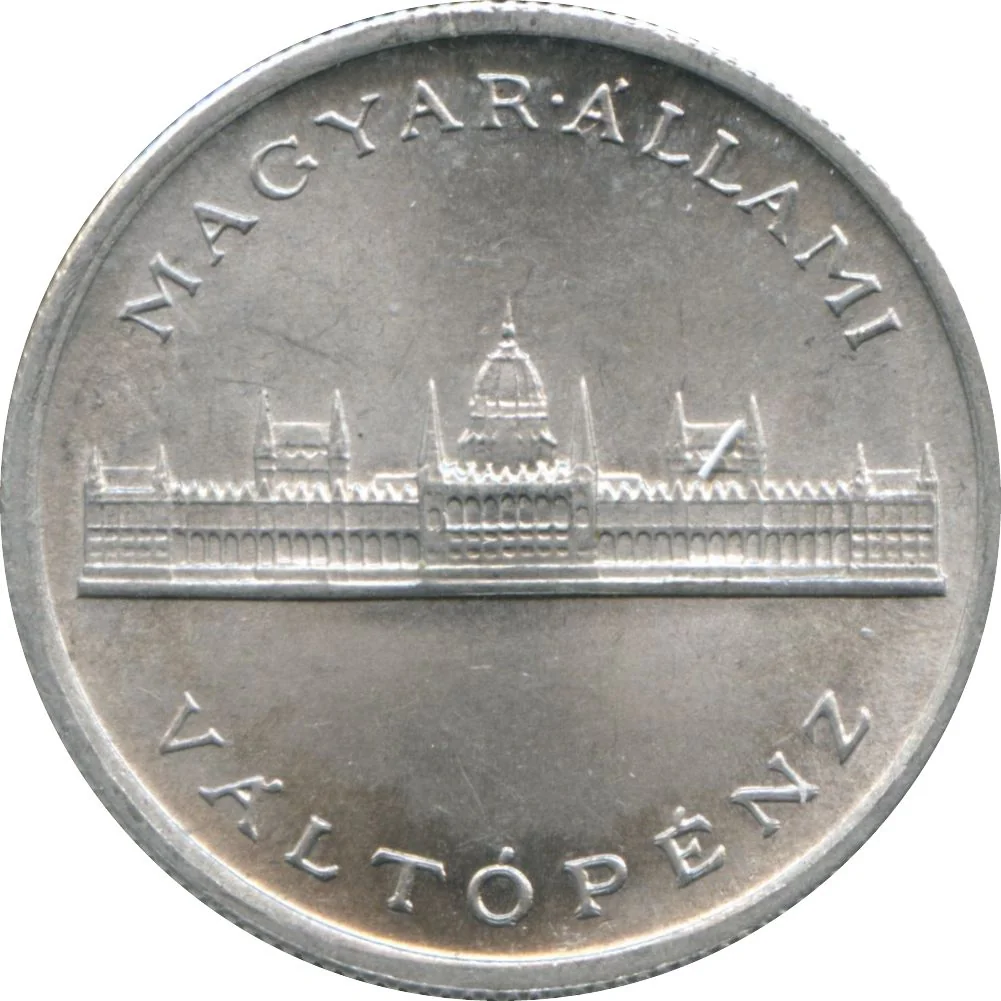
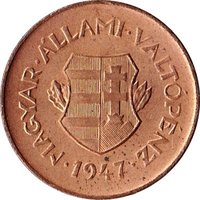
Inscription:
MAGYAR ÁLLAMI
VÁLTÓPÉNZ
VÁLTÓPÉNZ
Translation:
Hungarian State
Scrip
Scrip
Script: Latin
Language: Hungarian
Engraver: István Iván
Reverse
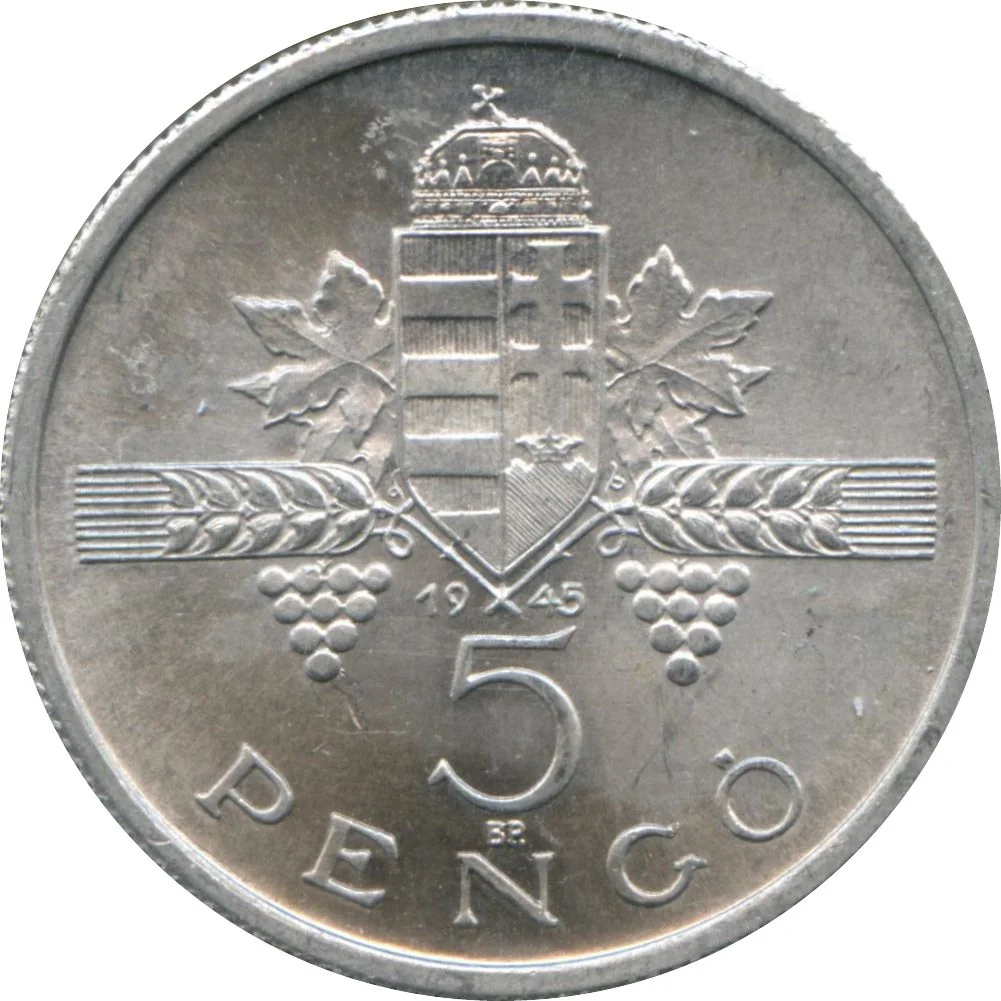
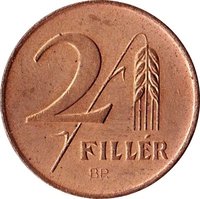
Inscription:
1945
5
BP.
PENGŐ
5
BP.
PENGŐ
Translation:
Nineteen forty-five
5
BP.
Pengő
5
BP.
Pengő
Script: Latin
Language: Hungarian
Engraver: István Iván
Edge
Reeded
Mints
| Name | Mark |
|---|---|
| Hungarian mint | BP. |
Historical background
In the final months of World War II, Hungary's currency, the pengő, was already in a state of catastrophic hyperinflation due to the ravages of war, massive government debt, and the collapse of productive capacity. The situation accelerated wildly following the country's liberation and the start of Soviet occupation in 1945. The provisional government, lacking real resources and under immense pressure to fund reconstruction and reparations to the Soviet Union, resorted to the printing press to cover all expenses, utterly decimating the currency's value. By mid-1945, prices were doubling within hours, and the pengő became virtually worthless, necessitating calculations in the millions and billions for basic goods.
The social and economic impact was devastating. Savings were erased, wages became meaningless as they could not keep pace with daily price increases, and a barter economy emerged as the only reliable means of exchange. The crisis crippled any attempt at normal economic recovery and fostered deep public trauma and mistrust in financial institutions. The government attempted a temporary stabilization by introducing the "tax pengő," a unit of account for calculations, but this did nothing to address the root cause of the physical money supply's exponential growth.
This untenable situation culminated in a dramatic monetary reform on August 1, 1946, when the forint was introduced to replace the pengő at an almost incomprehensible rate of 1 forint = 400,000 quadrillion pengő (4x10²⁹). The reform, backed by a more disciplined fiscal policy and supported by new agricultural harvests, was brutally effective. It instantly halted the hyperinflation, restored basic monetary function, and provided the essential stability upon which Hungary's postwar recovery and eventual socialist economic system could be built. The 1945-46 period thus stands as one of the most severe hyperinflations in world history.
The social and economic impact was devastating. Savings were erased, wages became meaningless as they could not keep pace with daily price increases, and a barter economy emerged as the only reliable means of exchange. The crisis crippled any attempt at normal economic recovery and fostered deep public trauma and mistrust in financial institutions. The government attempted a temporary stabilization by introducing the "tax pengő," a unit of account for calculations, but this did nothing to address the root cause of the physical money supply's exponential growth.
This untenable situation culminated in a dramatic monetary reform on August 1, 1946, when the forint was introduced to replace the pengő at an almost incomprehensible rate of 1 forint = 400,000 quadrillion pengő (4x10²⁹). The reform, backed by a more disciplined fiscal policy and supported by new agricultural harvests, was brutally effective. It instantly halted the hyperinflation, restored basic monetary function, and provided the essential stability upon which Hungary's postwar recovery and eventual socialist economic system could be built. The 1945-46 period thus stands as one of the most severe hyperinflations in world history.
🌱 Common