

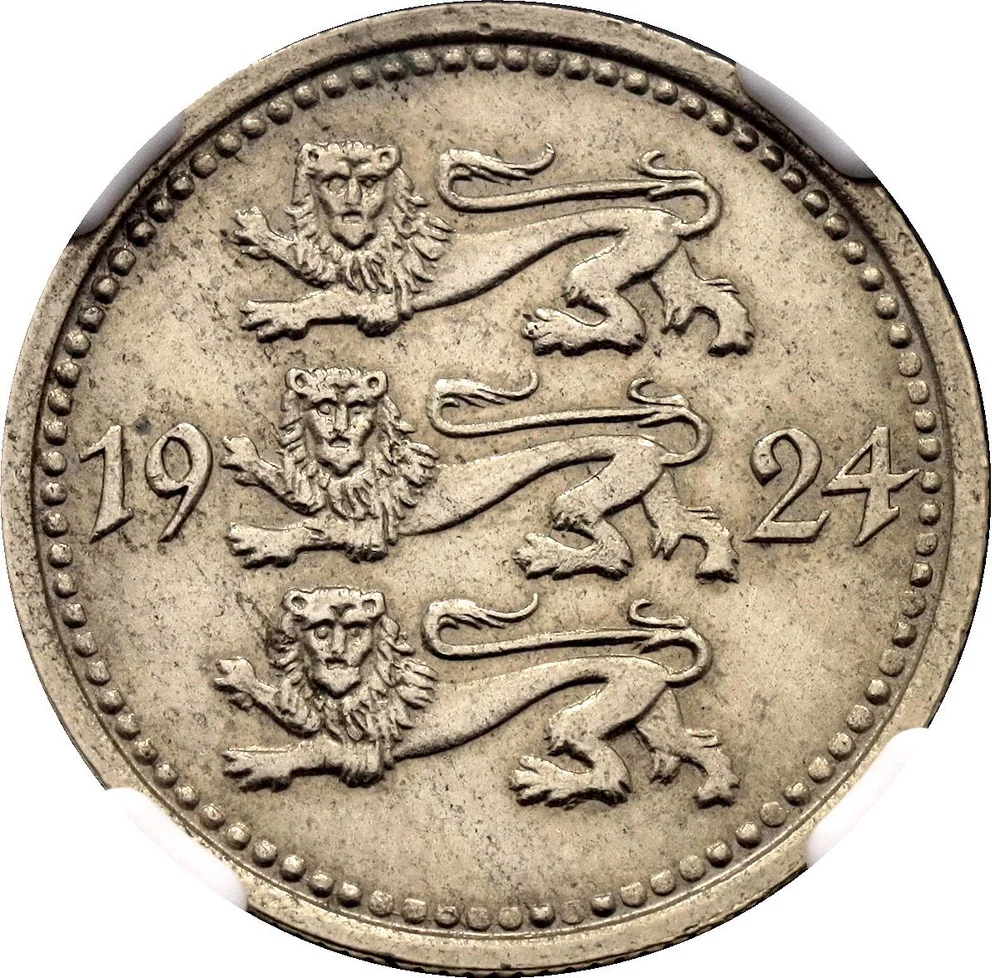
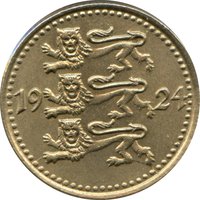
Obverse
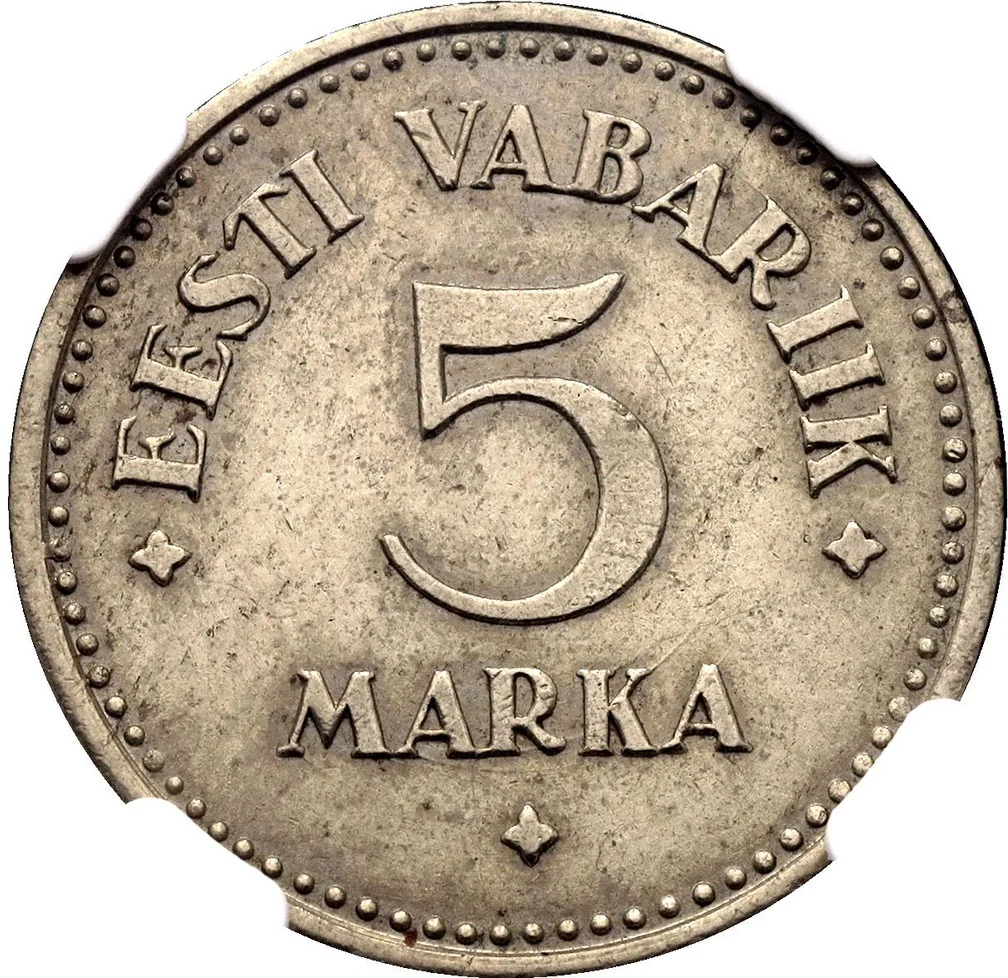
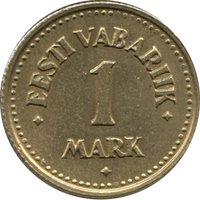
Reverse
Description:
Denomination.
Inscription:
EESTI VABARIIK
5
MARKA
5
MARKA
Translation:
REPUBLIC OF ESTONIA
5
MARKKA
5
MARKKA
Script: Latin
Language: Estonian
Engraver: Boris Krümmer
Edge
Reeded.
Mintings
| Year | Mint Mark | Mintage | Quality | Collection |
|---|---|---|---|---|
| 1924 | — | 2,105,010 |
Historical background
By 1924, Estonia’s currency situation was one of remarkable stability, a direct result of the landmark 1928 monetary reform that had been meticulously planned and prepared for in the preceding years. Following independence and the turmoil of the post-World War I and War of Independence period, the country suffered from hyperinflation driven by a flood of unbacked German Ostmark and then the unstable Estonian Mark (Eesti mark). Recognizing that this undermined economic recovery and foreign confidence, the state took decisive action. In 1924, the foundation was laid with the establishment of the independent Bank of Estonia (Eesti Pank), which was granted the sole right of note issue and tasked with creating a new, fully convertible currency.
The key achievement during this preparatory phase was the accumulation of a substantial gold and foreign exchange reserve to back the future currency. The state enacted strict fiscal discipline, running budget surpluses, and secured a crucial stabilization loan from an international consortium, including British and Swedish banks. This reserve provided the necessary credibility. Therefore, while 1924 did not see a new currency in circulation, it was the year where the essential institutional and financial pillars were solidified. The unstable old marks remained in use, but their eventual replacement was now a guaranteed government policy backed by tangible assets.
Consequently, the currency situation in 1924 was characterized by a period of confident transition. The public and markets were operating with the still-depreciating old marks, but with the knowledge that a radical change was imminent and securely funded. This expectation itself had a stabilizing effect, curbing speculative behavior and building trust. The successful culmination of this process came on 1 January 1928, when the Kroon (Eesti kroon) was introduced, pegged to the Swedish Krona and fully backed by gold, ending the era of instability and providing the foundation for Estonia’s economic growth in the late 1920s.
The key achievement during this preparatory phase was the accumulation of a substantial gold and foreign exchange reserve to back the future currency. The state enacted strict fiscal discipline, running budget surpluses, and secured a crucial stabilization loan from an international consortium, including British and Swedish banks. This reserve provided the necessary credibility. Therefore, while 1924 did not see a new currency in circulation, it was the year where the essential institutional and financial pillars were solidified. The unstable old marks remained in use, but their eventual replacement was now a guaranteed government policy backed by tangible assets.
Consequently, the currency situation in 1924 was characterized by a period of confident transition. The public and markets were operating with the still-depreciating old marks, but with the knowledge that a radical change was imminent and securely funded. This expectation itself had a stabilizing effect, curbing speculative behavior and building trust. The successful culmination of this process came on 1 January 1928, when the Kroon (Eesti kroon) was introduced, pegged to the Swedish Krona and fully backed by gold, ending the era of instability and providing the foundation for Estonia’s economic growth in the late 1920s.
🌱 Fairly Common