

10 Zlotys – Poland
Non-circulating coins
Commemoration: Bolesław Prus
Poland

Obverse
Description:
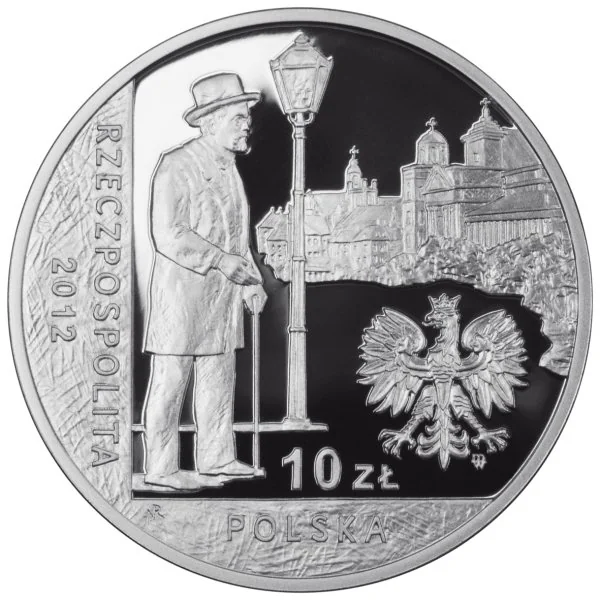
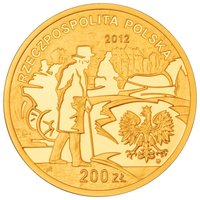
Silhouette of Bolesław Prus on a street. Background features a stylised Warsaw Old Town outline and the Polish state eagle.
Inscription:
mw
10 ZŁ
POLSKA
RZECZPOSPOLITA
2012
10 ZŁ
POLSKA
RZECZPOSPOLITA
2012
Translation:
10 ZŁOTYCH
POLAND
REPUBLIC OF POLAND
2012
POLAND
REPUBLIC OF POLAND
2012
Script: Latin
Language: Polish
Designer: Roussanka Nowakowska
Reverse
Description:
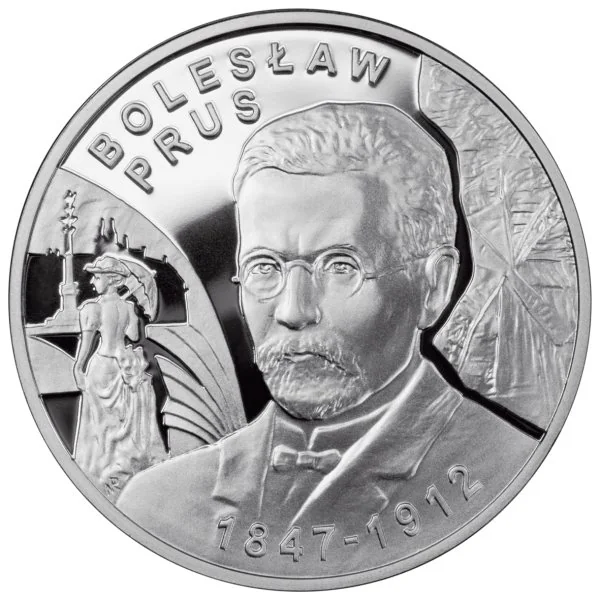
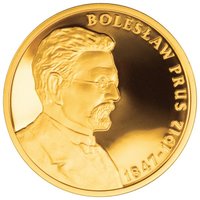
A stylized bust of Bolesław Prus, centrally, with a 19th-century lady holding an umbrella before Warsaw's Old City outline on the left.
Inscription:
BOLESŁAW PRUS
1847-1912
1847-1912
Translation:
BOLESŁAW PRUS
1847-1912
1847-1912
Script: Latin
Language: Polish
Designer: Roussanka Nowakowska
Edge
Plain
Mints
| Name | Mark |
|---|---|
| Mint of Poland | (MW) |
Mintings
| Year | Mint Mark | Mintage | Quality | Collection |
|---|---|---|---|---|
| 2012 | MW | 30,000 | Proof |
Historical background
In 2012, Poland's currency situation was dominated by the strength of the Polish złoty (PLN), which had rebounded significantly from the volatility of the 2008-2009 global financial crisis. The złoty appreciated against both the euro and the US dollar for much of the year, driven by Poland's status as the only EU economy to avoid a recession during the crisis, attracting substantial foreign investment. This strength was underpinned by relatively high interest rates from the National Bank of Poland (NBP), which maintained its reference rate above 4.5% for most of 2012 to combat inflation, making złoty-denominated assets attractive to carry traders.
However, this appreciation created a policy dilemma. While a strong currency helped keep import prices and inflation in check, it began to pressure Polish exporters by making their goods more expensive on international markets. Furthermore, there was significant concern about the impact of the ongoing Eurozone debt crisis, particularly Poland's exposure to a potential downturn in its major trading partners. These external risks, coupled with signs of slowing domestic economic growth in the latter half of the year, led to increased market volatility and periodic bouts of złoty weakness whenever negative news emerged from the Eurozone.
The year concluded with a notable shift in monetary policy. In response to the economic slowdown and with inflation falling, the NBP began a cautious easing cycle in November 2012, cutting interest rates by 25 basis points. This marked the start of a reversal from the hawkish stance that had supported the złoty, signaling a new phase where supporting growth was prioritized. Consequently, the currency ended the year off its peaks, reflecting both the new dovish policy direction and the persistent external uncertainties from the European sovereign debt crisis.
However, this appreciation created a policy dilemma. While a strong currency helped keep import prices and inflation in check, it began to pressure Polish exporters by making their goods more expensive on international markets. Furthermore, there was significant concern about the impact of the ongoing Eurozone debt crisis, particularly Poland's exposure to a potential downturn in its major trading partners. These external risks, coupled with signs of slowing domestic economic growth in the latter half of the year, led to increased market volatility and periodic bouts of złoty weakness whenever negative news emerged from the Eurozone.
The year concluded with a notable shift in monetary policy. In response to the economic slowdown and with inflation falling, the NBP began a cautious easing cycle in November 2012, cutting interest rates by 25 basis points. This marked the start of a reversal from the hawkish stance that had supported the złoty, signaling a new phase where supporting growth was prioritized. Consequently, the currency ended the year off its peaks, reflecting both the new dovish policy direction and the persistent external uncertainties from the European sovereign debt crisis.
💎 Extremely Rare