

2 Leva (Socialist Revolution) – Bulgaria
Circulating commemorative coins
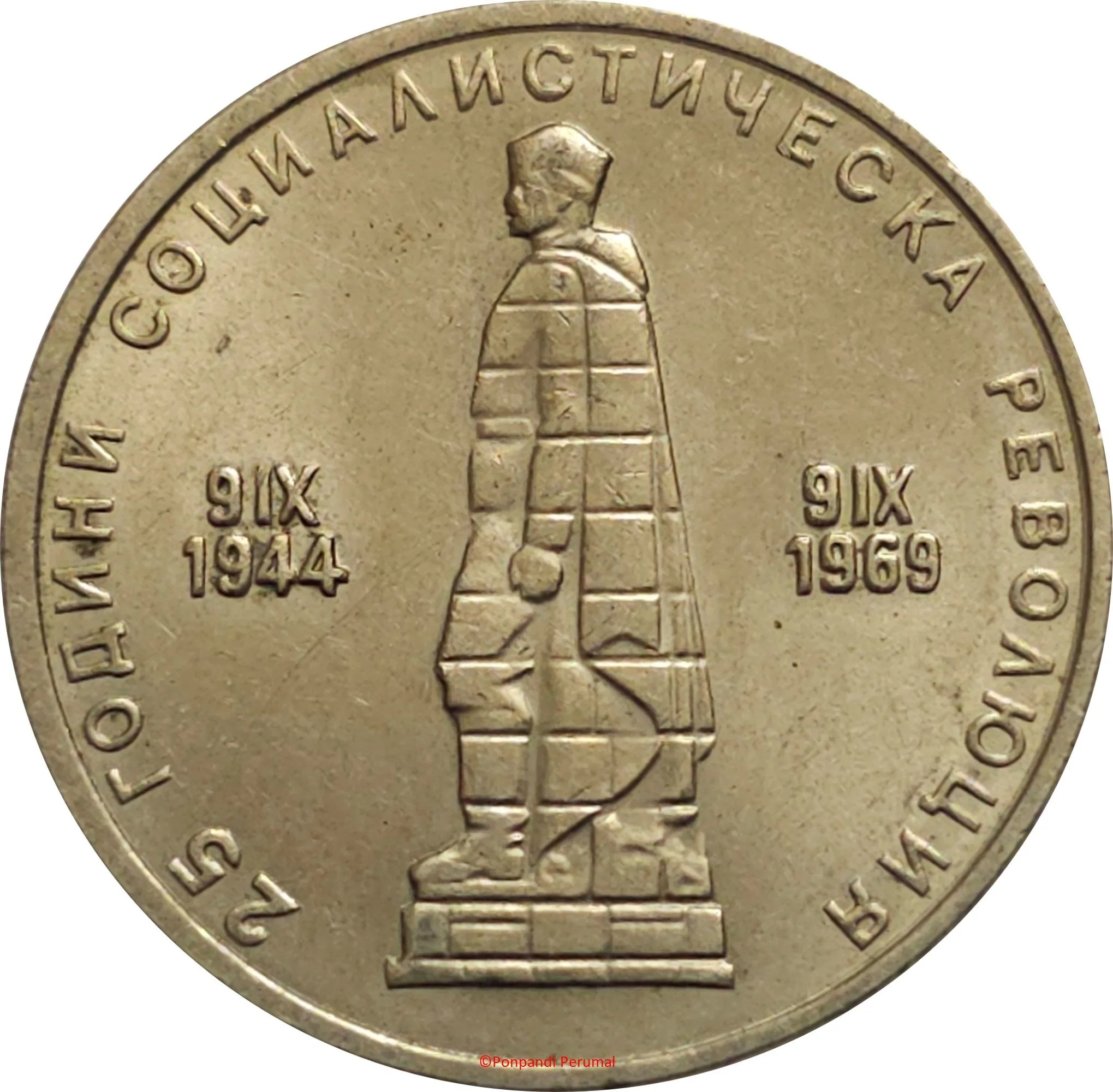
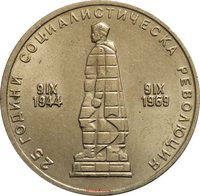
Commemoration: 25th Anniversary of Socialist Revolution, September 9, 1944
Bulgaria
Context
Year: 1969
Issuer: Bulgaria 
Period: 
(1946—1990)
Currency:
(1962—1999)
Demonetized: Yes
Total mintage: 1,082,210
Material
Diameter: 30.1 mm
Weight: 10.6 g
Thickness: 2 mm
Shape: Round
Composition: Copper-nickel
Technique: Milled
Alignment: Medal alignment
flip
References
KM: #Click to copy to clipboard75
Numista: #6444
Value
Exchange value: 2 BGL
Obverse
Description:
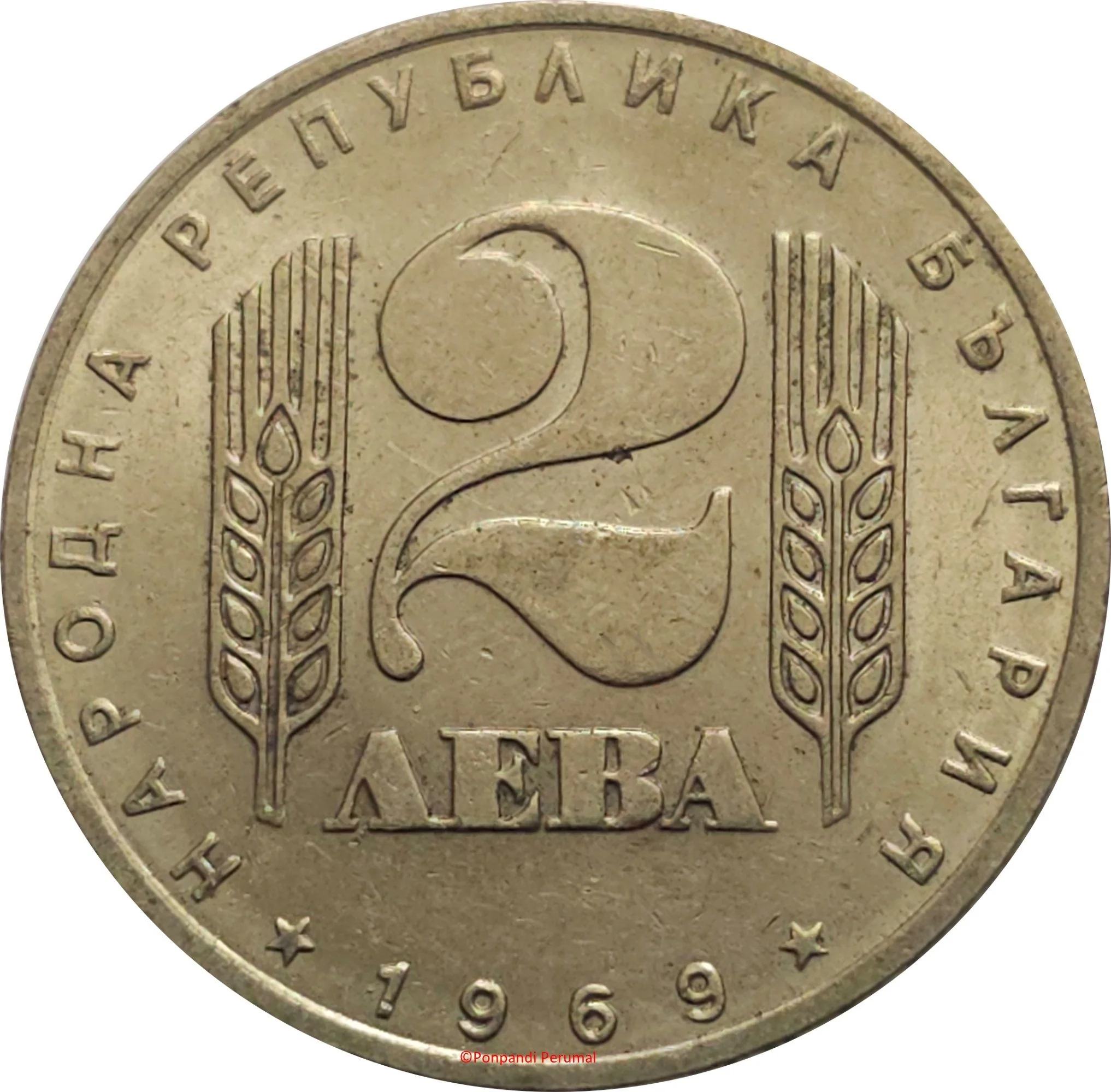
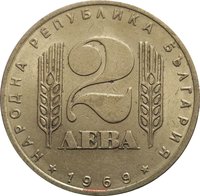
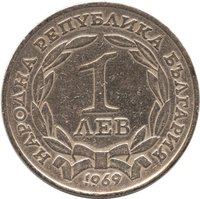
Country. Denomination, date.
Inscription:
НАРОДНА РЕПУБЛИКА БЪЛГАРИЯ
2
ЛЕВА
* 1969 *
2
ЛЕВА
* 1969 *
Translation:
PEOPLE'S REPUBLIC OF BULGARIA
2
LEVA
* 1969 *
2
LEVA
* 1969 *
Script: Cyrillic
Language: Bulgarian
Engravers: Valentin Starchev, Krum Damyanov
Reverse
Edge
Reeded
Categories
| Event> Revolution |
Mints
| Name | Mark |
|---|---|
| Bulgarian Mint | — |
Mintings
| Year | Mint Mark | Mintage | Quality | Collection |
|---|---|---|---|---|
| 1969 | — | 1,082,210 |
Historical background
In 1969, Bulgaria's currency situation was defined by its position within the Soviet-led Council for Mutual Economic Assistance (COMECON) and its centrally planned economy. The official currency, the Bulgarian Lev (BGN), was a non-convertible "soft currency." Its value was administratively set by the Bulgarian State Bank and had no direct link to market forces or major Western currencies. Internally, the lev was used for all domestic transactions, but its exchange rate was largely symbolic for the average citizen, as foreign travel and access to hard currency were severely restricted by the state.
Externally, Bulgaria's trade and currency relations were heavily oriented toward the COMECON bloc, particularly the Soviet Union. Much trade was conducted through bilateral clearing agreements using the "transferable ruble," an artificial accounting unit, to avoid the use of hard currencies like the US dollar or Deutsche Mark. This system insulated Bulgaria from the global financial market but also created imbalances and limited access to Western technology and goods. For any essential trade with non-communist countries, the government relied on a limited pool of hard currency reserves, which were centrally allocated to priority state enterprises.
For Bulgarian citizens in 1969, the reality was a stark dual-currency environment. While wages and daily life operated with leva, access to Western goods or travel required hard currency, which was illegal for individuals to possess without authorization. A black market for dollars and other hard currencies existed, offering exchange rates far more unfavorable than the official state rate, reflecting the lev's overvaluation. Thus, the currency situation mirrored the country's political reality: stable and controlled internally, but isolated from the global economy and restrictive for its population.
Externally, Bulgaria's trade and currency relations were heavily oriented toward the COMECON bloc, particularly the Soviet Union. Much trade was conducted through bilateral clearing agreements using the "transferable ruble," an artificial accounting unit, to avoid the use of hard currencies like the US dollar or Deutsche Mark. This system insulated Bulgaria from the global financial market but also created imbalances and limited access to Western technology and goods. For any essential trade with non-communist countries, the government relied on a limited pool of hard currency reserves, which were centrally allocated to priority state enterprises.
For Bulgarian citizens in 1969, the reality was a stark dual-currency environment. While wages and daily life operated with leva, access to Western goods or travel required hard currency, which was illegal for individuals to possess without authorization. A black market for dollars and other hard currencies existed, offering exchange rates far more unfavorable than the official state rate, reflecting the lev's overvaluation. Thus, the currency situation mirrored the country's political reality: stable and controlled internally, but isolated from the global economy and restrictive for its population.
🌱 Common